⚡
EV V2L power
Vehicle-to-Load capability can turn an EV into a mobile power source for selected support equipment.
SolarFireTruck.com is an educational and manga-style concept site exploring how electric fleet vehicles with Vehicle-to-Load power could support pumps, cameras, lights, communications, and local water movement during wildfire-readiness planning.
The key example is the electric postal truck. It is local. It is visible. It follows neighborhood routes. It carries stored battery energy. With safe design and clear limits, that battery could support selected emergency-readiness loads.
Pair EV V2L power with local water, such as a swimming pool, then use properly rated pumps, hoses, lights, cameras, and monitored defensive spray equipment as a private readiness support concept — never as a replacement for professional firefighting.
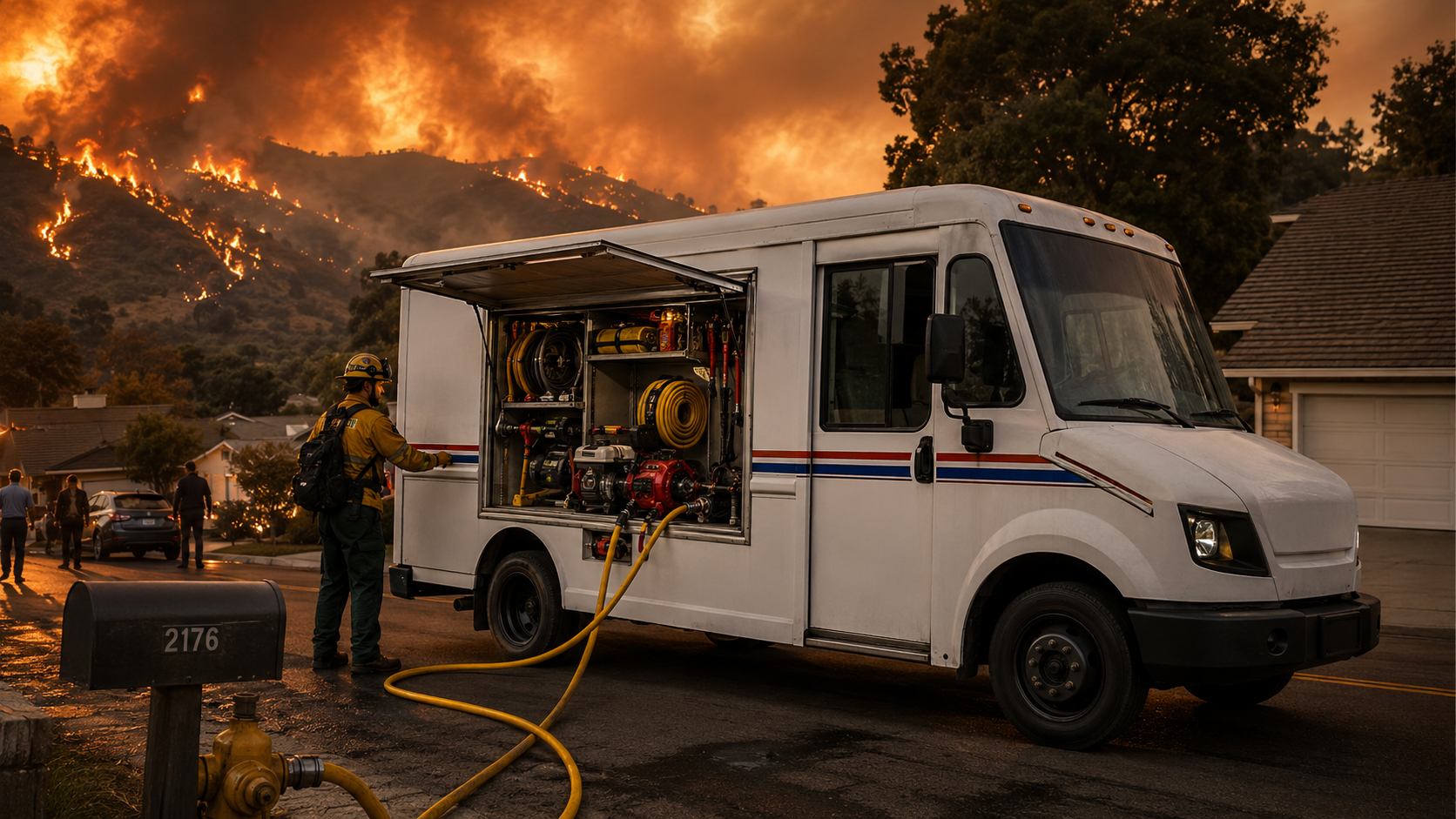
SolarFireTruck.com is built around a practical chain of ideas. Each part is exciting only if the safety boundary remains clear.
Vehicle-to-Load capability can turn an EV into a mobile power source for selected support equipment.
Backyard pools may represent local stored water if pumping, access, routing, and safety are planned.
Cameras can help monitor embers, spray zones, equipment areas, and exposure points.
Firefighters, evacuation orders, codes, permits, inspections, and professional design come first.
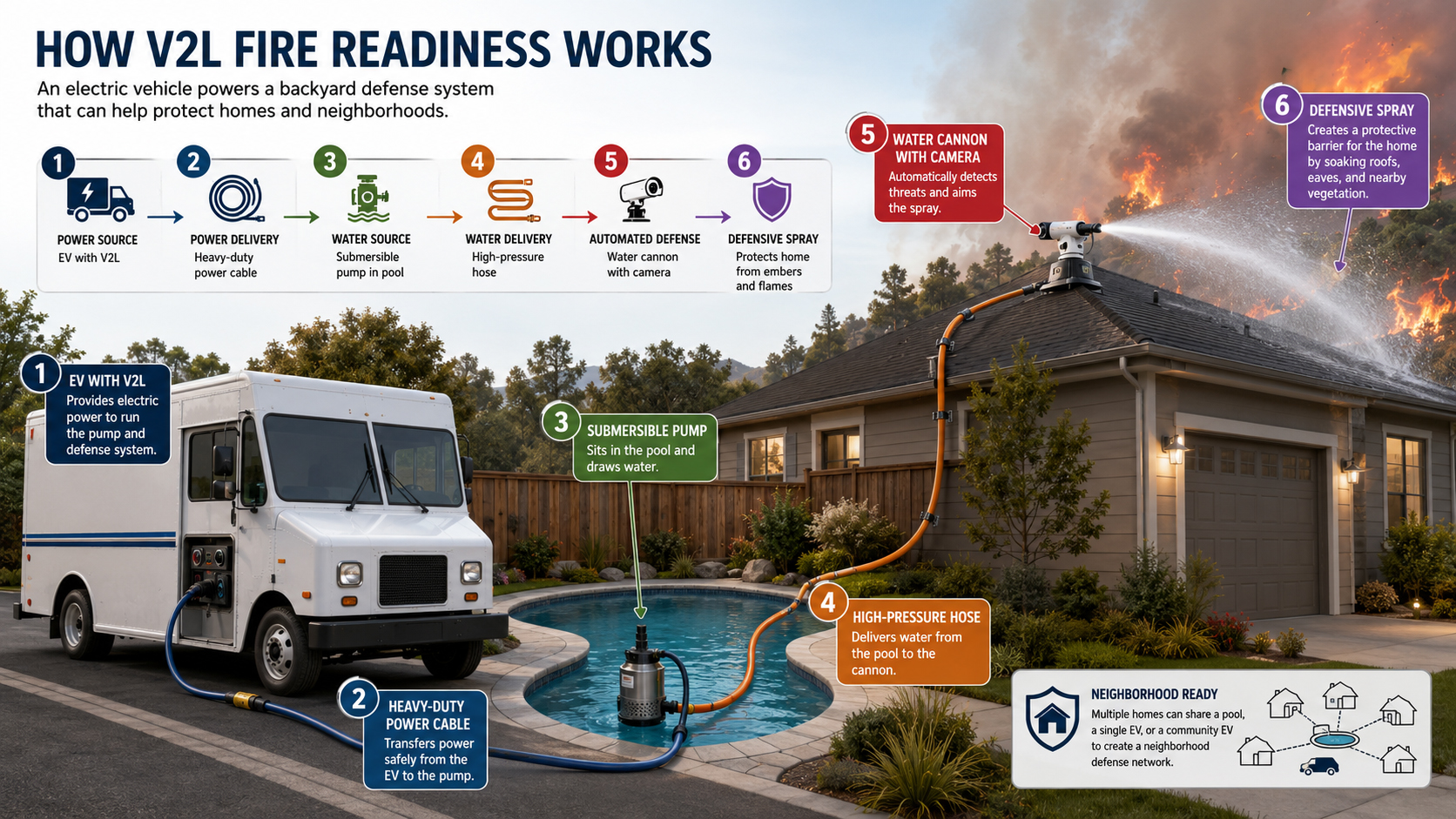
SolarFireTruck.com uses manga comedy because the idea needs to be memorable. Postman Sparky, the pool, the pump, the camera cannon, and the fire chief all teach different parts of the readiness system.
The site is intentionally bold, visual, and memorable. But the responsible version of the concept is limited, professional, and safety-first.
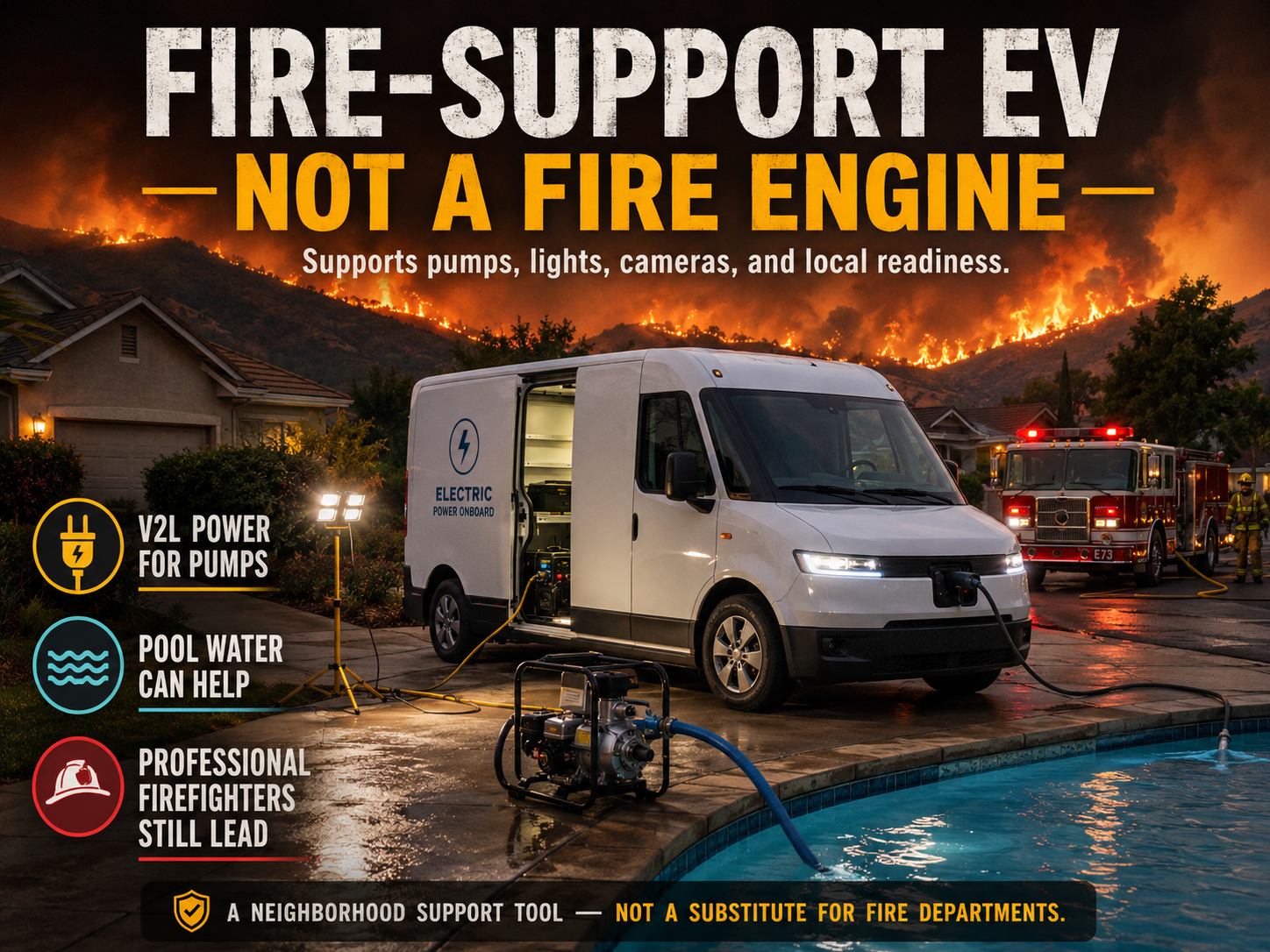
The EV can be imagined as support equipment, not a replacement for trained firefighters or fire apparatus.
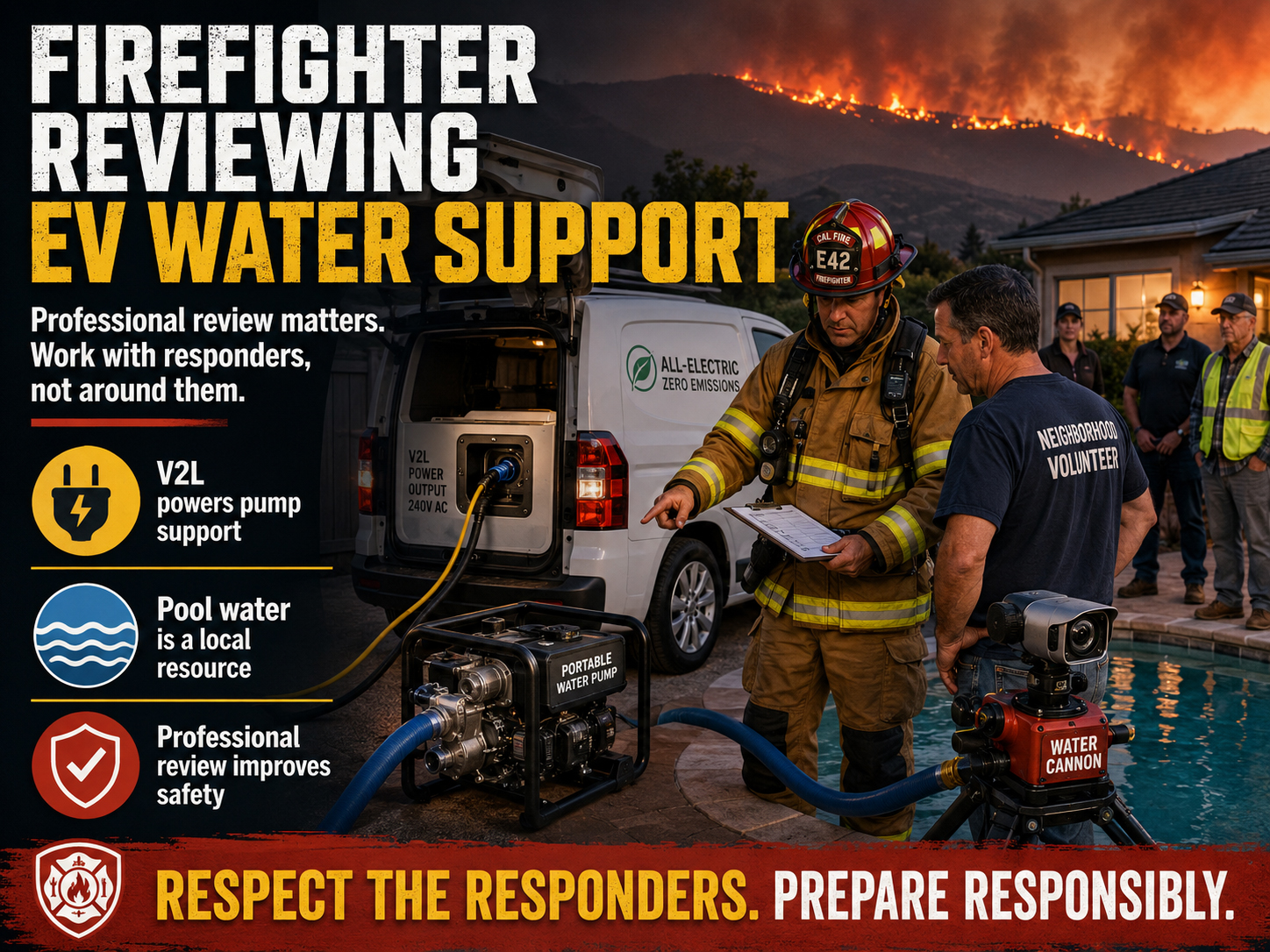
Electrical, plumbing, fire, structural, and safety professionals must review any real-world system.
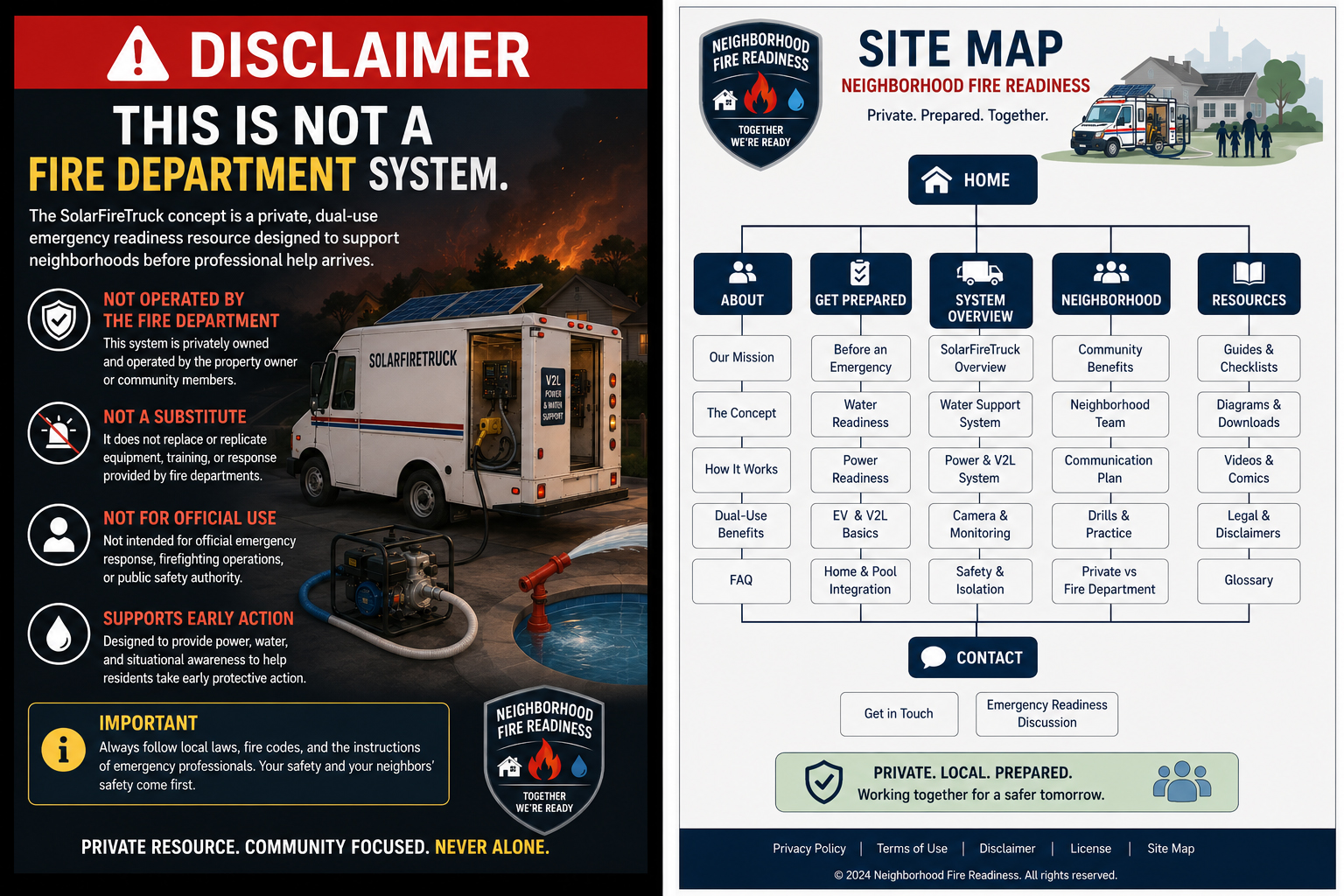
Private readiness must never delay evacuation, block access, or create false confidence.
SolarFireTruck.com fits ABC Solar’s long-running interest in practical solar, battery, EV, and disaster-readiness ideas. The concept is meant to provoke useful thinking about how clean-energy assets can support communities.
Safety first: SolarFireTruck.com does not sell a certified fire system through this page. Any real installation requires local professional design, code review, permitting, inspection, and emergency-authority awareness.
SolarFireTruck.com is built around one practical message: do not wait until the sky is orange to figure out water, power, pumps, access, and safety.
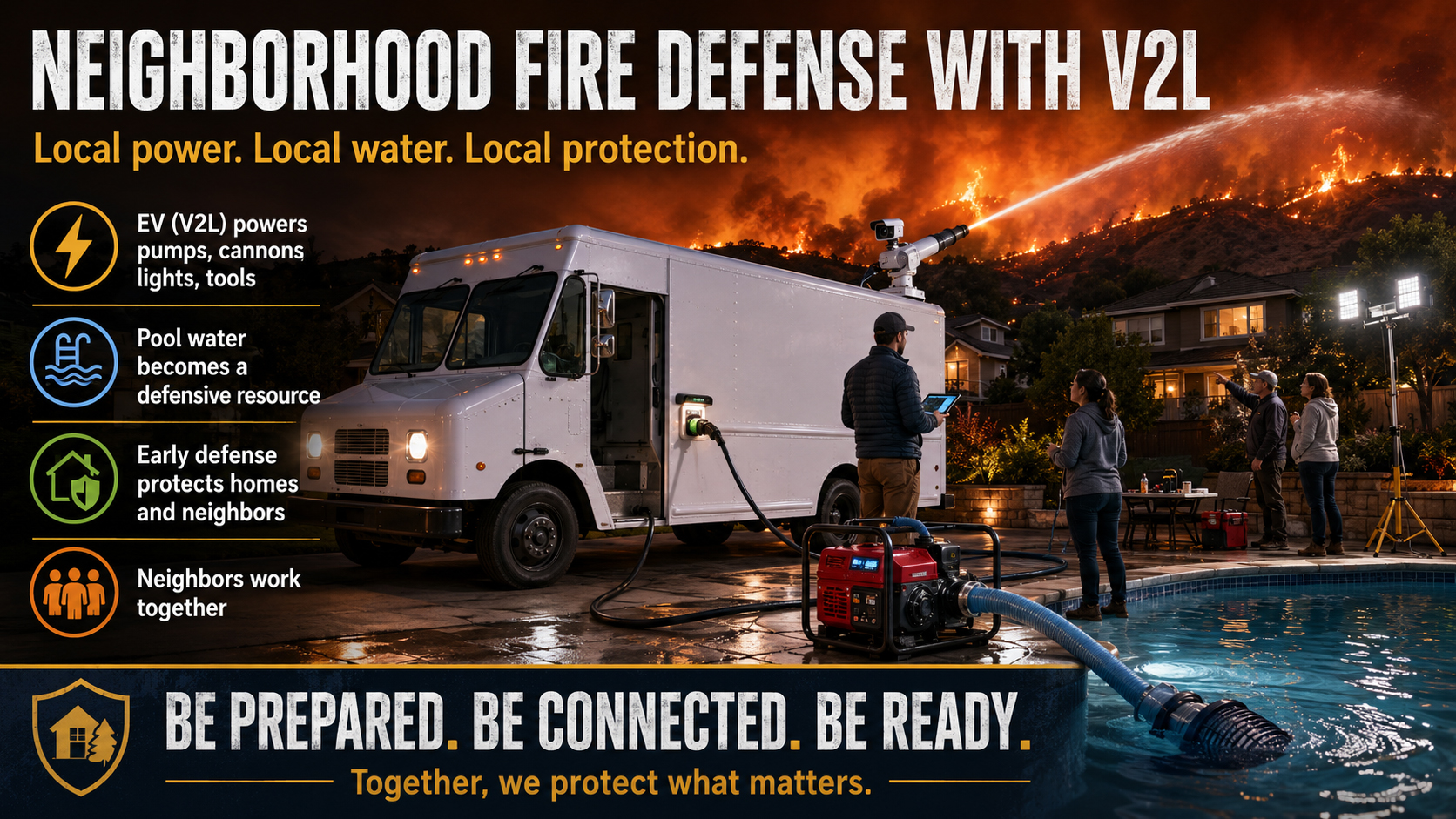
The best next page is the plain-language explanation of how EV power, pool water, pumps, hoses, and camera water cannons fit together.