🏊
Pool reserve
The water source must be accessible, usable, and not blocked by gates, debris, electrical hazards, or unsafe conditions.
In the SolarFireTruck.com concept, backyard pool water can become a local emergency water reserve when connected to properly selected pumps, safe power, planned hose routes, and defensive spray equipment.
Fire hydrants, fire engines, and public water systems remain the real fire infrastructure. But many homes already have thousands of gallons of water sitting in plain sight. The question is whether that water can be accessed safely, quickly, and usefully.
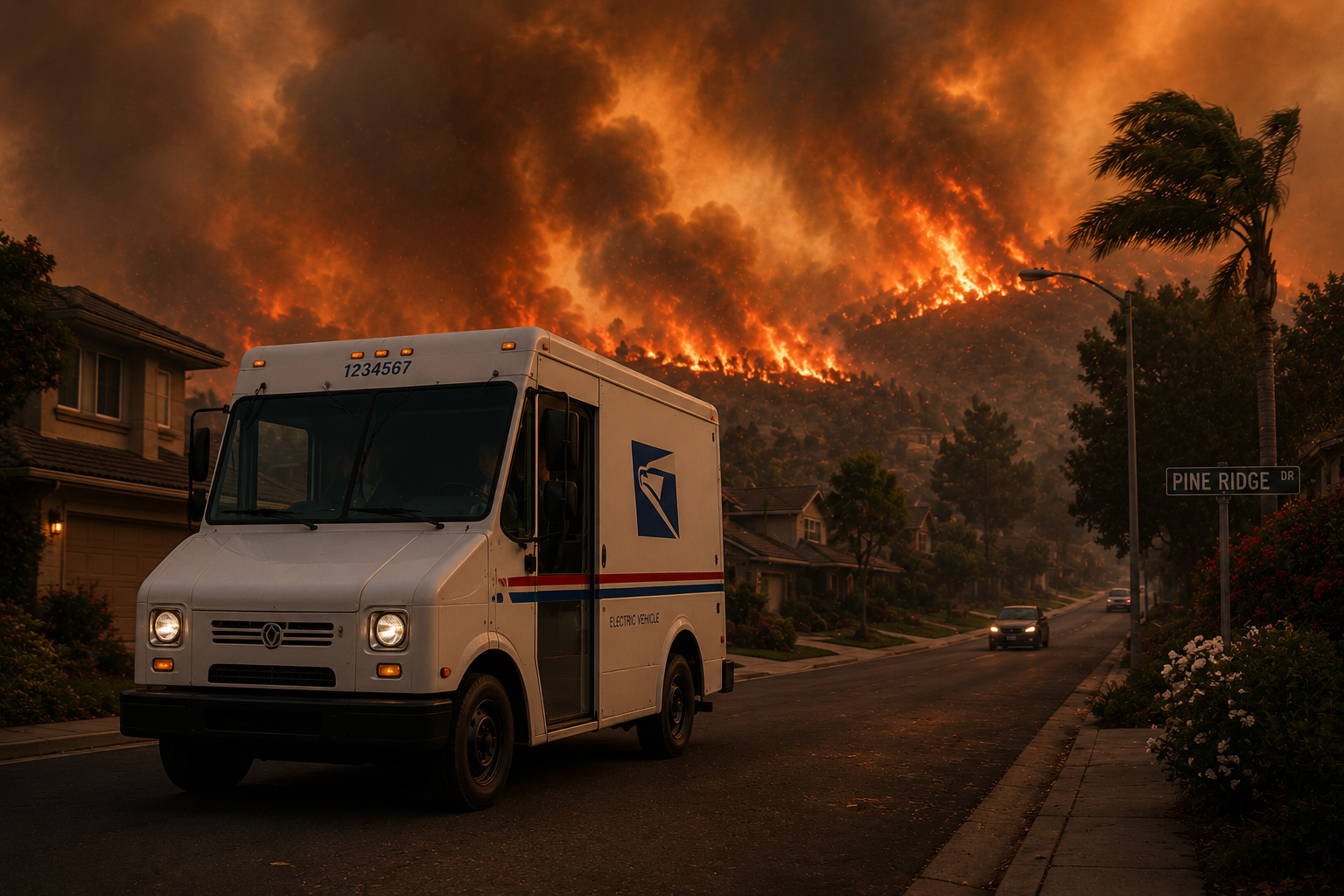
Every link in the water chain matters. If one link fails, the system fails. The SolarFireTruck idea works only as pre-planned readiness, not last-second improvisation.
The water source must be accessible, usable, and not blocked by gates, debris, electrical hazards, or unsafe conditions.
A strainer, screen, or floating intake helps reduce leaves, pool toys, grit, and suction problems.
The pump must match the power source and the required flow, head pressure, hose run, and runtime.
Water can be aimed at planned zones such as eaves, fences, vegetation edges, decks, or other exposure points.
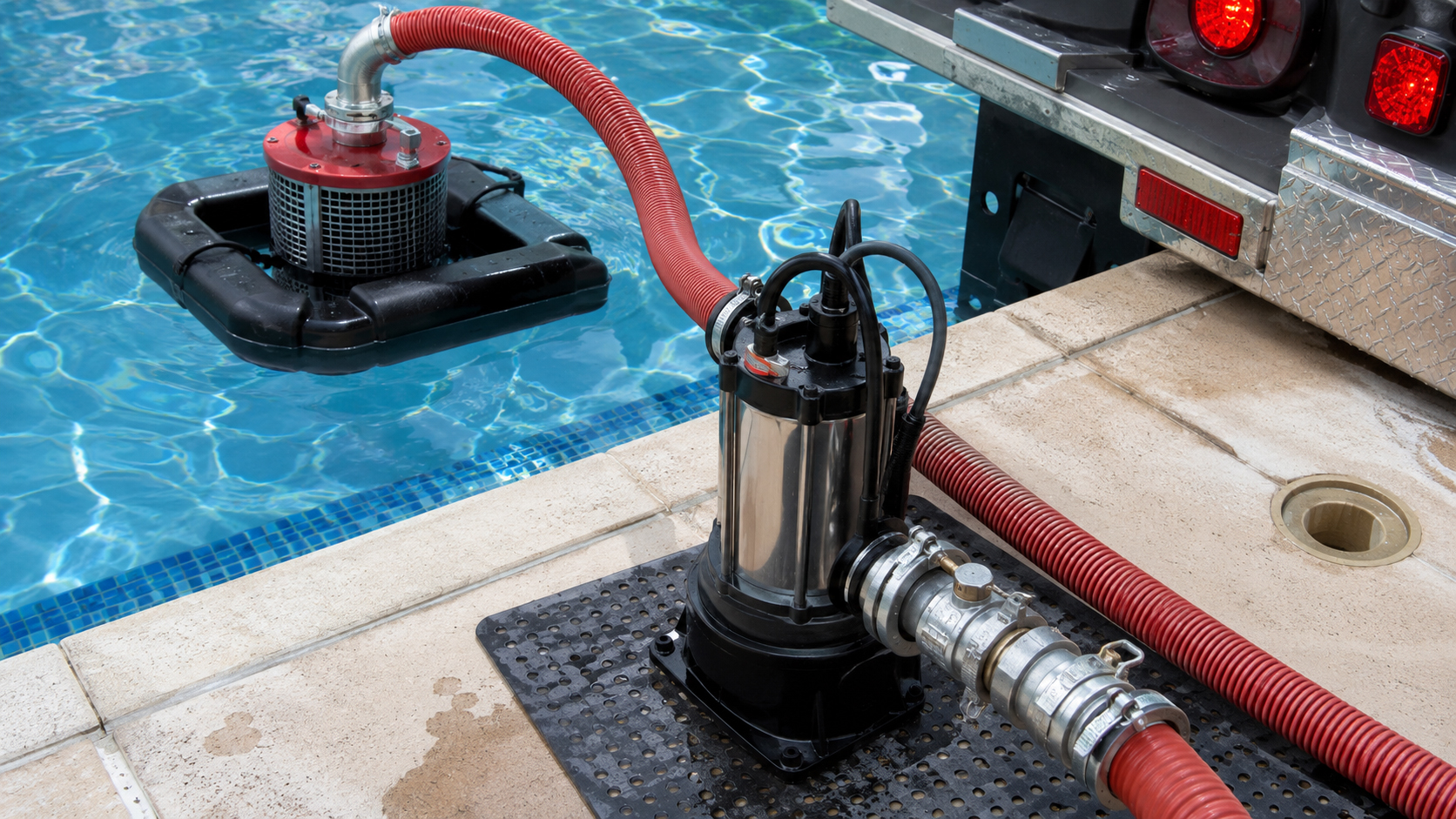
The pump cannot be chosen by hope. It must be selected around real wattage, startup surge, available voltage, flow rate, lift, pressure loss, hose diameter, and distance to the target.
Motors can require more power at startup than during steady running. A pump that seems small on paper may still exceed the safe V2L output during startup.
Long hose runs, small hose diameter, elevation change, fittings, and nozzles all reduce flow. The farther the water travels, the more the pump must overcome.
EV battery charge, pump draw, heat, duty cycle, and emergency priorities determine how long the system can operate usefully.
A good route avoids driveways needed by firefighters, evacuation paths, stairs, sharp edges, trip hazards, hot surfaces, and places where water discharge could create electrical danger.
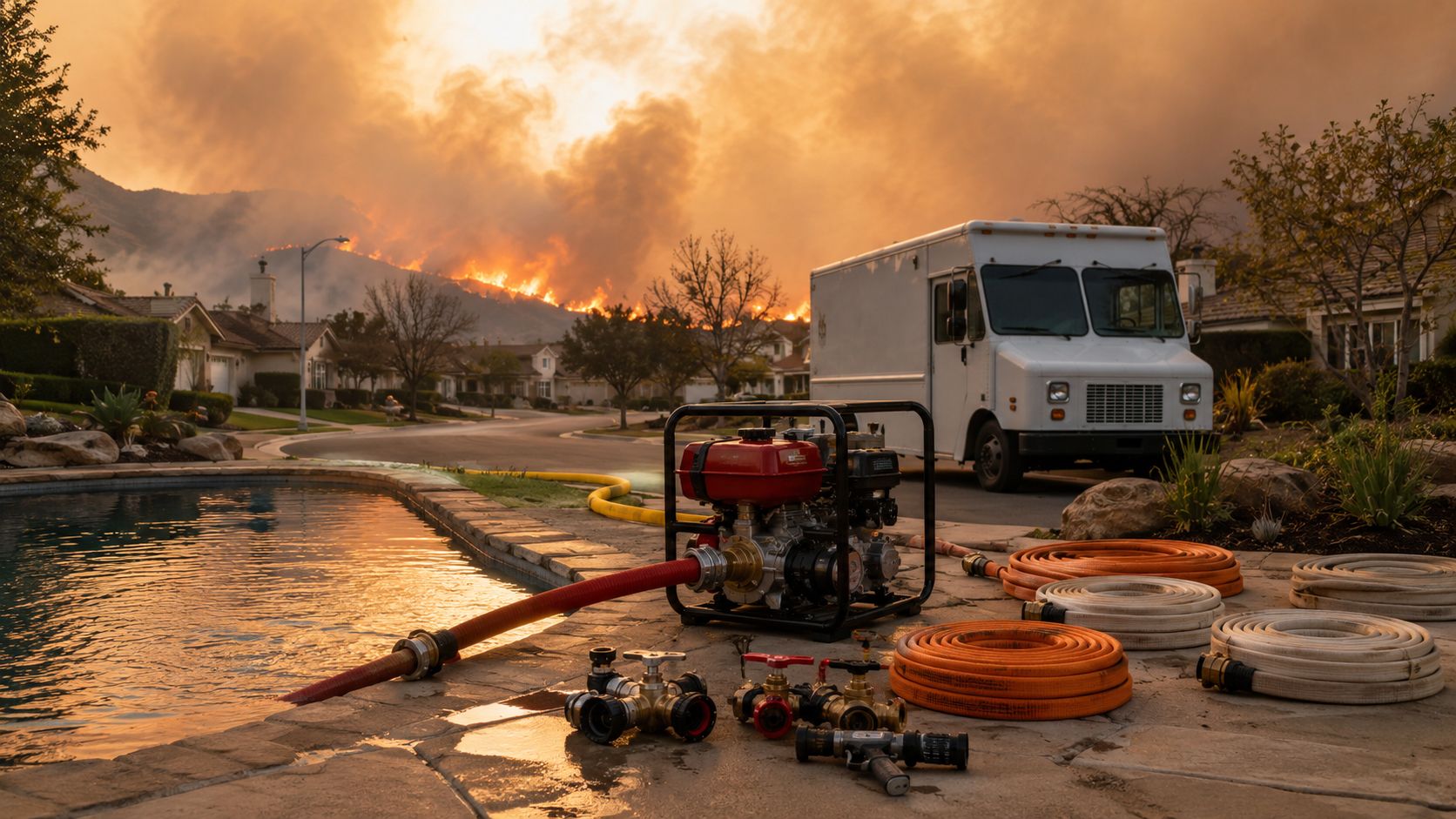
Equipment should be staged so people do not have to invent the route under stress.
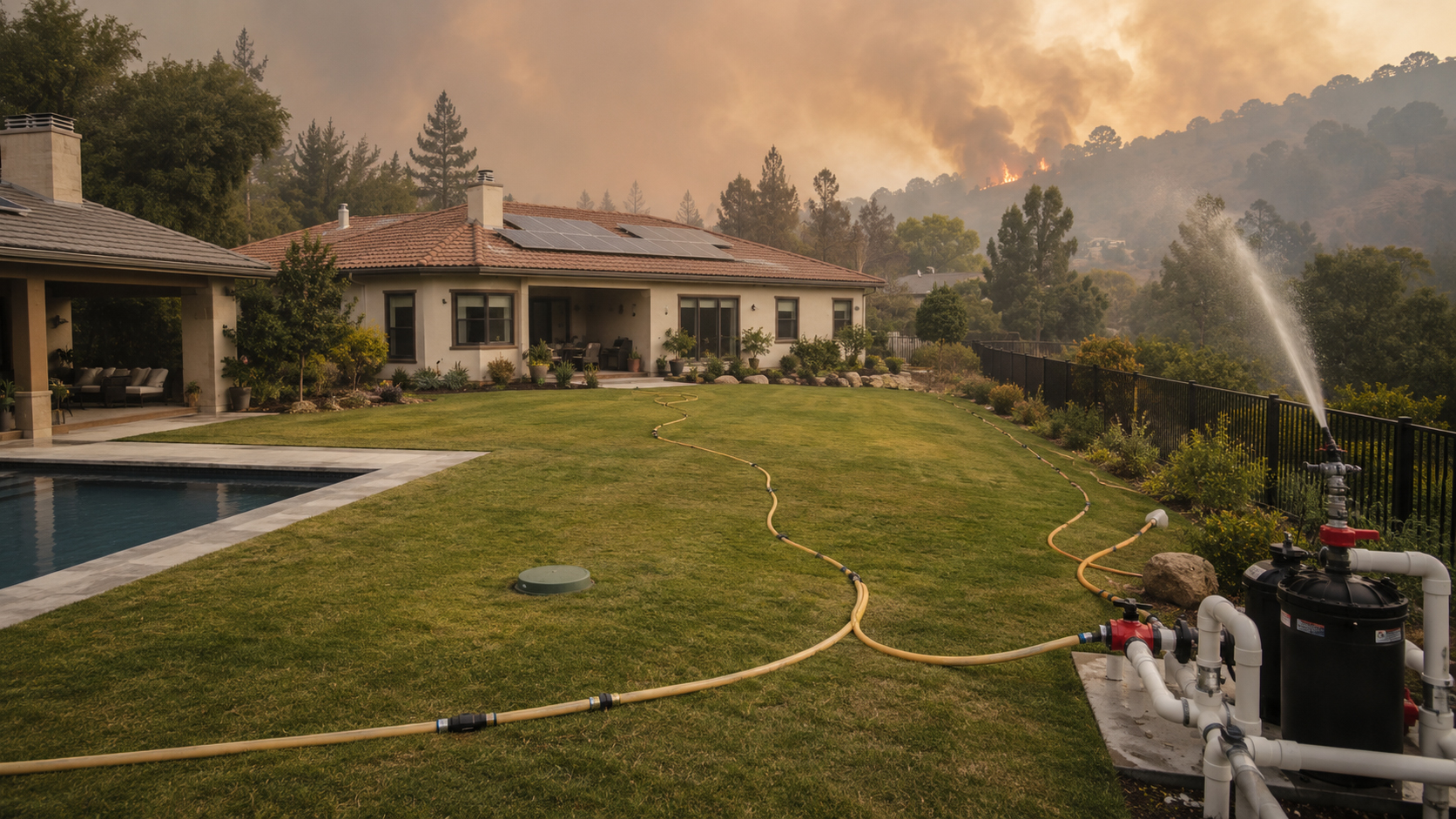
Hoses should be routed with clear walking paths and safe equipment zones.
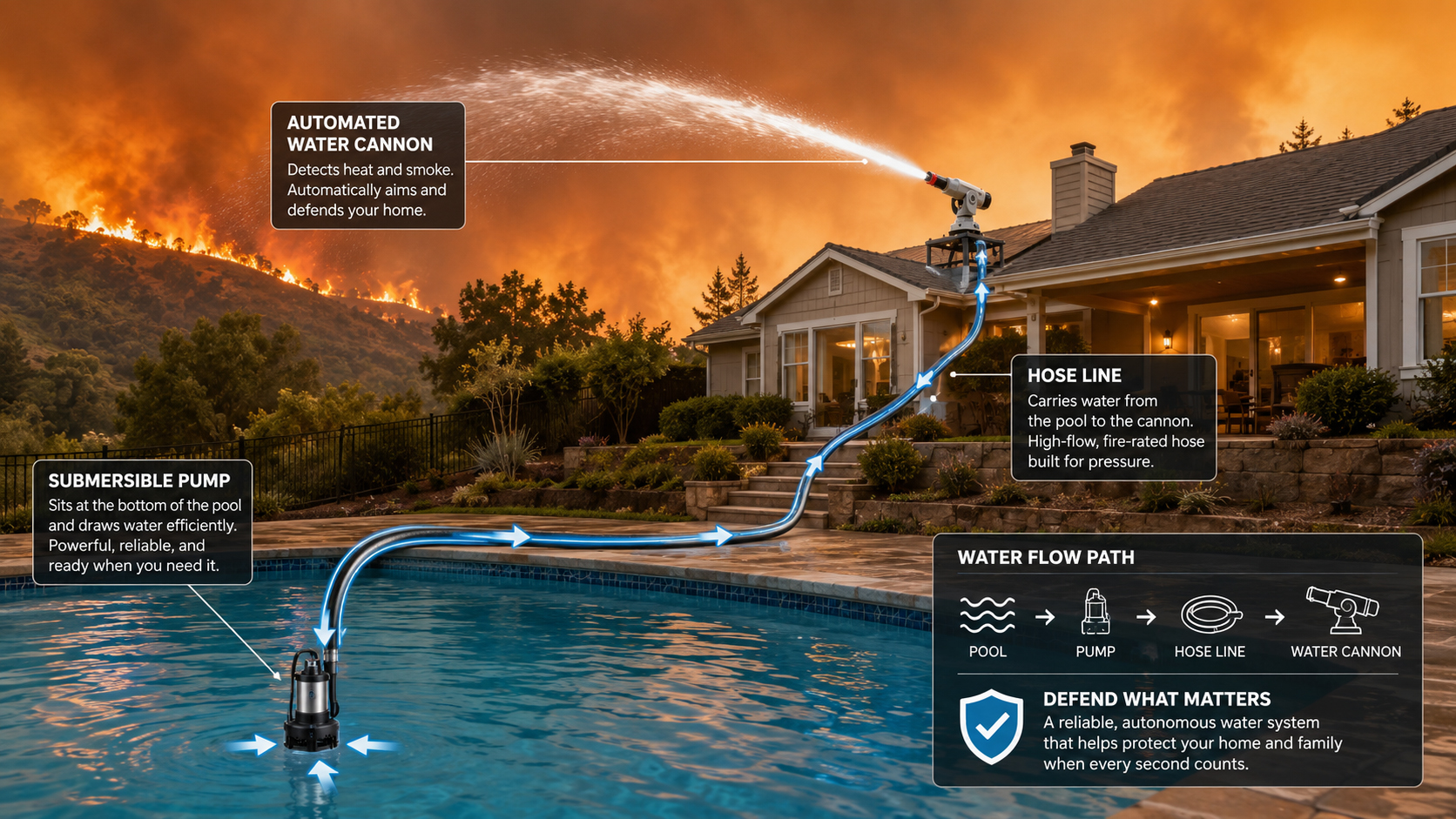
The defensive nozzle or cannon should be positioned based on real flow, pressure, and target zones.
SolarFireTruck.com becomes more interesting when the block is mapped: which homes have pools, which pools are accessible, where EVs can stage, where hoses can run, and where water would actually help.
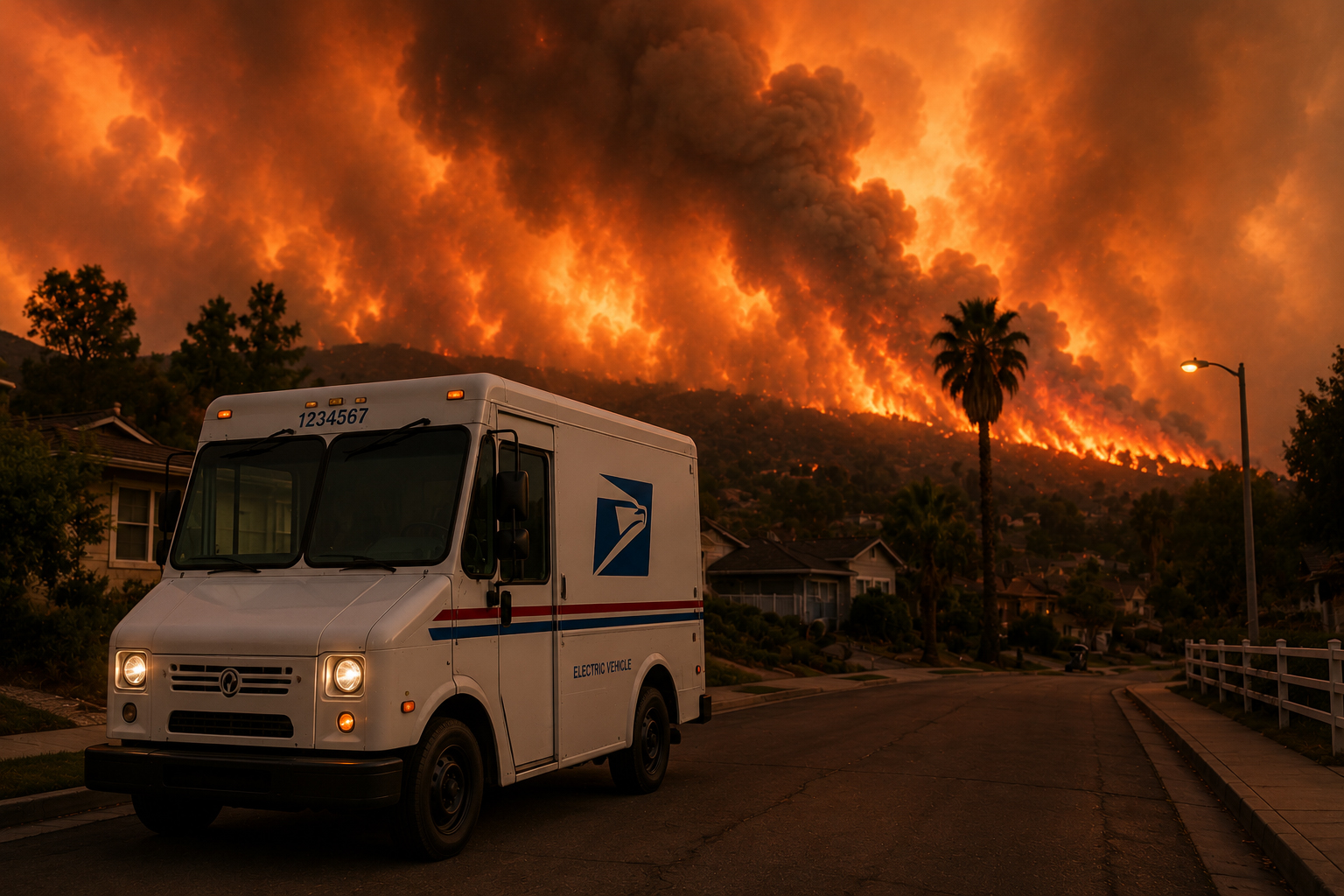
EV outlets, extension cords, wet ground, pools, spray, panic, and smoke are not a casual DIY environment. A safe design requires electrical isolation, protection devices, dry routing, emergency shutoff, and trained operators.
Do not improvise: Do not run ordinary cords through wet areas, place energized equipment at the pool edge, bypass protection, overload V2L outlets, or operate any system that has not been professionally reviewed.
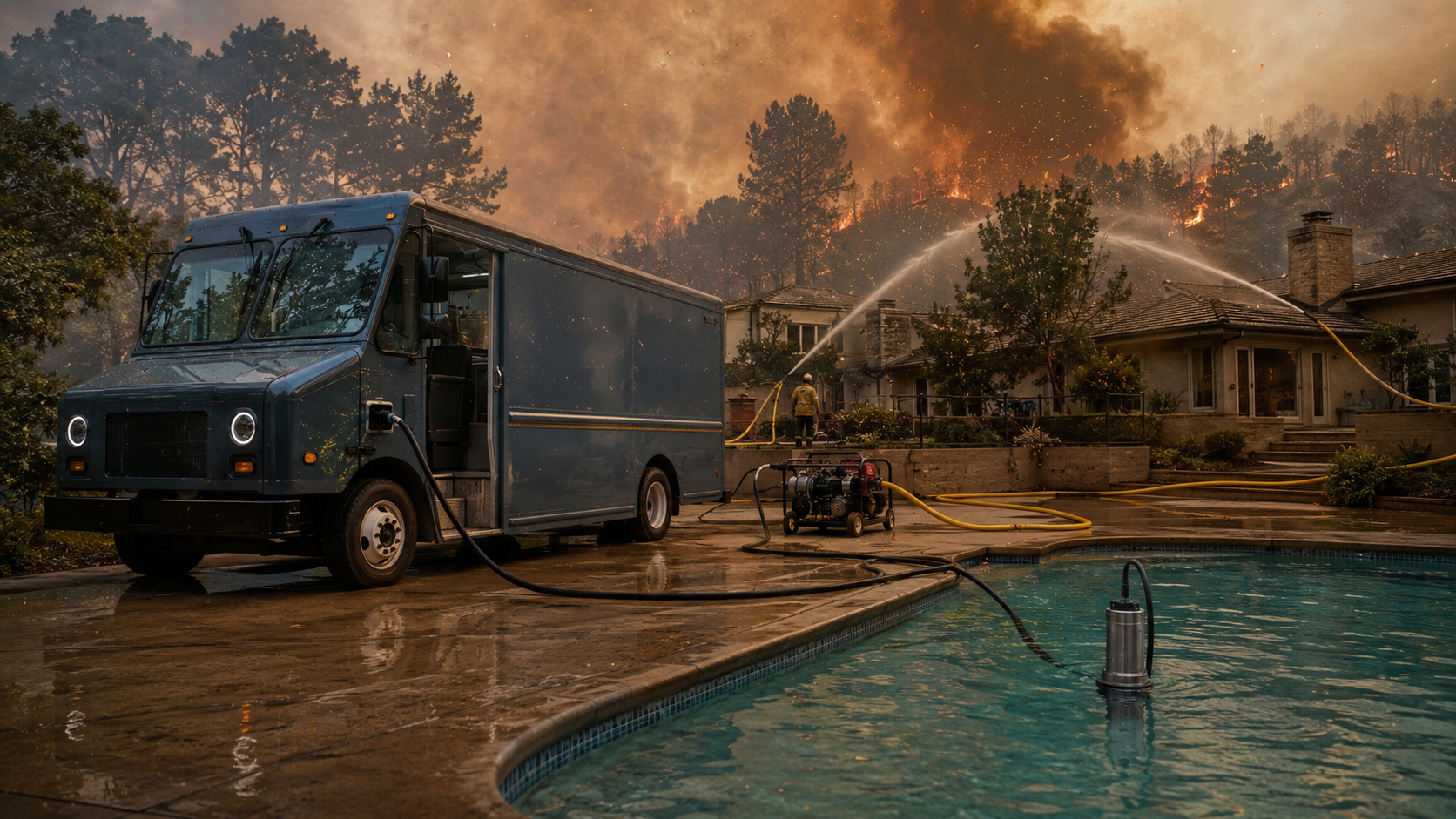
Pool-water pumping is most realistic as a readiness and support concept: wet selected zones, support a defensive water cannon, keep a hose line available, improve visibility with lights, and leave immediately when emergency instructions require evacuation.
The pool-water concept can help people understand stored local resources. It must not create false confidence, delay evacuation, or confuse anyone about the role of professional firefighters.
Once water can be pumped, the next question is where it goes. The automatic water cannon with camera page explains defensive spray points, monitoring, and safety boundaries.