🧺
Intake
The intake should reduce debris, avoid suction blockage, and remain stable in the pool.
A backyard pool may hold thousands of gallons of water, but that water does nothing until a pump, intake, hose, and nozzle move it safely to the right place.
The pump has to lift water, push it through hose, overcome fittings and elevation, and still deliver useful flow at the defensive spray point. In the SolarFireTruck concept, it also has to match the available power source, such as EV Vehicle-to-Load output.

A good setup is a chain of boring, reliable parts. Emergency equipment should be predictable, easy to inspect, and easy to shut down.
The intake should reduce debris, avoid suction blockage, and remain stable in the pool.
The pump must fit the power source and deliver enough flow after hose and elevation losses.
Hose size, length, fittings, bends, and routing can make or break the system.
The operator needs fast water shutoff and fast power shutoff if conditions change.
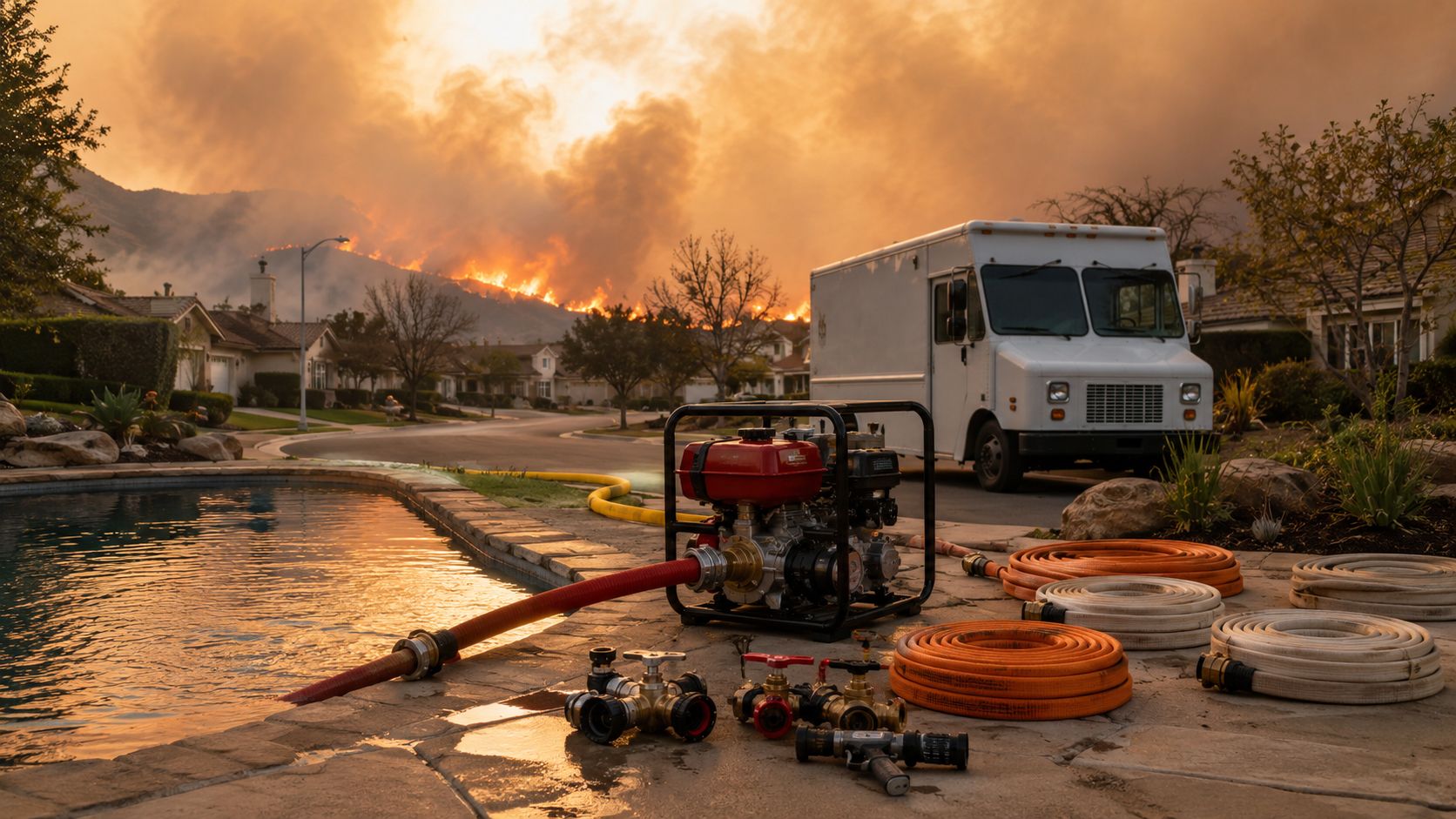
A hose laid across the wrong path can trip people, block responders, kink under a tire, rub against sharp edges, or create a wet electrical hazard. Route planning matters as much as pump selection.
Fire engines, firefighters, hydrants, gates, driveways, and evacuation paths must remain open. A private support hose must not become an obstacle.
Bends, driveway edges, gates, steps, and tires can crush flow. A simple hose path often works better than a dramatic one.
The hose should not cross electrical cords, EV outlets, battery equipment, or control gear unless a professional design protects the crossing.
Leaves, ash, toys, grit, covers, broken branches, and panic can all interfere with pumping. The intake should be designed to keep water moving.
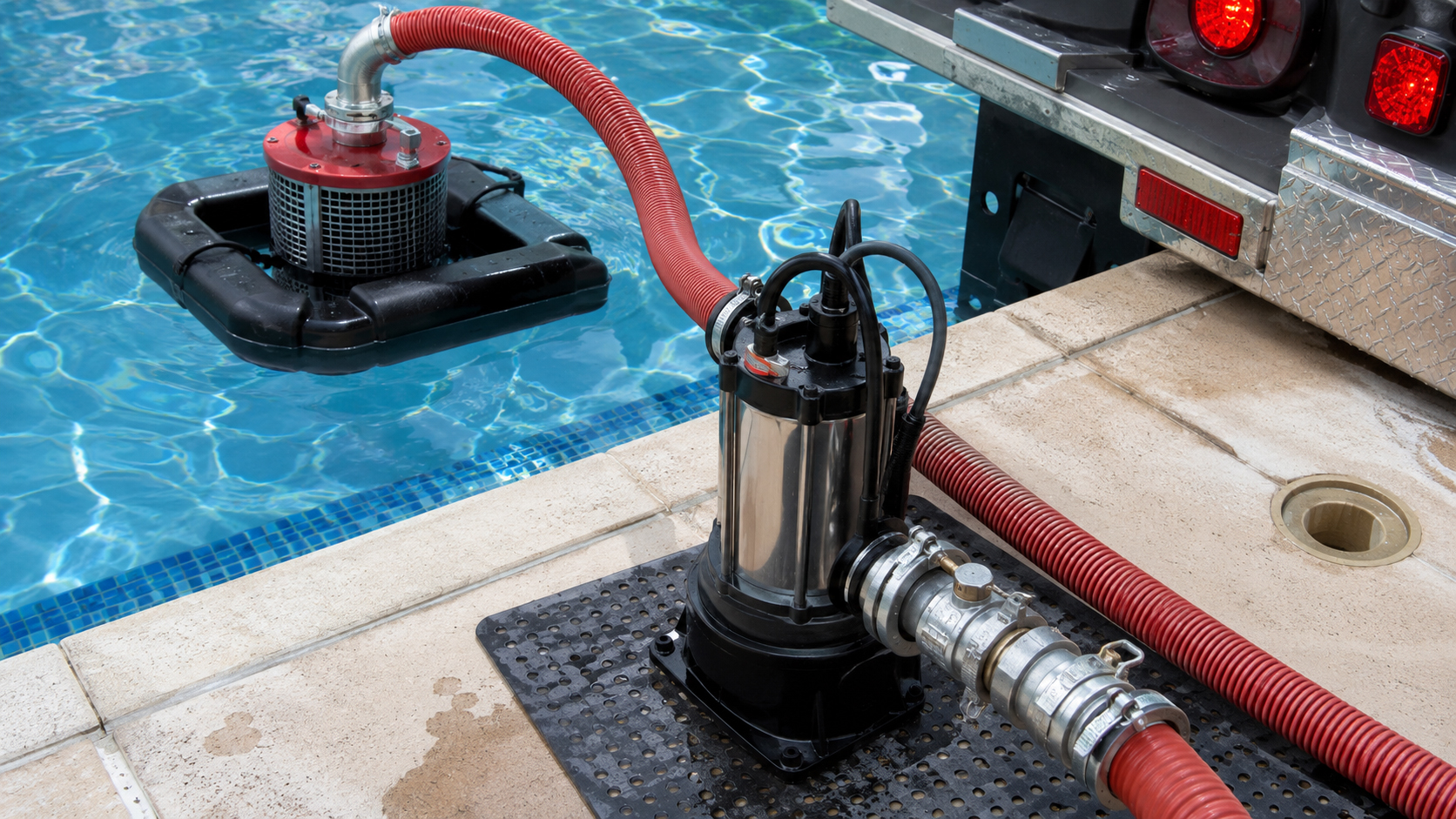
A floating intake can help draw cleaner water from below the surface while avoiding bottom debris.
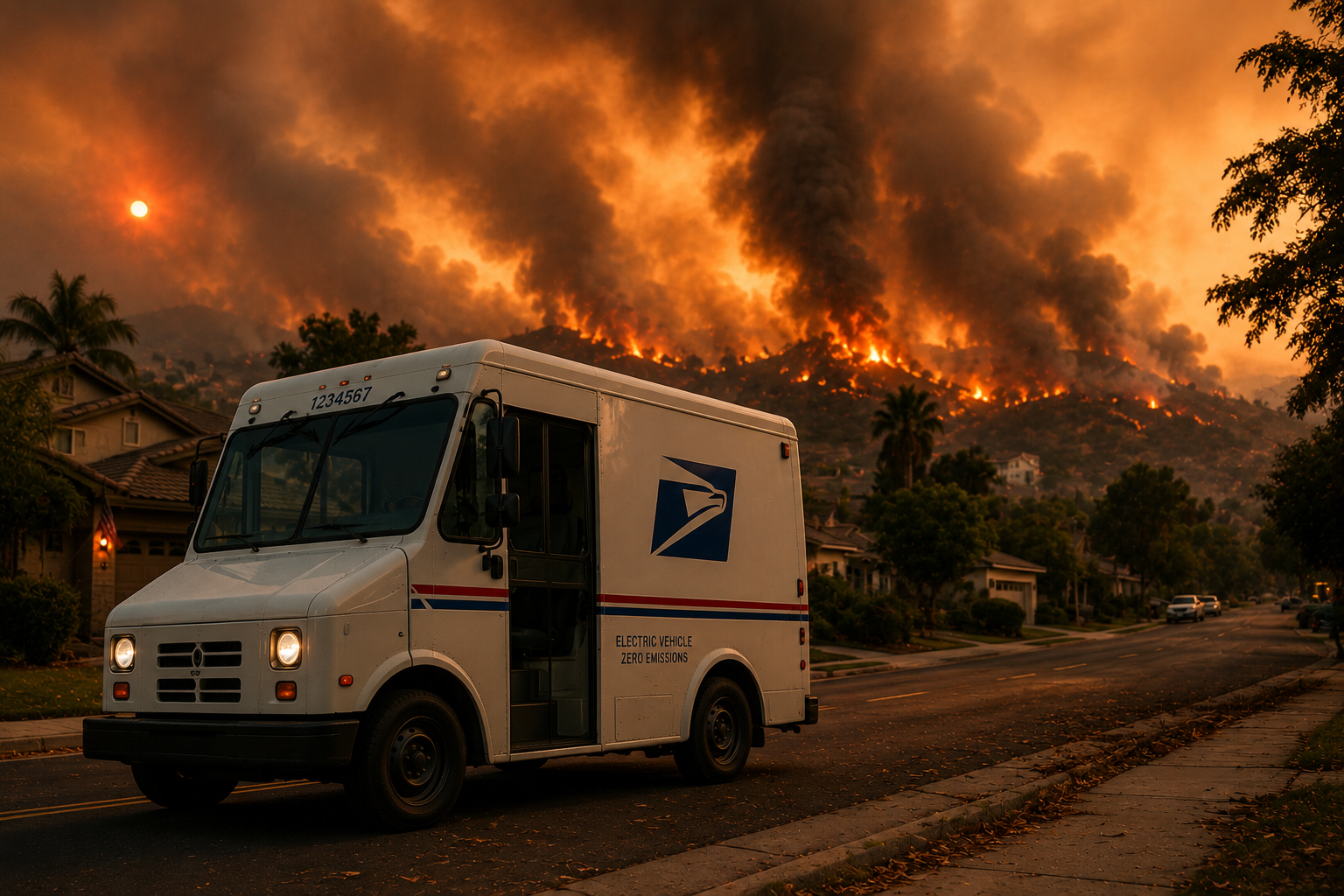
The water source must be accessible, stable, and usable before the hose is pressurized.
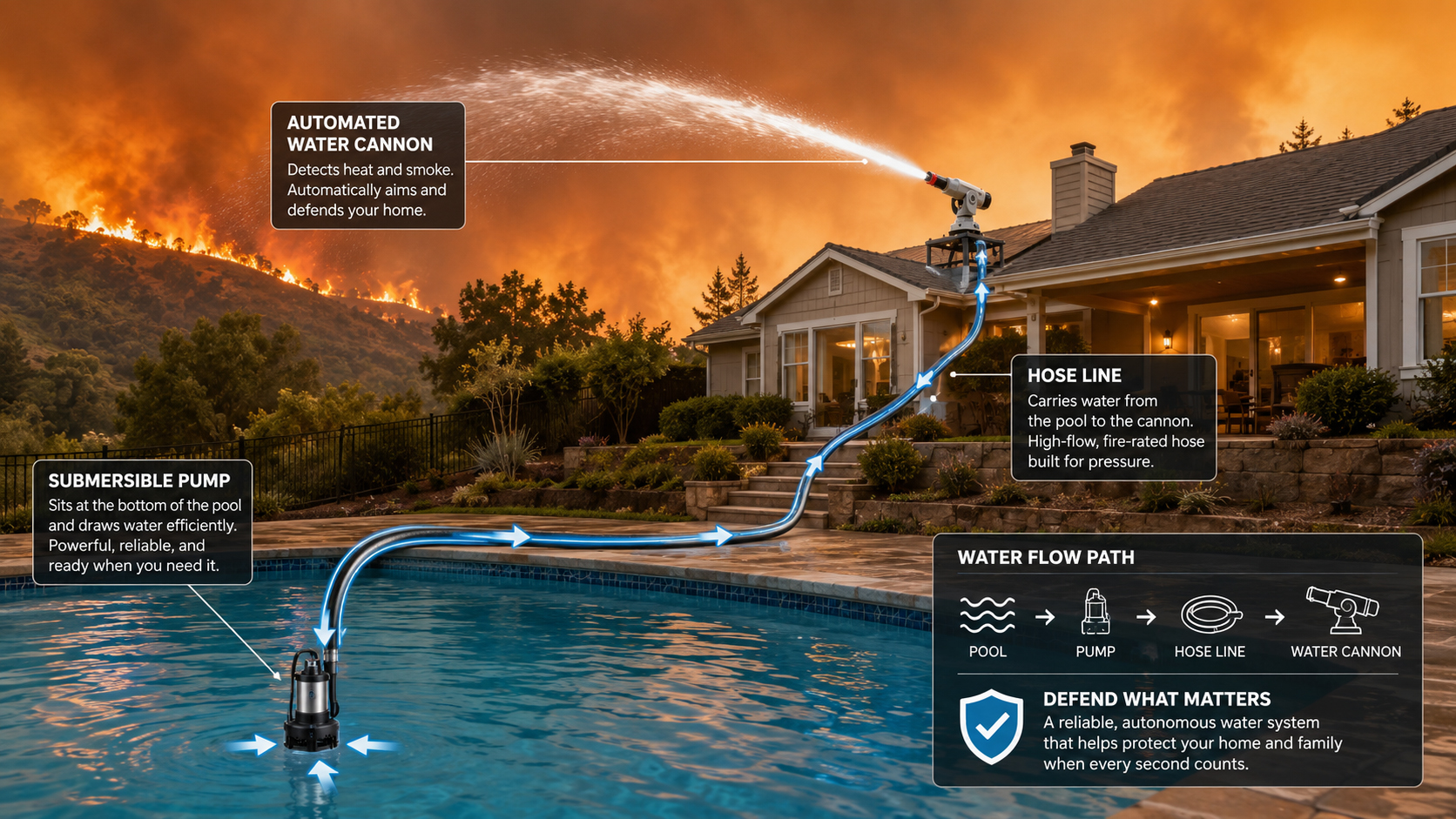
The intake and pump must support the actual downstream nozzle or cannon requirements.
A pool may have plenty of water, but a weak pump, long hose, small diameter, clogged intake, or high spray target can reduce the result to a trickle. The setup must be tested and verified under realistic conditions.
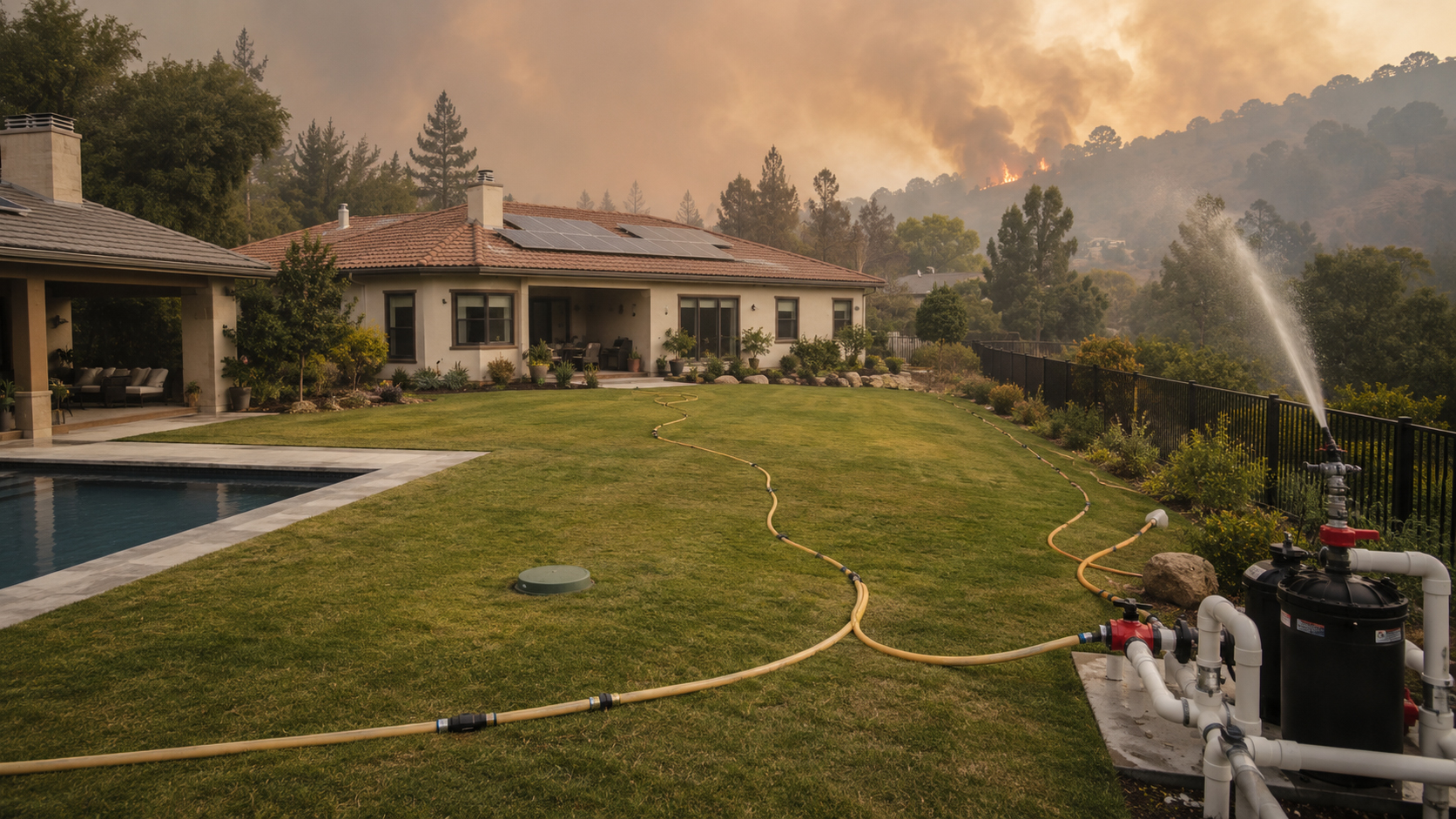
A bad setup can create electrocution risk, trip hazards, blocked access, hose whip, pump overload, false confidence, and responder interference. The system must be designed to fail safely.
Do not improvise around water and electricity: Use qualified professionals for electrical protection, pump sizing, cable routing, emergency shutoff, and safe deployment procedures.
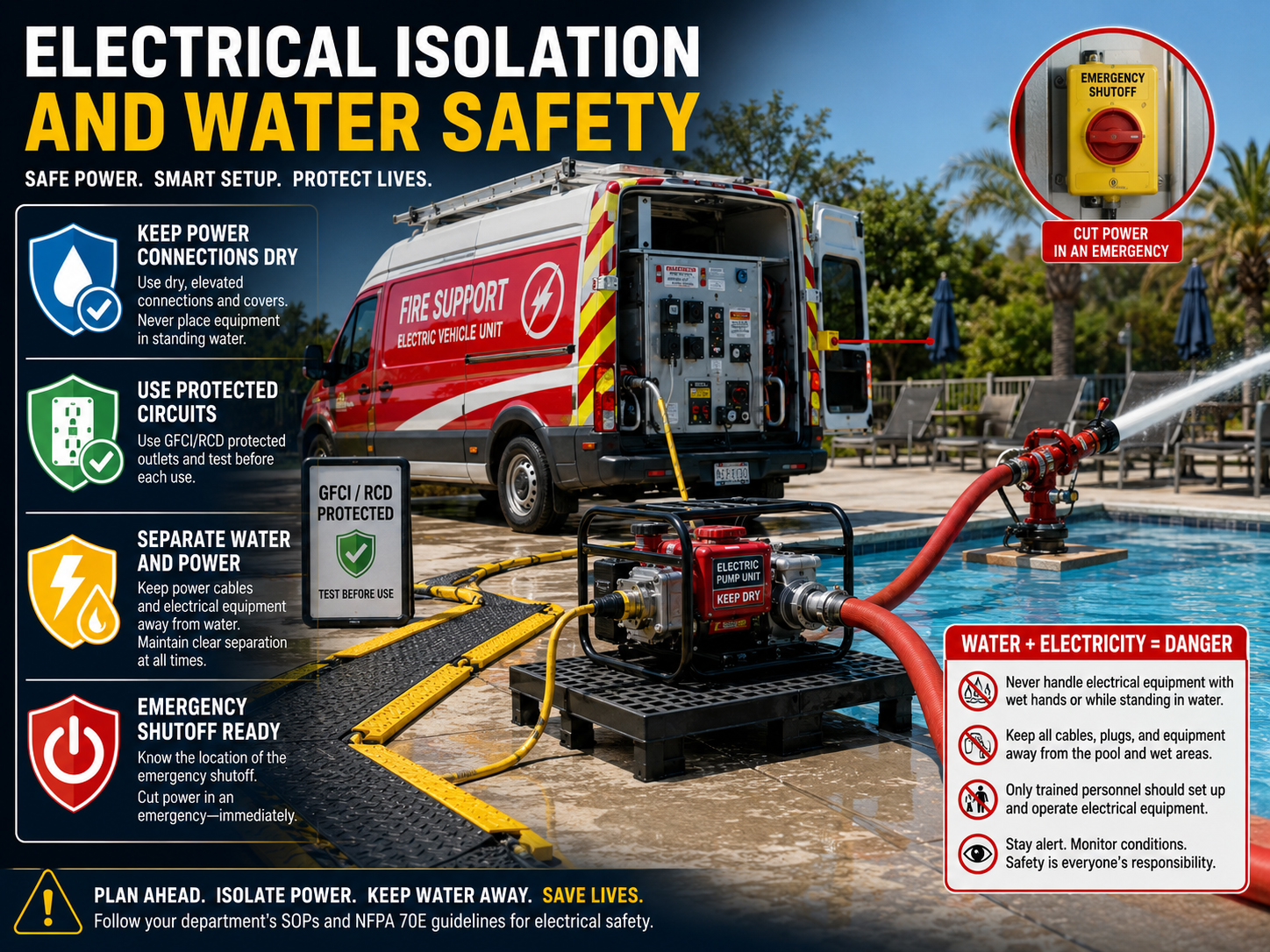
The equipment should have labels, ratings, setup diagrams, a checklist, and clear stop rules. If people cannot understand the system quickly, it is not ready for emergency use.
One pump and one pool can help one property. A neighborhood map of pools, EVs, hoses, and safe staging points turns scattered resources into a readiness plan.