🚚
EV fleet layer
Electric postal trucks, work vans, municipal vehicles, and homeowner EVs may provide mobile power if they have the proper output.
SolarFireTruck.com turns scattered neighborhood assets — EVs, pools, pumps, hoses, cameras, solar batteries, and safe staging locations — into a practical readiness model that people can understand before smoke is in the air.
A single home may have an EV and a pool. A neighborhood may have dozens. The SolarFireTruck concept asks what happens when local resources are mapped, staged, labeled, and understood as emergency support assets — without confusing them with professional firefighting systems.
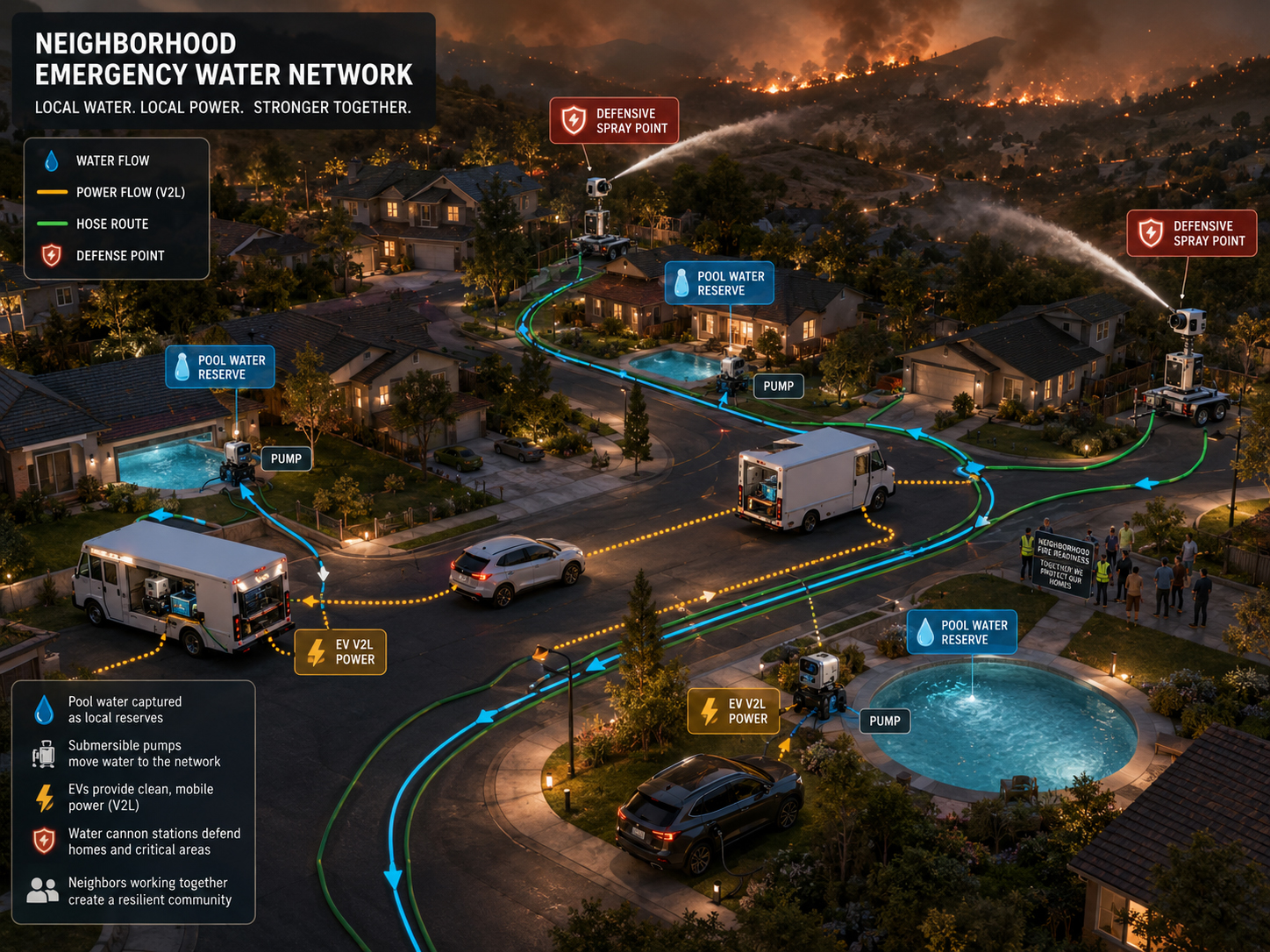
The neighborhood readiness model starts by recognizing what is already there: parked EVs, swimming pools, solar panels, home batteries, water tanks, long driveways, defensible spaces, and people who know the street.
Electric postal trucks, work vans, municipal vehicles, and homeowner EVs may provide mobile power if they have the proper output.
Pools can be mapped as local water reserves, subject to access, safety, pump design, and property permission.
Home batteries, solar batteries, and charged EVs can support lights, pumps, cameras, controls, and communications.
Firefighter access, evacuation rules, electrical safety, and code boundaries control everything.
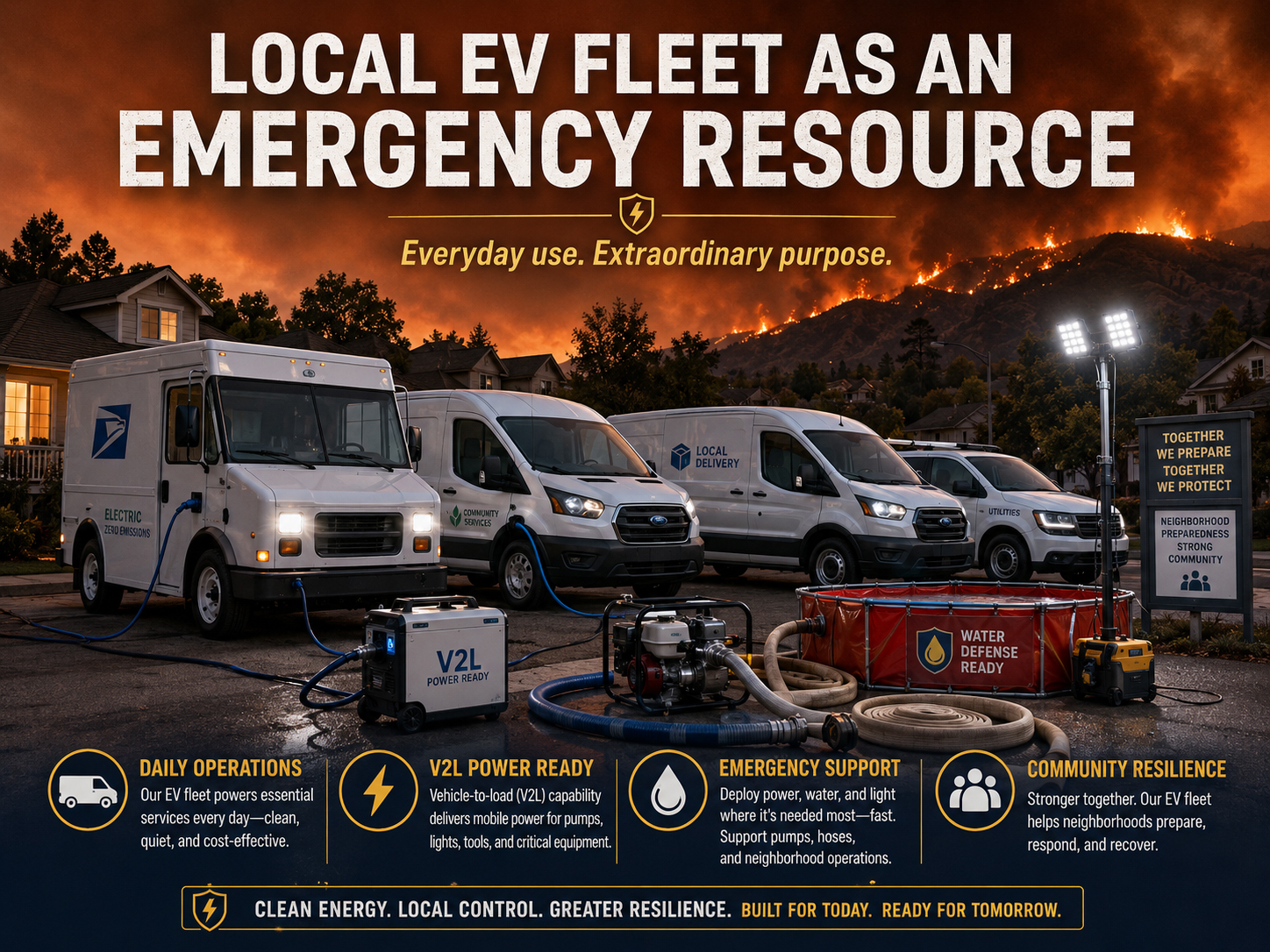
A readiness plan should identify where EVs can safely park, what they can power, how long they can operate, and when they must leave. The vehicle must never block fire engines, hydrants, gates, driveways, or evacuation movement.
During red-flag weather, EVs and home batteries should be treated as readiness assets. A low battery is a missed opportunity.
Not every EV can power external loads. V2L rating, voltage, wattage, outlet type, duty cycle, and manufacturer instructions matter.
If the EV becomes an obstacle, it changes from a resource into a hazard. Staging rules must be written before deployment.
The map does not need to be complicated. It needs to answer the practical questions: where is the water, where is the power, where can equipment safely go, and where must nothing block emergency access?
Pools, hot tubs, water tanks, hydrants, ponds, and other potential water points, with access notes and permission status.
V2L EVs, home batteries, solar battery systems, outlets, backup circuits, and available emergency loads.
Narrow streets, steep driveways, locked gates, overhead wires, retaining walls, dead ends, hydrants, and turnarounds.
Pre-measured paths from water sources to defensive zones that avoid walkways, power cords, and emergency access lanes.
Camera views, roofline exposure, fence lines, slope-facing yards, vegetation edges, and ember-watch locations.
Places where vehicles, hoses, equipment, or people should never be placed during a fire emergency.
A pool is not a hydrant. But a neighborhood with many pools has a distributed water resource. The value comes from knowing which pools can be accessed, which pump kits fit, and where water can safely be delivered.
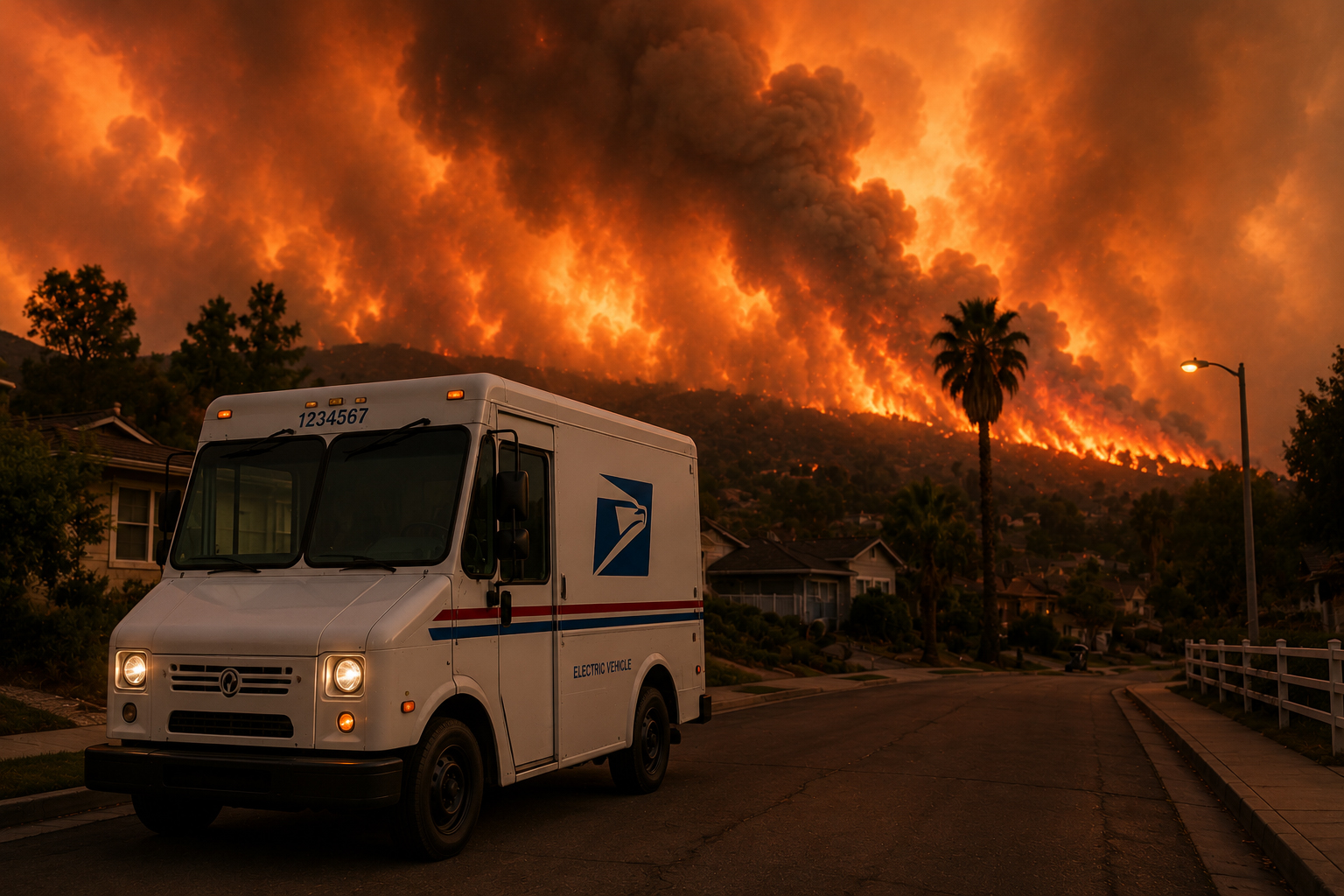
Private readiness can help only if it remains disciplined. The system must not confuse command, block access, create water or electrical hazards, delay evacuation, or pretend to be code-compliant fire protection.
Hard boundary: If evacuation is ordered, leave. If firefighters arrive, yield. If a system is unsafe, shut it down. If equipment blocks access, move it. If there is any doubt, public safety controls the decision.
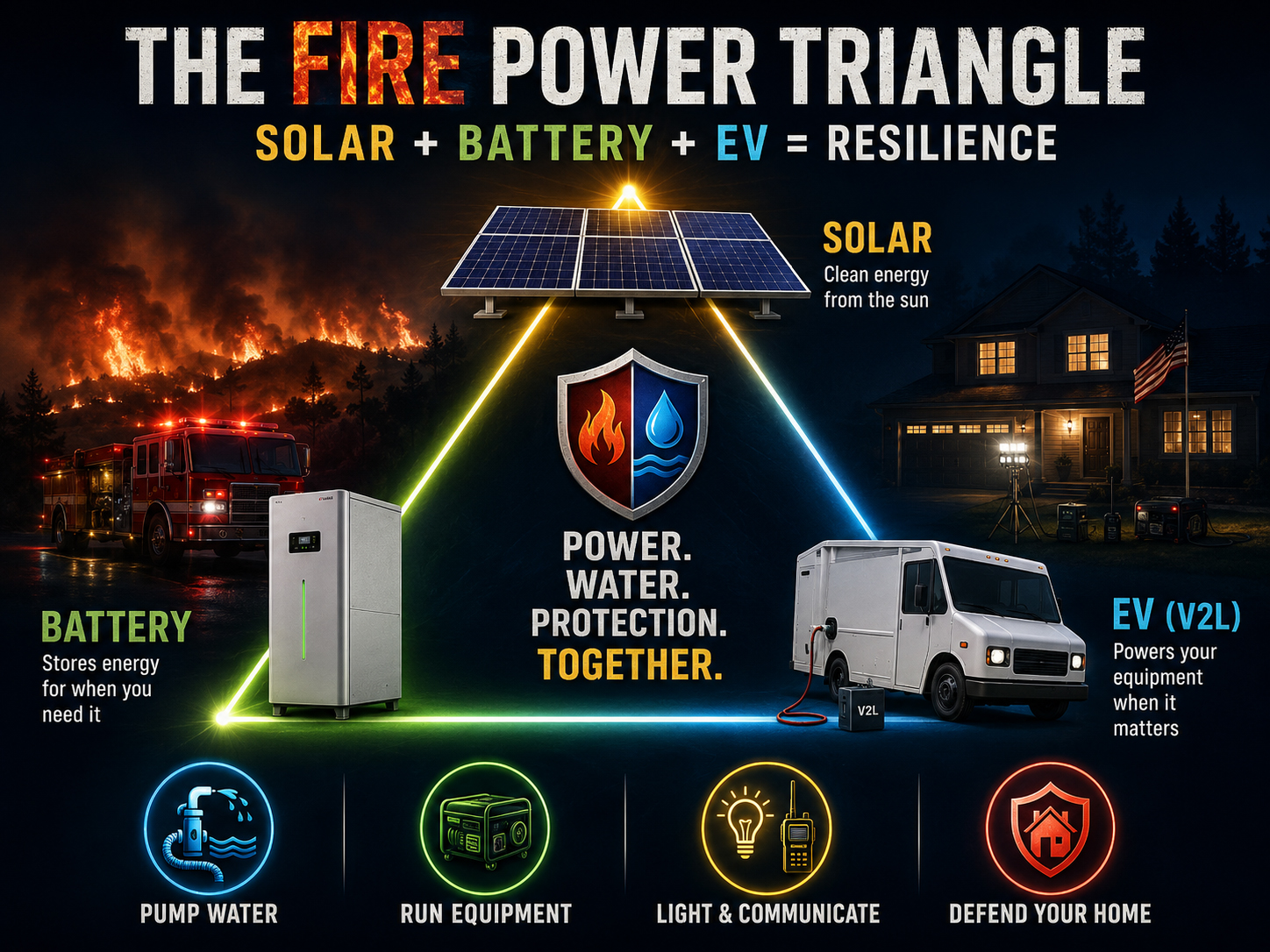
A neighborhood readiness model should not depend on one device. Solar can recharge batteries. Home batteries can support selected circuits. EVs can provide mobile V2L power. Together, they create more options for pumps, cameras, lights, and communications.
Solar production can help keep batteries and EVs charged when utility power is unstable or expensive.
Home batteries can keep selected loads online if the grid goes down, depending on system design and stored energy.
V2L EVs can bring portable power to a pump, camera, light, or support location, subject to output limits.
The purpose of planning is to remove guesswork. People should know what the equipment is, where it goes, who is responsible, and when not to use it.
EV V2L power is powerful, but it becomes more useful when paired with solar charging, home batteries, and a planned backup-power strategy.