📬
Normal day
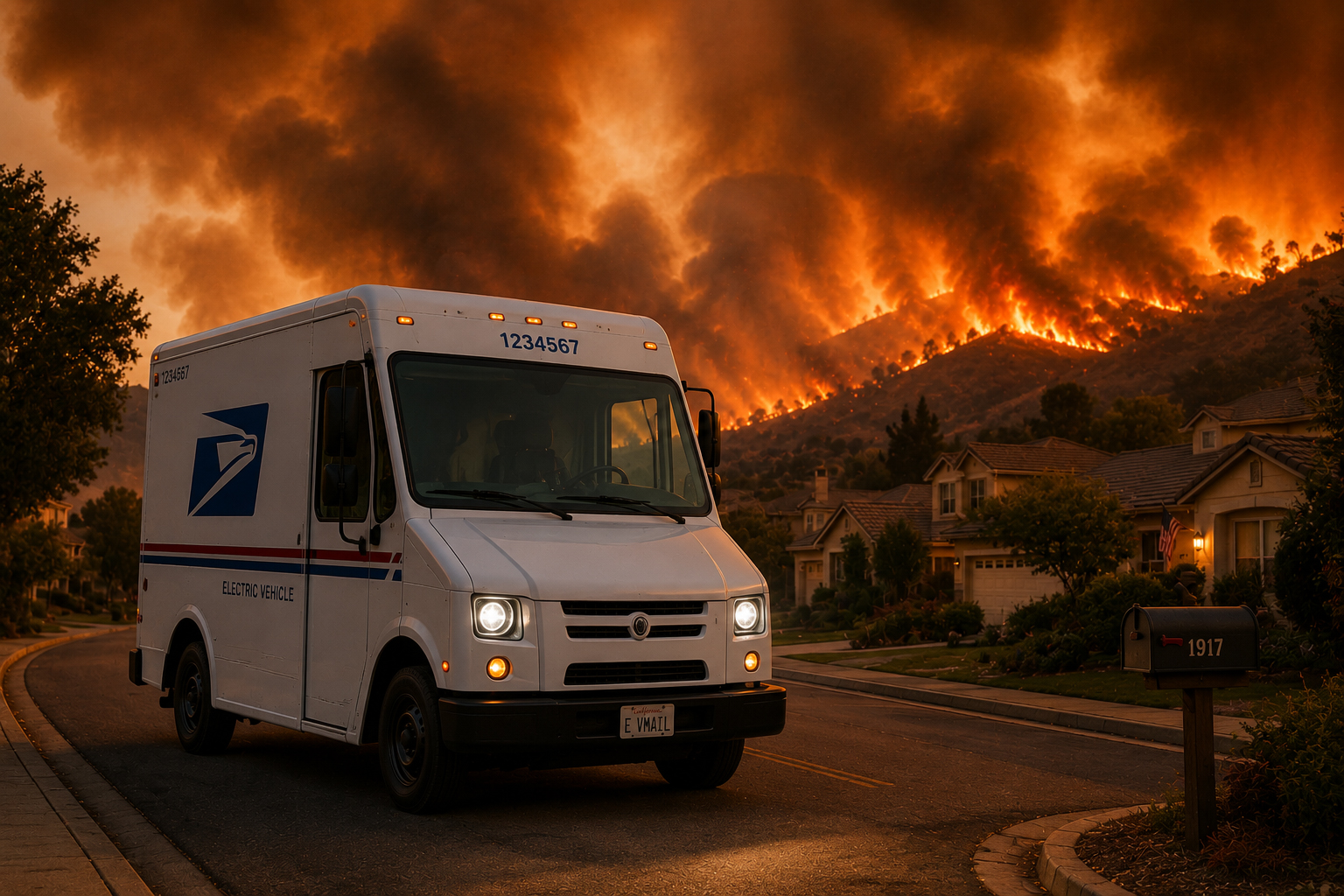
The truck delivers mail, packages, documents, medicine, and daily service across familiar streets.
The key SolarFireTruck.com example is simple: an electric postal truck is already moving through the neighborhood. With Vehicle-to-Load power, it could become a mobile support platform for pumps, cameras, lights, radios, and defensive water equipment.
Unlike a private car hidden in a garage, a postal truck is part of the street. It has a route. It knows the block. It stops near homes, sidewalks, driveways, pools, and people. Electrification gives that familiar vehicle a second identity: mobile stored power.
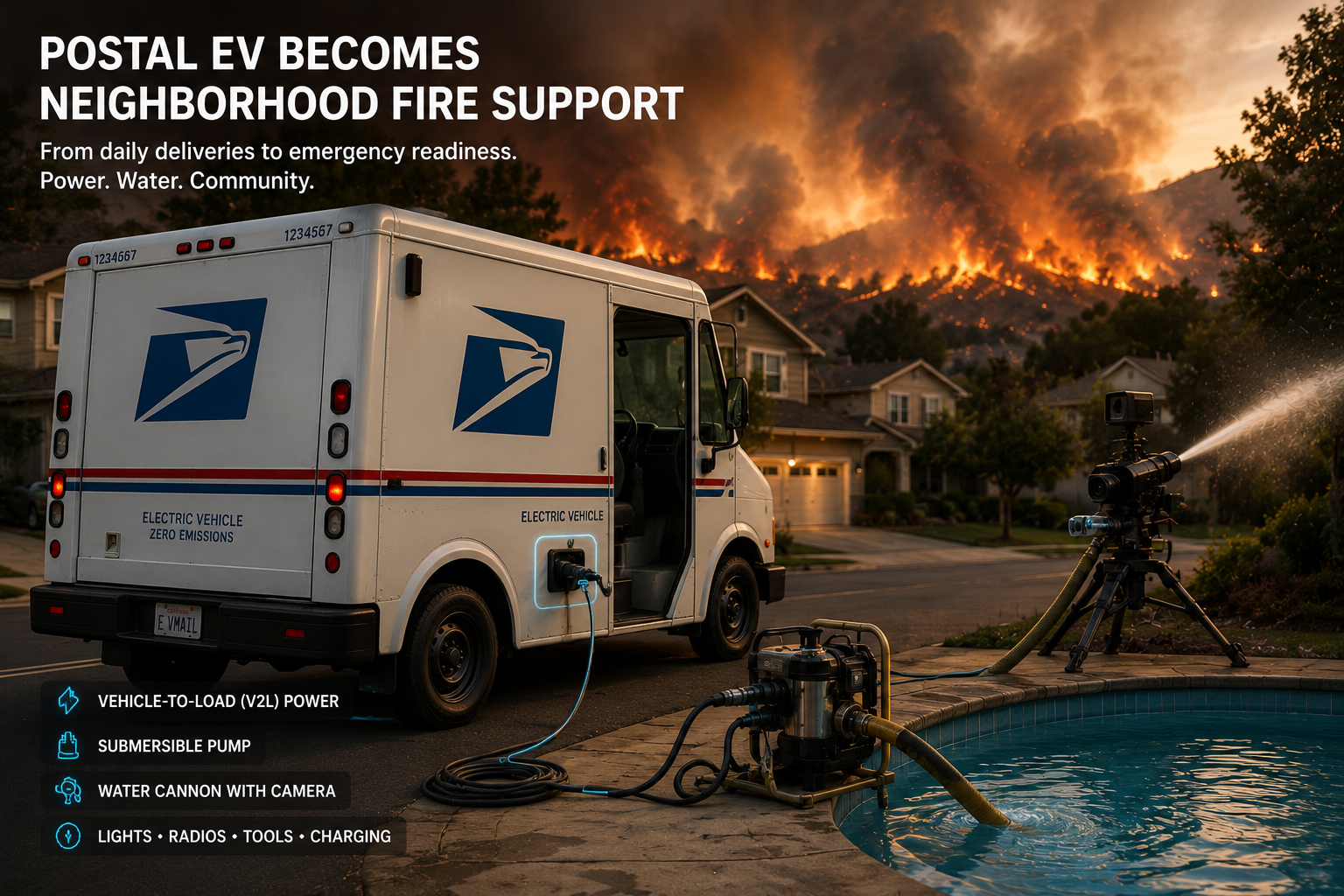
The point is not to turn postal workers into firefighters. The point is to recognize that an electrified fleet can carry stored energy and standardized equipment into the neighborhoods that may need help first.
The truck delivers mail, packages, documents, medicine, and daily service across familiar streets.
The same EV may provide V2L power for pumps, lights, cameras, radios, and basic control equipment.
If paired with a safe pump kit, nearby pool water can become a local defensive reserve.
Firefighters and emergency officials remain in charge. The EV is support infrastructure only.
A useful support truck cannot depend on improvisation. It needs a known kit, known ratings, known training, and known rules. The kit should be designed for quick assessment, not heroic guesswork.
A submersible or transfer pump selected for the vehicle’s actual power output, including startup surge and expected runtime.
Hose, screened intake, floating intake option, fittings, strainers, clamps, and quick identification tags.
Portable lights, camera monitoring, extension placement tools, and equipment markers for night or smoke conditions.
Written operating limits, emergency stop, firefighter access rules, electrical isolation instructions, and “do not deploy” conditions.
Postal routes already organize the city into repeatable paths. In wildfire zones, those same paths could be studied for pools, hydrants, narrow streets, gates, slopes, turnarounds, evacuation routes, and safe EV staging positions.
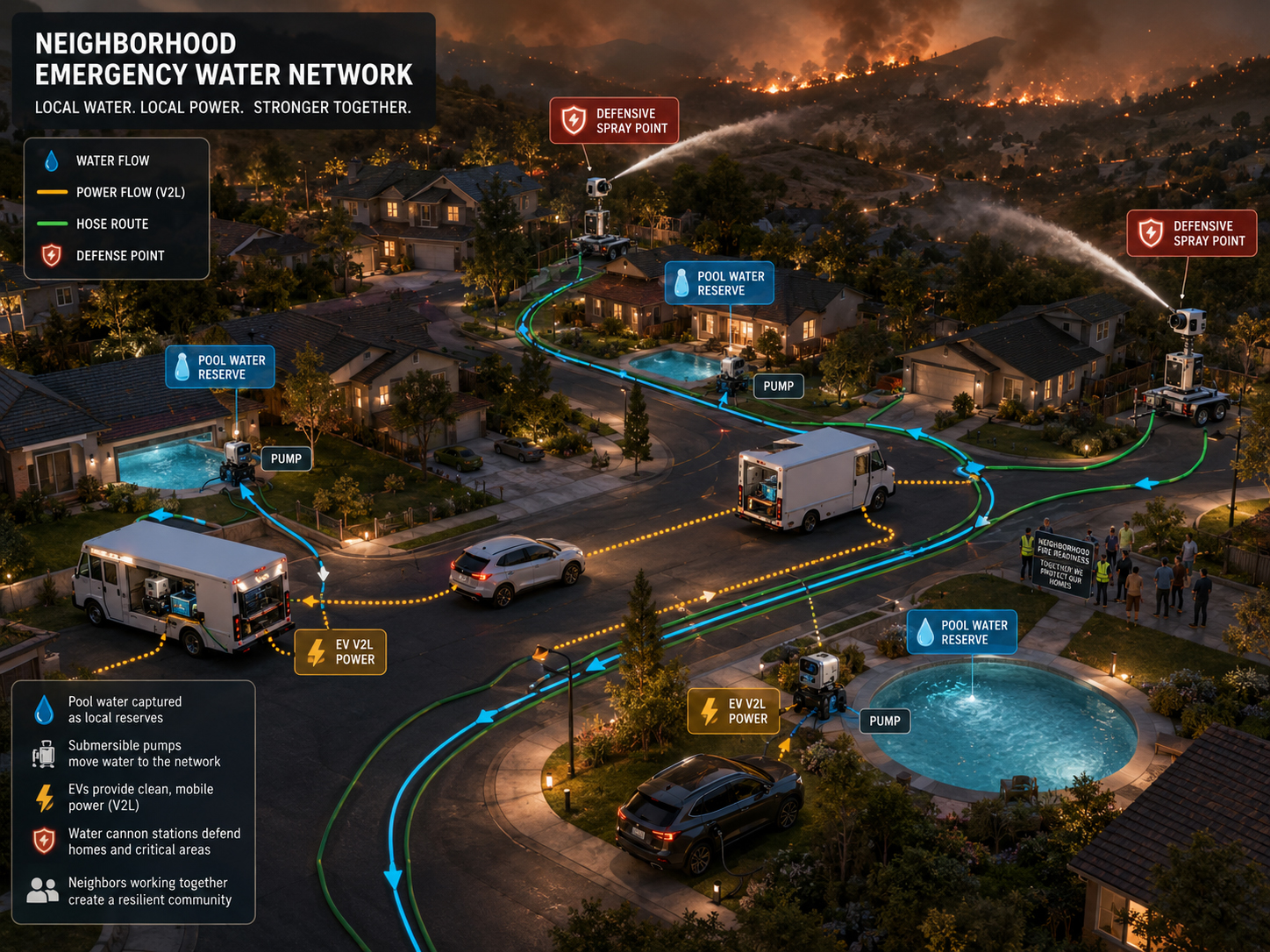
Pools, tanks, hydrants, and access constraints can be mapped before a crisis.
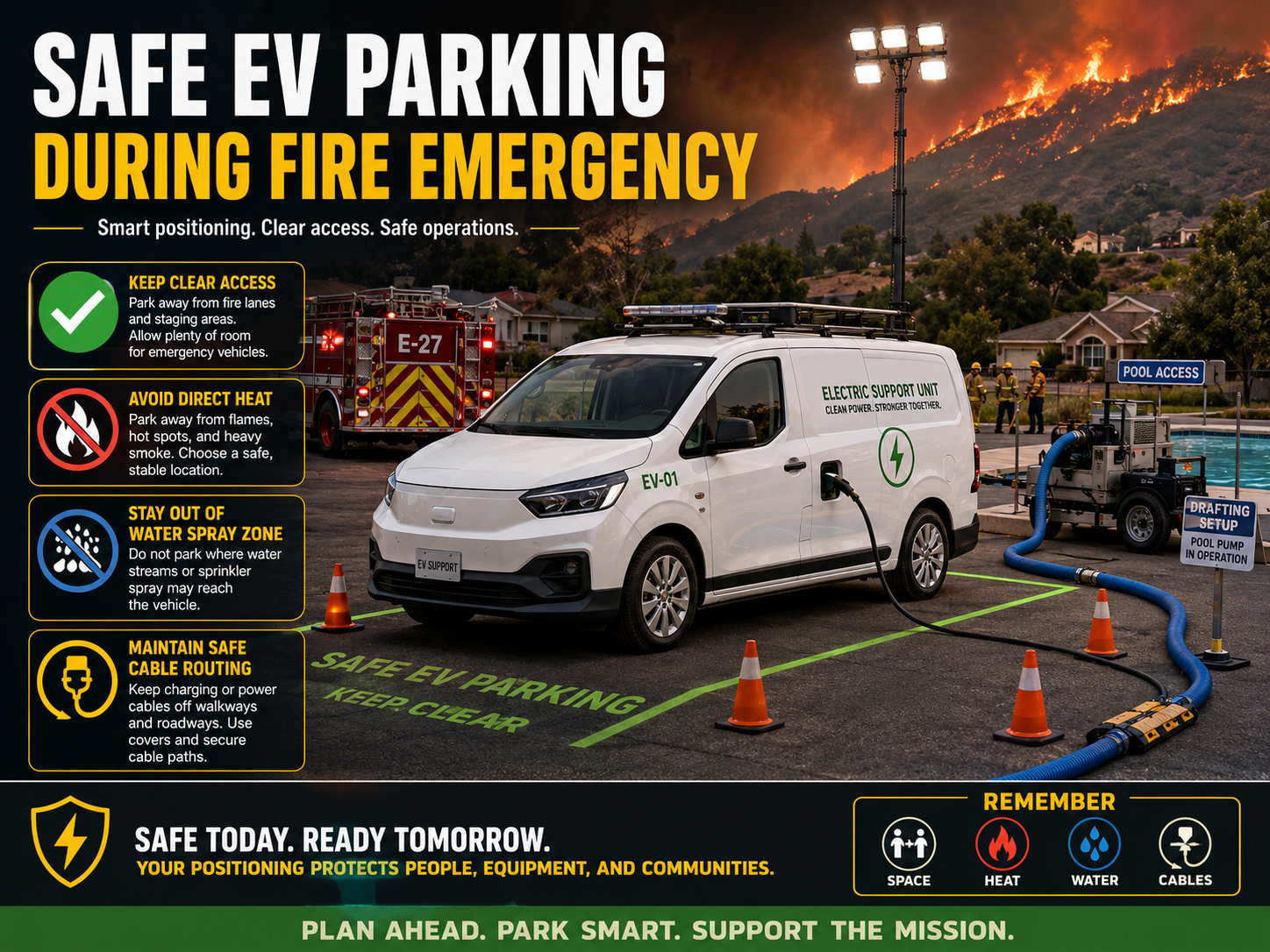
A support EV must be parked where it helps without blocking engines, escape, gates, or hoses.
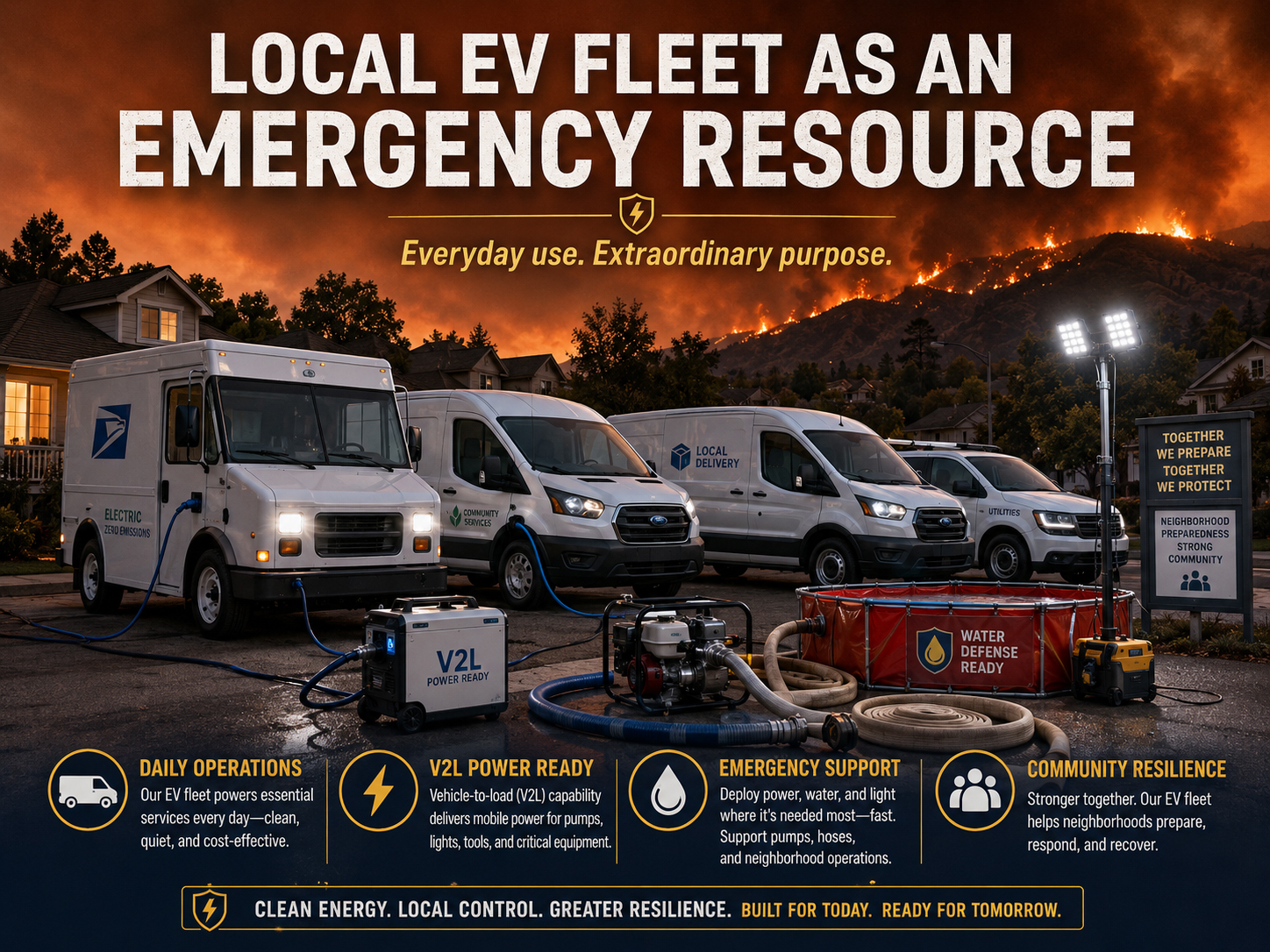
One EV is a tool. A coordinated fleet is a distributed layer of local energy.
The SolarFireTruck name is dramatic on purpose, but the boundary is serious. An electric postal truck can be imagined as a support platform. It cannot replace professional fire engines, trained firefighters, fire hydrants, evacuation orders, permits, or code-compliant fire protection systems.
Safety boundary: A postal EV support concept must never encourage civilians to stay in a fire zone, interfere with emergency responders, improvise unsafe electrical work, or misuse pool water systems without professional review.
The strongest use case is not fighting a major wall of flame. It is supporting early readiness: power a pump, wet a defensive zone, light a driveway, monitor embers, charge radios, and keep local water moving while everyone follows emergency instructions.
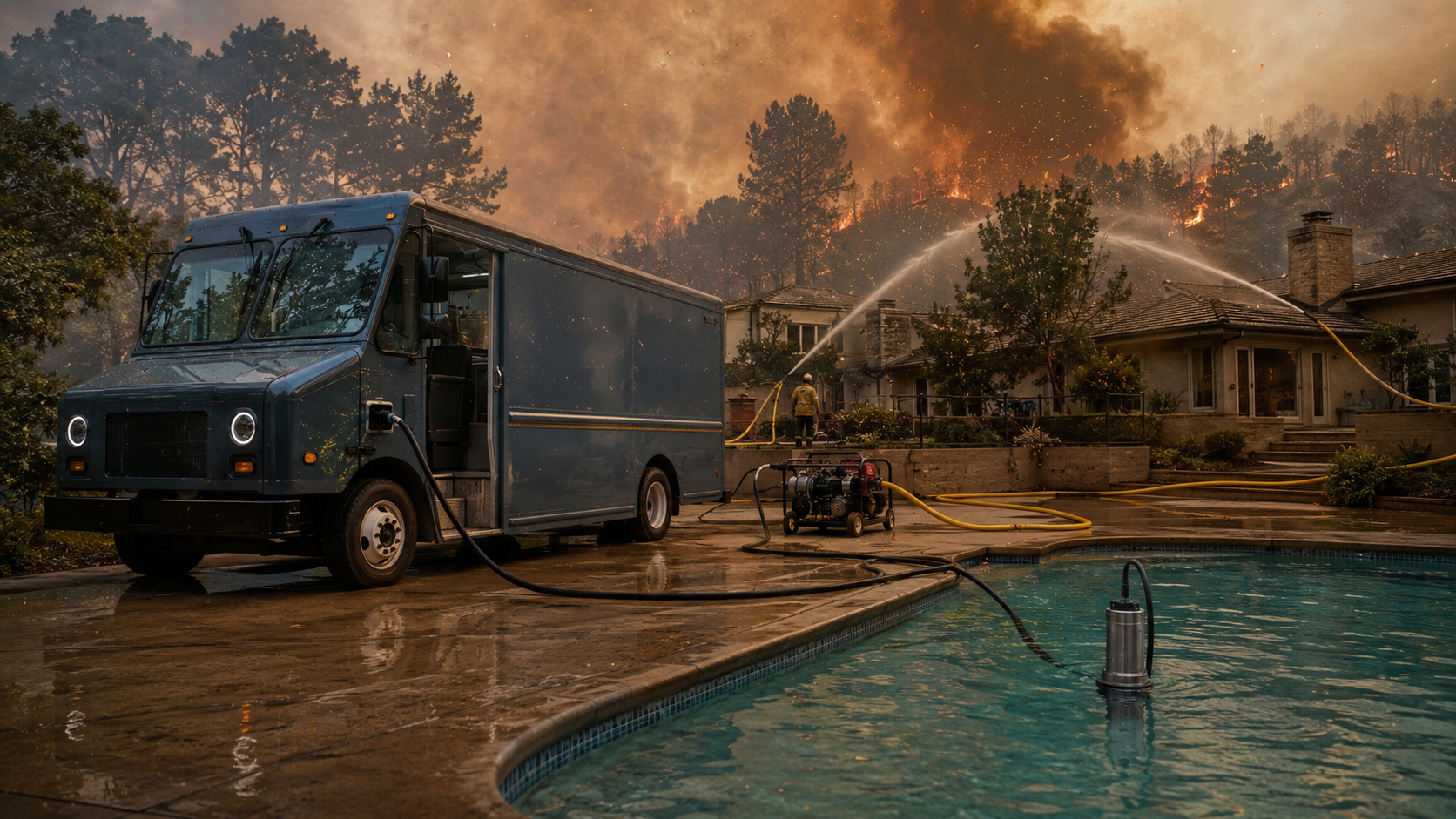
The electric postal truck provides the power. The next page explains the pool-water side of the concept: intake, pump, hose, flow, and safety.