🚚
1. Electric vehicle
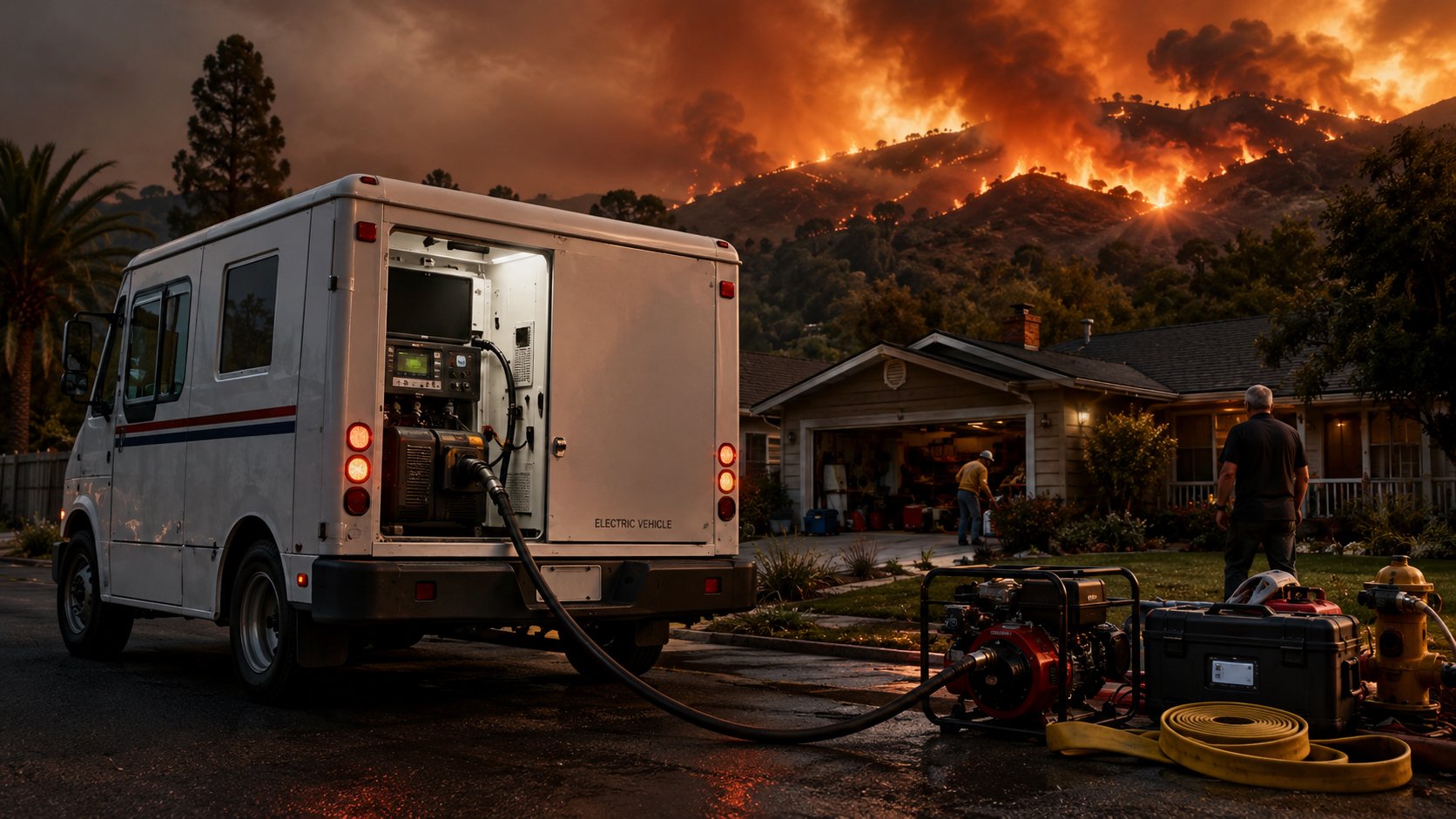
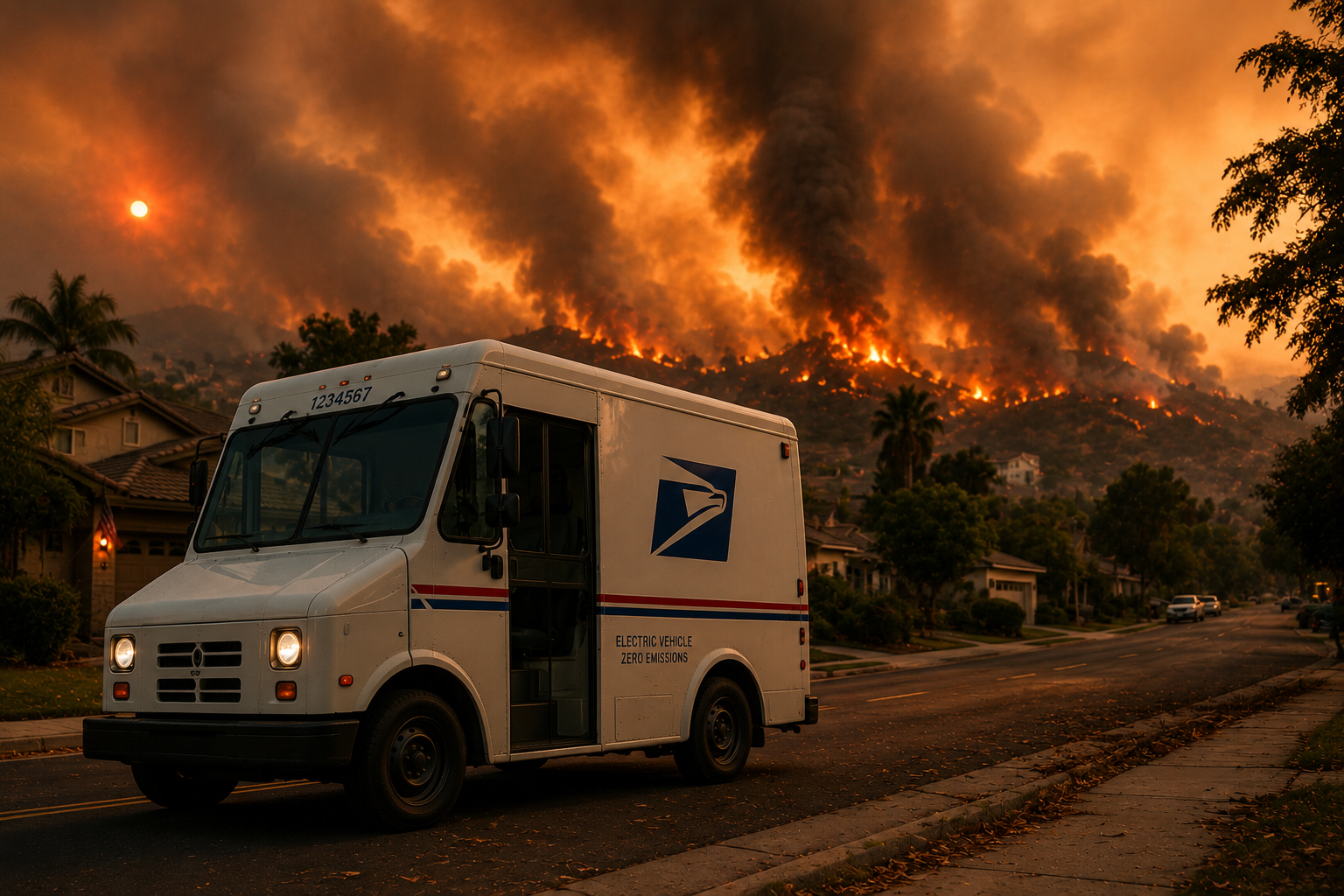
The EV is the mobile power source. Postal trucks, municipal EVs, work vans, and other fleet vehicles could become dual-use emergency assets if properly equipped.
The SolarFireTruck.com idea connects five things that may already exist in a neighborhood: an electric vehicle, stored battery power, a swimming pool, portable pumping equipment, and a defensive spray point.
A Vehicle-to-Load capable EV can supply electricity to properly rated equipment. A submersible pump can draw water from a pool. Hose lines can carry water to a spray device. A camera can help monitor the threat area. The system is only useful when it is designed safely and used responsibly.
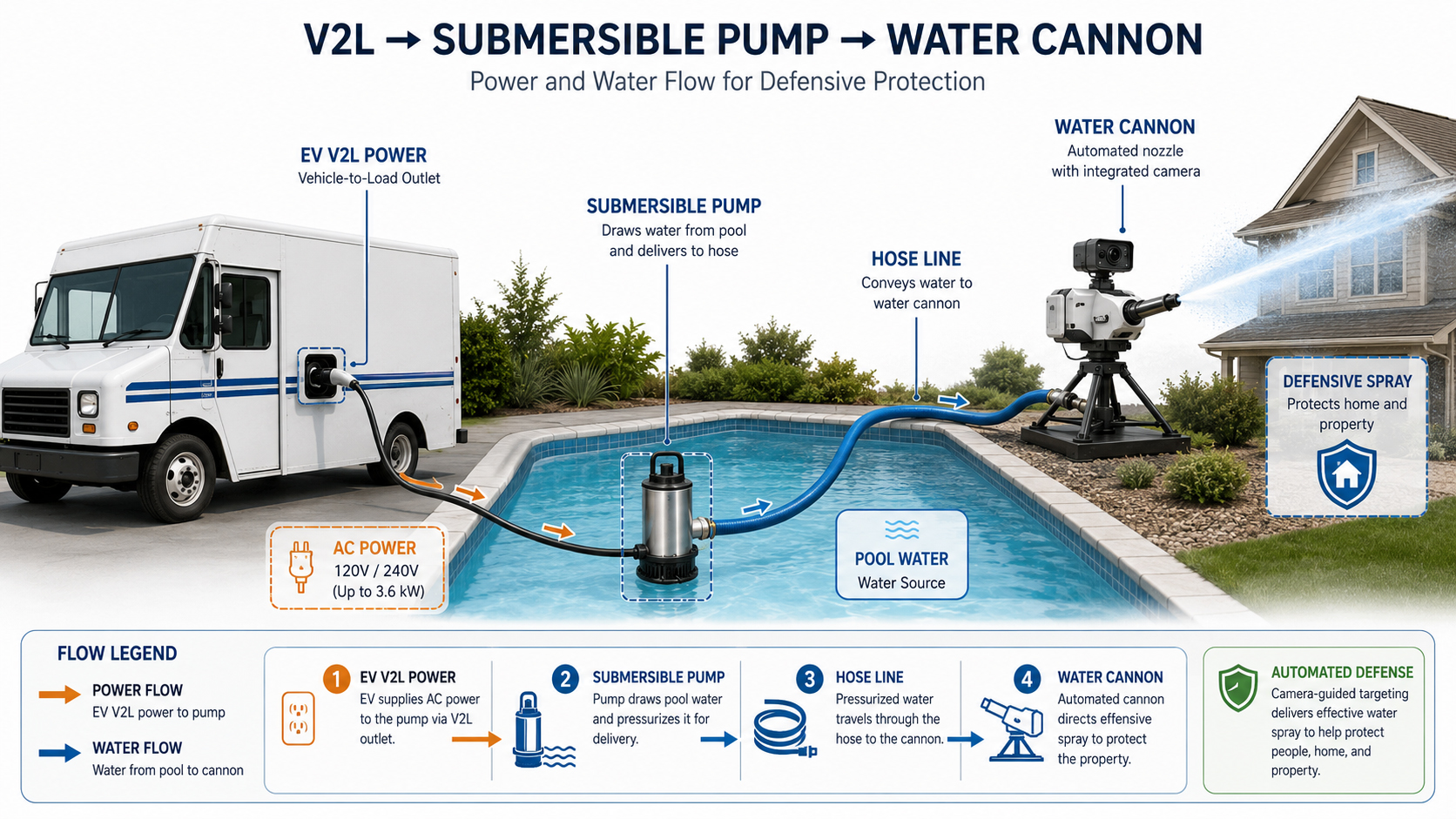
Each part has a job. Each part also has limits. The design must respect electricity, water, heat, smoke, people, property lines, and firefighter command.
The EV is the mobile power source. Postal trucks, municipal EVs, work vans, and other fleet vehicles could become dual-use emergency assets if properly equipped.
Vehicle-to-Load power can run selected external loads. Ratings matter. Overloading the vehicle, using unsafe cables, or mixing wet areas with electricity is dangerous.
Backyard pools can hold thousands of gallons of water. That water may become a defensive reserve when the intake, pump, and hose system are designed correctly.
Pump capacity, hose diameter, run length, elevation, filtering, and nozzle pressure all control whether water reaches the target with useful flow.
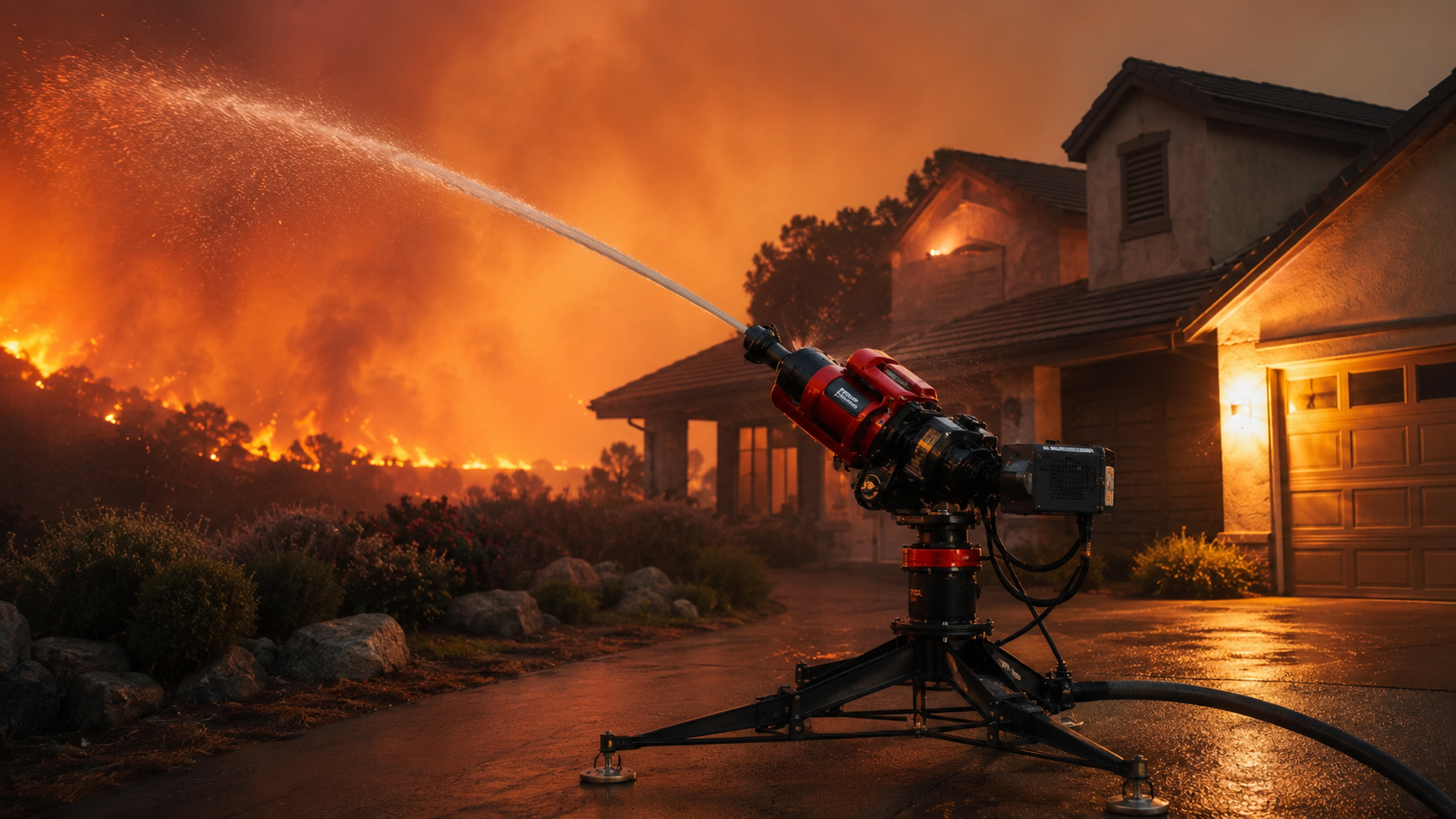
A camera-guided spray point can help monitor embers and direct water toward planned defensive zones, but it must not create false confidence.
SolarFireTruck.com is not a fire engine, not a hydrant, not a code system, and not a replacement for evacuation or professional response.
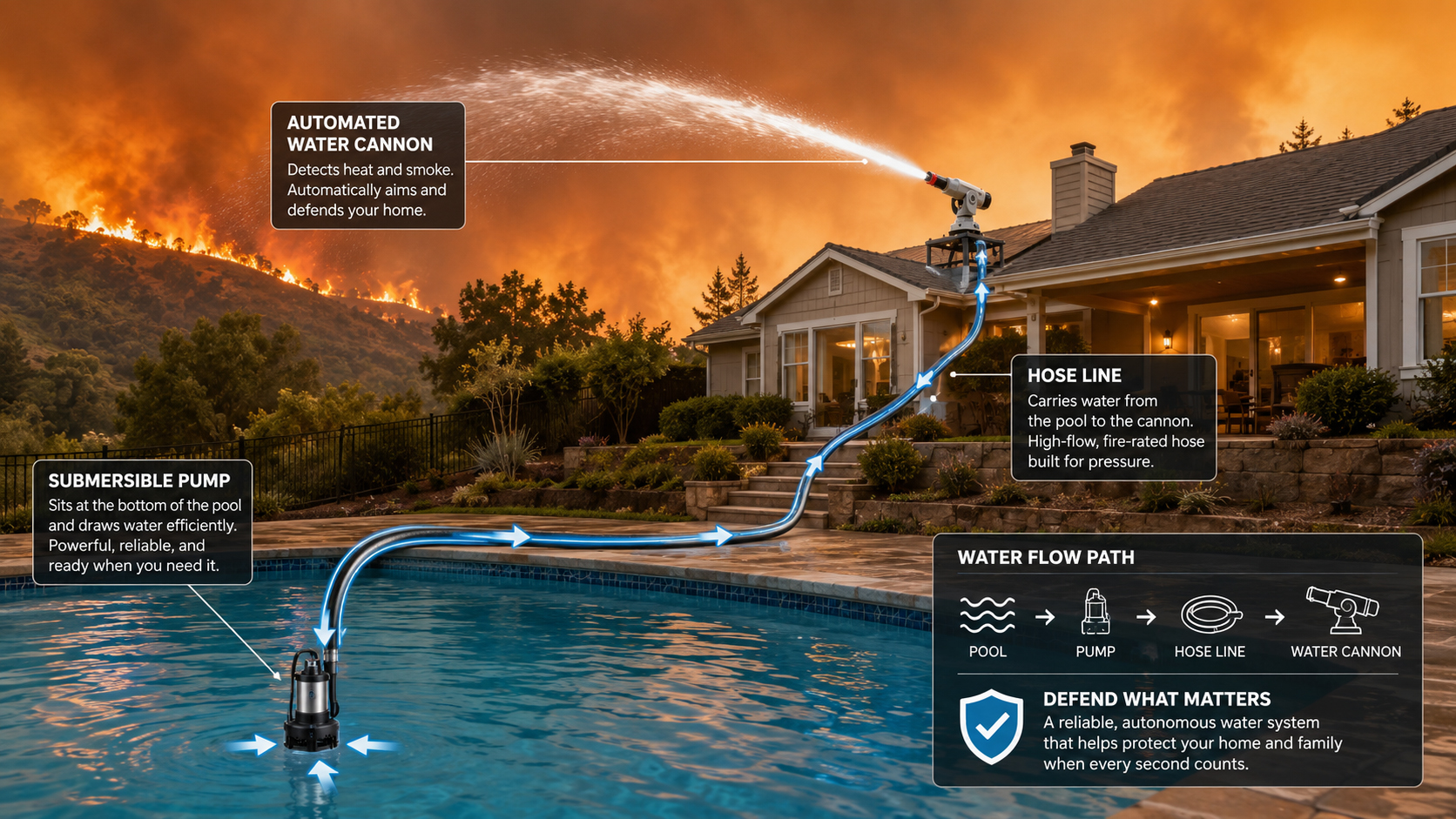
The strongest part of this concept is that the neighborhood may already have both stored energy and stored water. The technical challenge is connecting them safely, with enough flow and pressure to matter.
The concept is not limited to one dramatic cannon. EV power may support several readiness loads when properly rated and prioritized.
Move water from a local pool to a planned hose line or spray point.
Support night visibility for safe movement, equipment checks, and coordination.
Power cameras, radios, phone charging, routers, or monitoring tools if conditions allow.
Run limited tools or control equipment within the EV’s safe output rating.
The neighborhood version looks at pools, EVs, driveways, hydrants, slopes, gates, fences, evacuation routes, and safe staging points. The goal is not improvisation. The goal is pre-planned readiness.
Where can the EV park safely? Which pool is accessible? What pump can the V2L outlet actually run? How long is the hose run? Where should water be aimed? Who is trained? Who has authority? What must never be done?
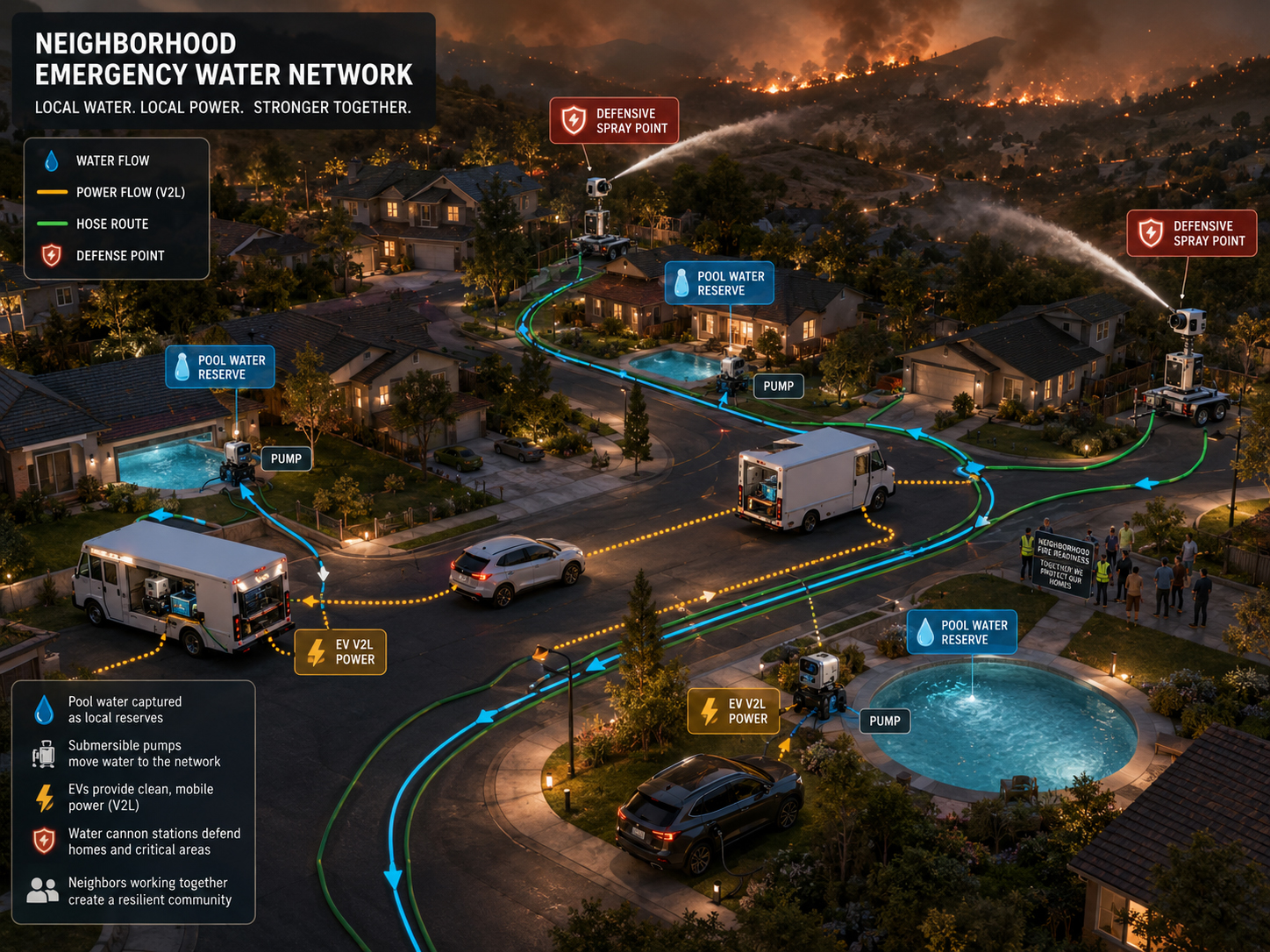
A private system must never interfere with firefighters. It must never encourage anyone to stay when evacuation is ordered. It must never be presented as a code-compliant fire suppression system unless designed and approved under the applicable rules.
Safety rule: Any real installation requires qualified review. Electrical isolation, GFCI/RCD protection, cable routing, pump ratings, water discharge, backflow, structural mounting, control systems, fire access, and legal responsibility must be handled professionally.