✅
What it can be
A planning concept for EV power, pool water, pumps, hoses, lights, cameras, and small emergency support loads.
SolarFireTruck.com is an educational concept about EV power, pool water, pumps, cameras, and neighborhood readiness. It is not a fire department, not a fire-code system, and not a substitute for evacuation, hydrants, fire engines, or professional responders.
The SolarFireTruck name is dramatic because the concept is memorable: an EV with Vehicle-to-Load power may help run a pump, light, camera, radio, or defensive water device. But that does not make the vehicle a fire engine.
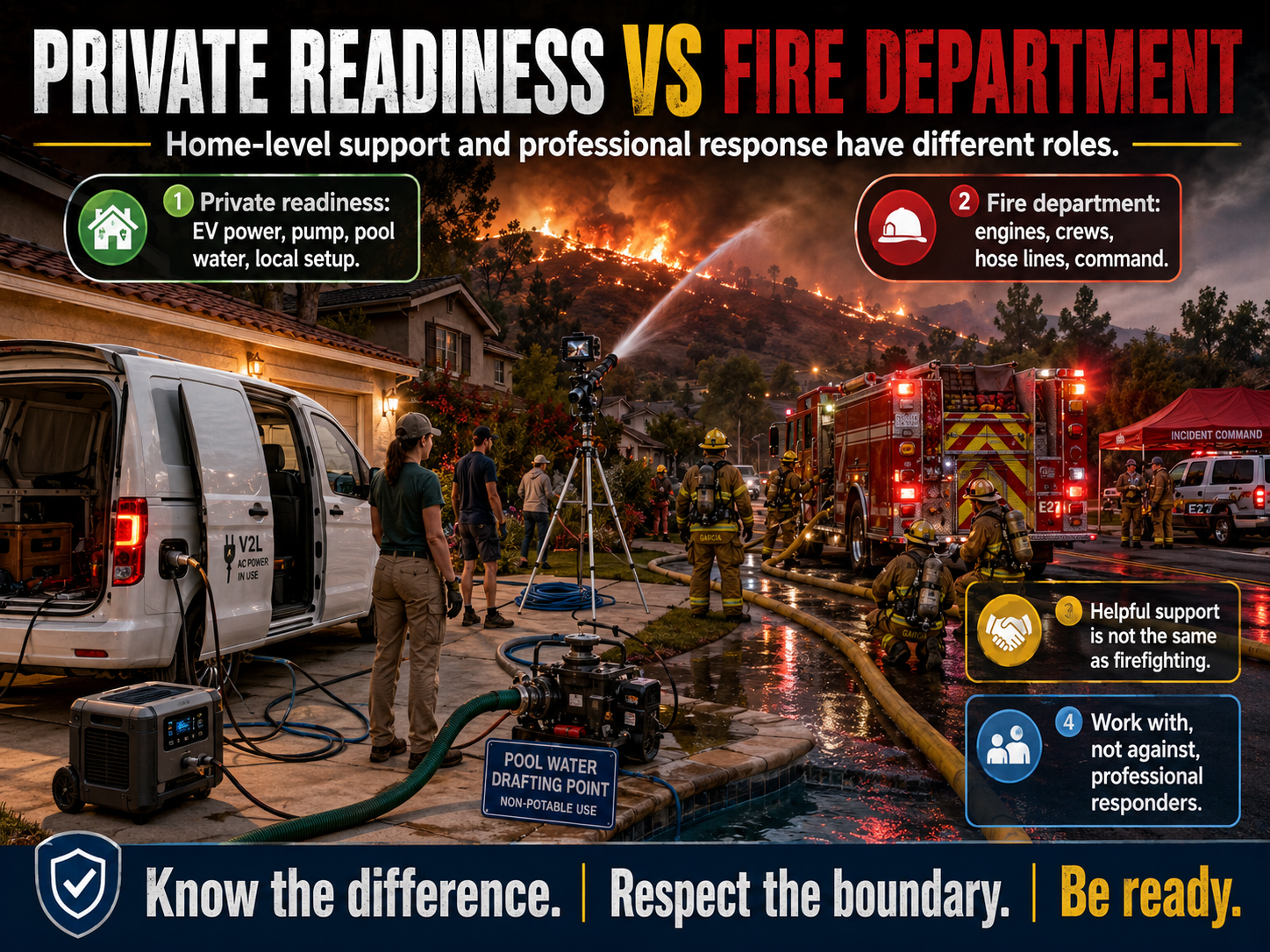
The idea is to make neighborhoods think more clearly about water, power, and preparation. The idea is not to make civilians think they can fight major wildfires.
A planning concept for EV power, pool water, pumps, hoses, lights, cameras, and small emergency support loads.
A certified fire suppression system, fire engine, fire department, evacuation substitute, or public safety authority.
Firefighters, law enforcement, emergency managers, code officials, and evacuation authorities control the emergency scene.
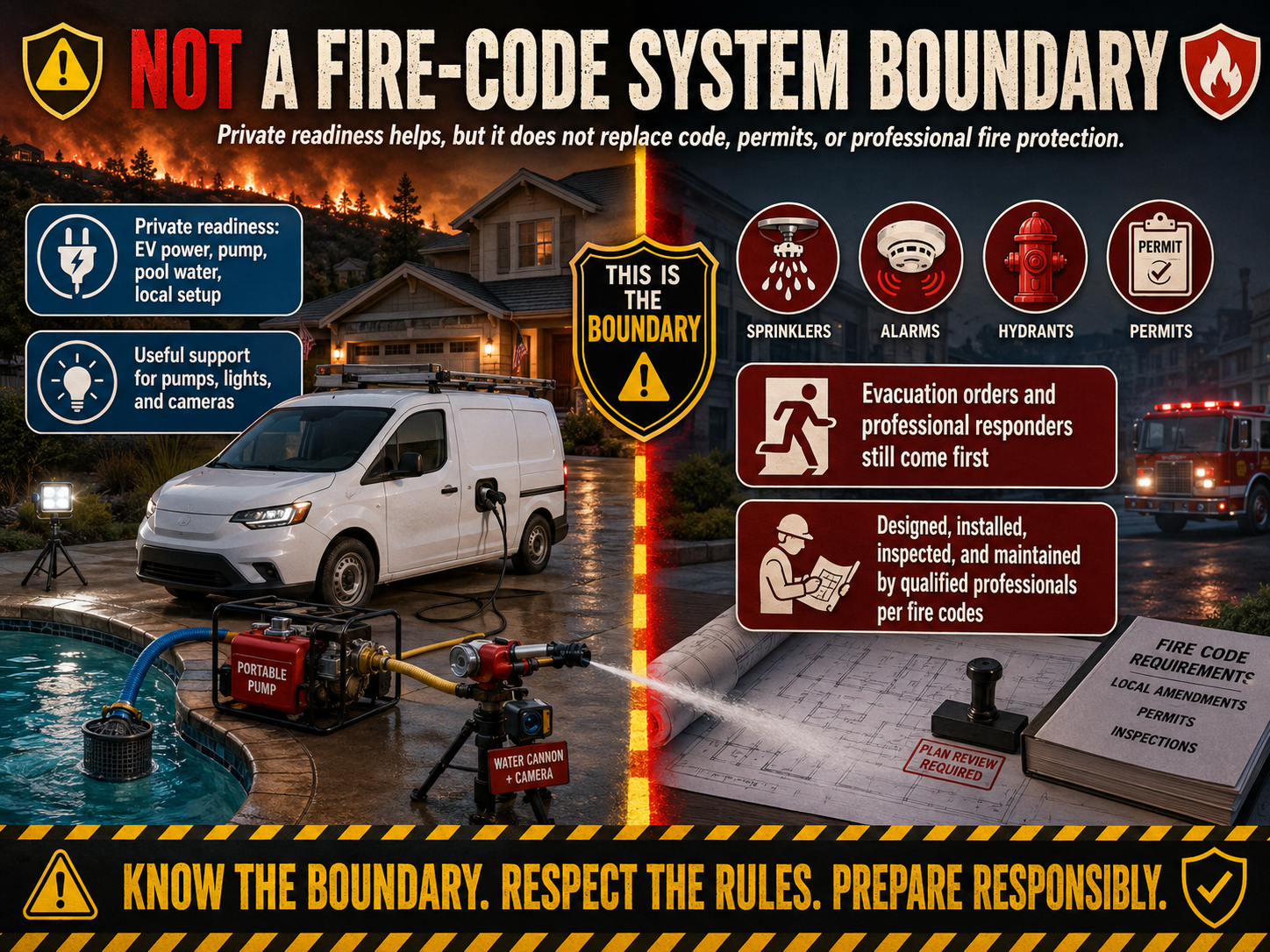
Fire protection systems are governed by laws, codes, standards, permits, inspections, maintenance rules, and professional responsibility. A pool pump and EV power concept does not become an approved system just because it moves water.
Unless a system has been designed, permitted, inspected, and approved under the applicable rules, it should not be presented as a code-compliant fire suppression system.
Fire departments, building departments, utility rules, electrical codes, water rules, and property requirements still apply.
A defensive spray concept may help in limited conditions. It cannot guarantee structure survival during wildfire.
A concept site must be entertaining and memorable without encouraging unsafe behavior. These are the messages to reject clearly.
Wrong. If evacuation is ordered or conditions are unsafe, leave. Equipment can be replaced. People cannot.
Wrong. Fire engines, ambulances, police, utility crews, hydrants, gates, and evacuation routes must stay clear.
Wrong. Water and electricity require proper protection, dry routing, isolation, rated equipment, and professional review.
Wrong. Water spray may support limited defensive zones, but wildfire behavior can overwhelm private equipment quickly.
A support system that interferes with responders becomes a hazard. Hoses, EVs, pumps, lights, cameras, and water cannons must be positioned so they can be shut down, moved, or abandoned quickly.
Hard rule: Do not argue with emergency responders. Do not delay evacuation. Do not block access. Do not energize unsafe equipment. Do not operate private systems where firefighters need to work.
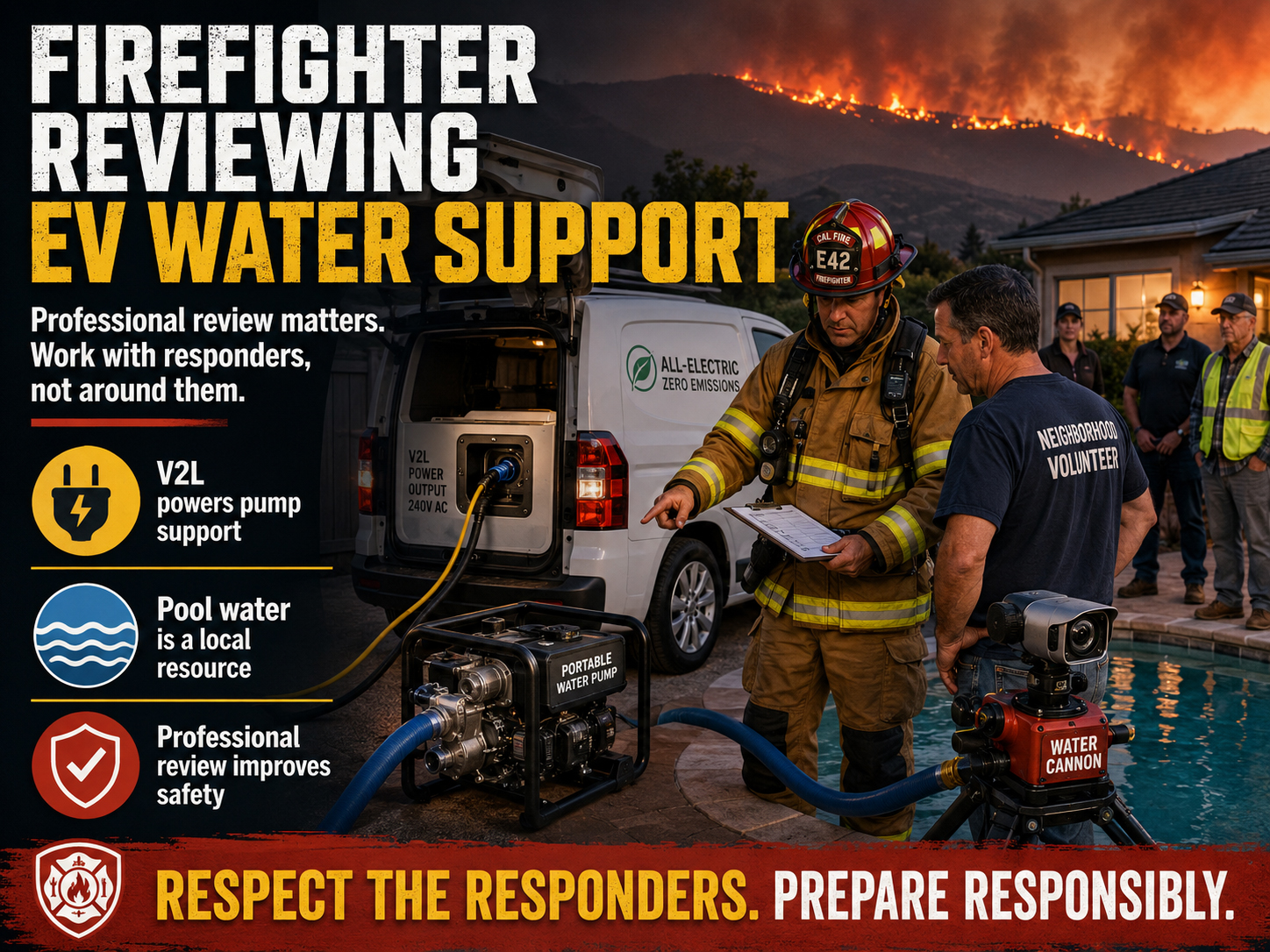
The responsible SolarFireTruck idea is not heroic improvisation. It is pre-planned support: charged EVs, labeled equipment, known pump loads, mapped water sources, safe parking, dry cable routing, shutoff procedures, and clear authority.
The phrase “Solar Fire Truck” makes the idea visible. The safer explanation is more precise: a dual-use EV emergency power and water-support concept for neighborhood wildfire readiness.
SolarFireTruck.com explores how EVs with Vehicle-to-Load power could support selected readiness loads such as pool-water pumps, cameras, lights, and communications. It is not a certified fire suppression system or a substitute for professional emergency response.
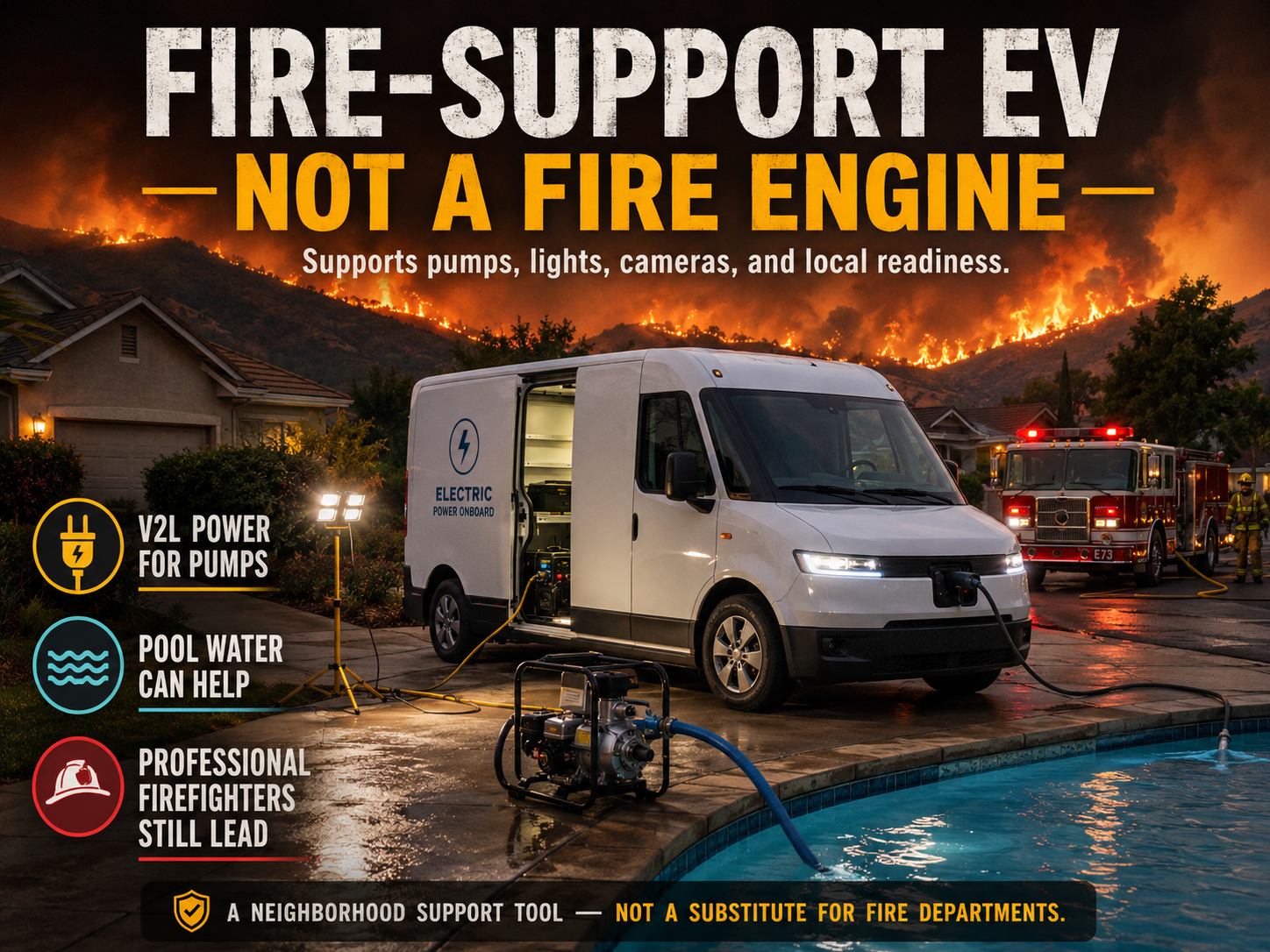
The boundary page explains the idea plainly. The disclaimer page states the legal and safety limits even more directly.