🧯
Not firefighting authority
This site does not train, authorize, or direct civilians to fight fires or remain in evacuation areas.
SolarFireTruck.com is an educational and conceptual site. It does not authorize, certify, design, install, approve, or replace any fire protection system, emergency response system, electrical system, water system, vehicle system, or evacuation procedure.
SolarFireTruck.com discusses a concept: using electric vehicles with Vehicle-to-Load power to support selected readiness equipment such as pumps, lights, cameras, communications, and defensive water spray ideas. The concept is not a professional fire plan, not a code-compliant fire suppression system, and not an instruction to deploy equipment during a fire.
Follow official instructions: If firefighters, police, emergency managers, utility crews, or public officials give instructions, those instructions control. If evacuation is ordered, evacuate immediately.
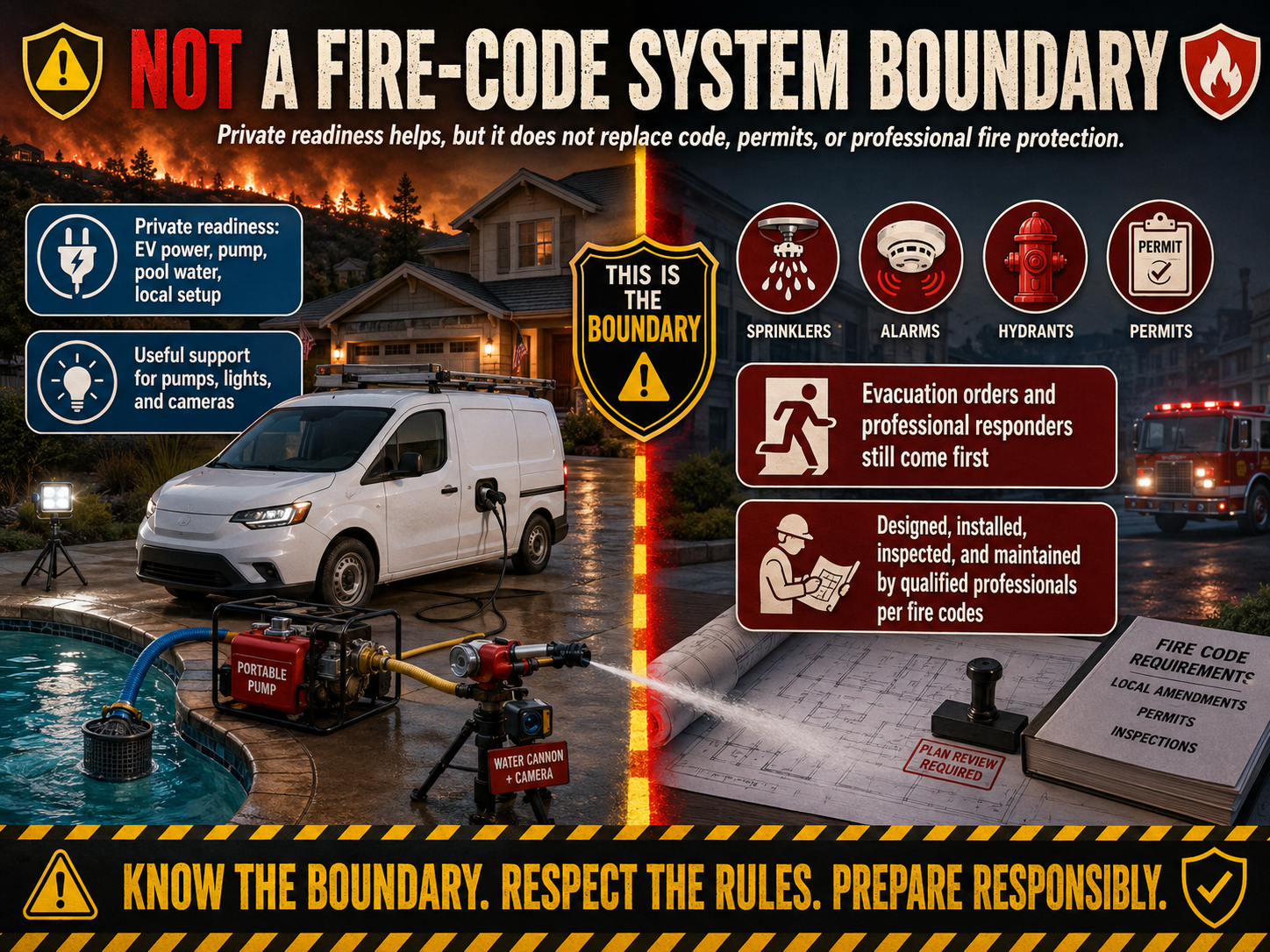
The pages on this site are meant to explain ideas, not to grant permission or provide final engineering.
This site does not train, authorize, or direct civilians to fight fires or remain in evacuation areas.
No concept shown here should be treated as permitted, inspected, certified, listed, or code-compliant.
EV V2L, batteries, pumps, circuits, cords, transfer equipment, and water-adjacent loads require qualified review.
Pumps, hoses, intakes, backflow, discharge, pressure, and water-source use require proper design and legal review.
An EV support concept is not a fire engine, not a hydrant, and not a professional fire crew.
Nothing here should delay evacuation, override official instructions, or create confidence to stay in danger.
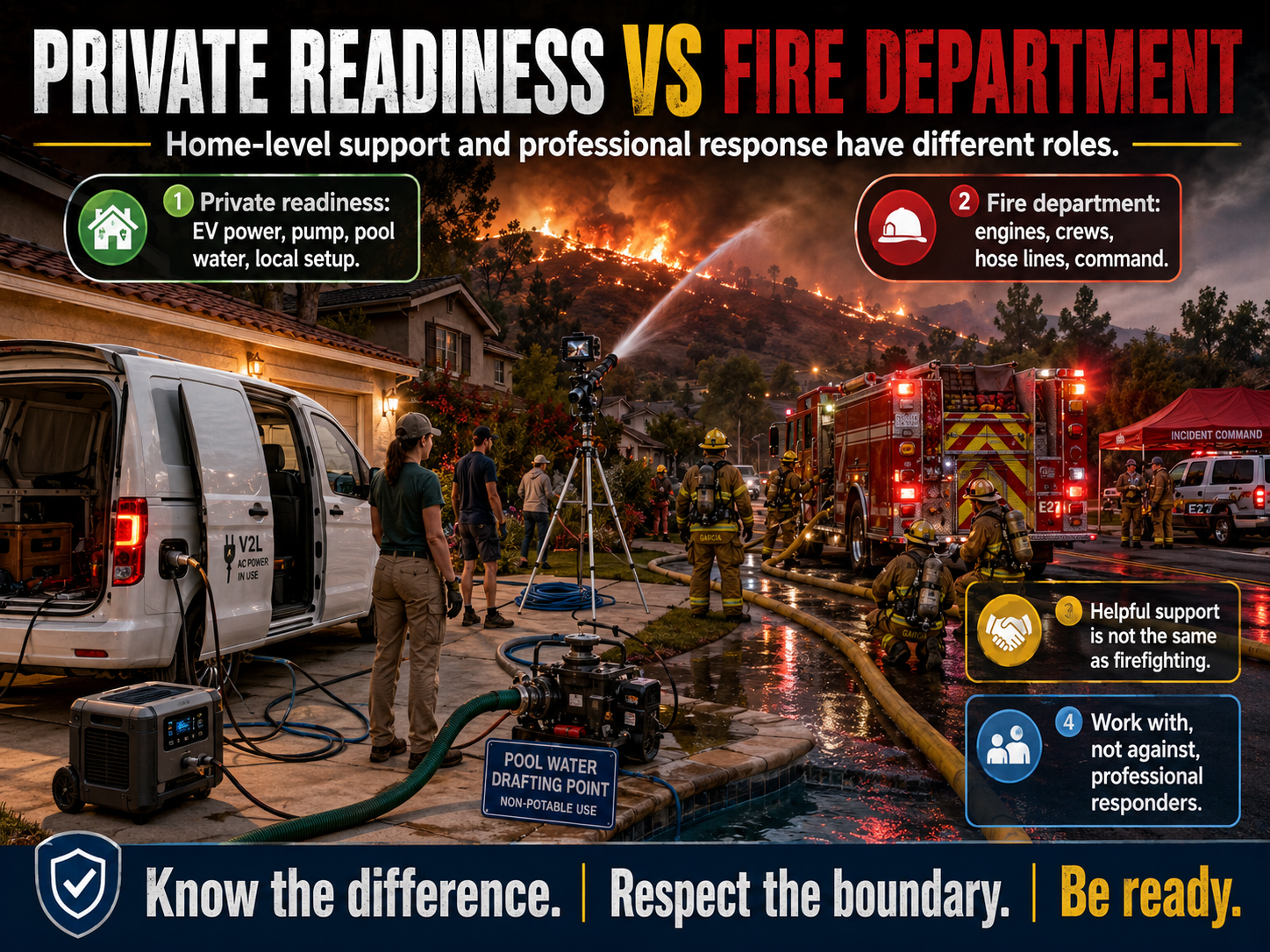
During a fire, emergency command decisions may change rapidly. Roads may close. Utilities may be shut off. Water pressure may change. Winds may shift. Conditions that looked manageable can become deadly.
A real project may involve overlapping requirements from fire authorities, electrical codes, building departments, utility rules, vehicle manufacturer instructions, product listings, insurance policies, property rights, water rules, and local emergency operations.
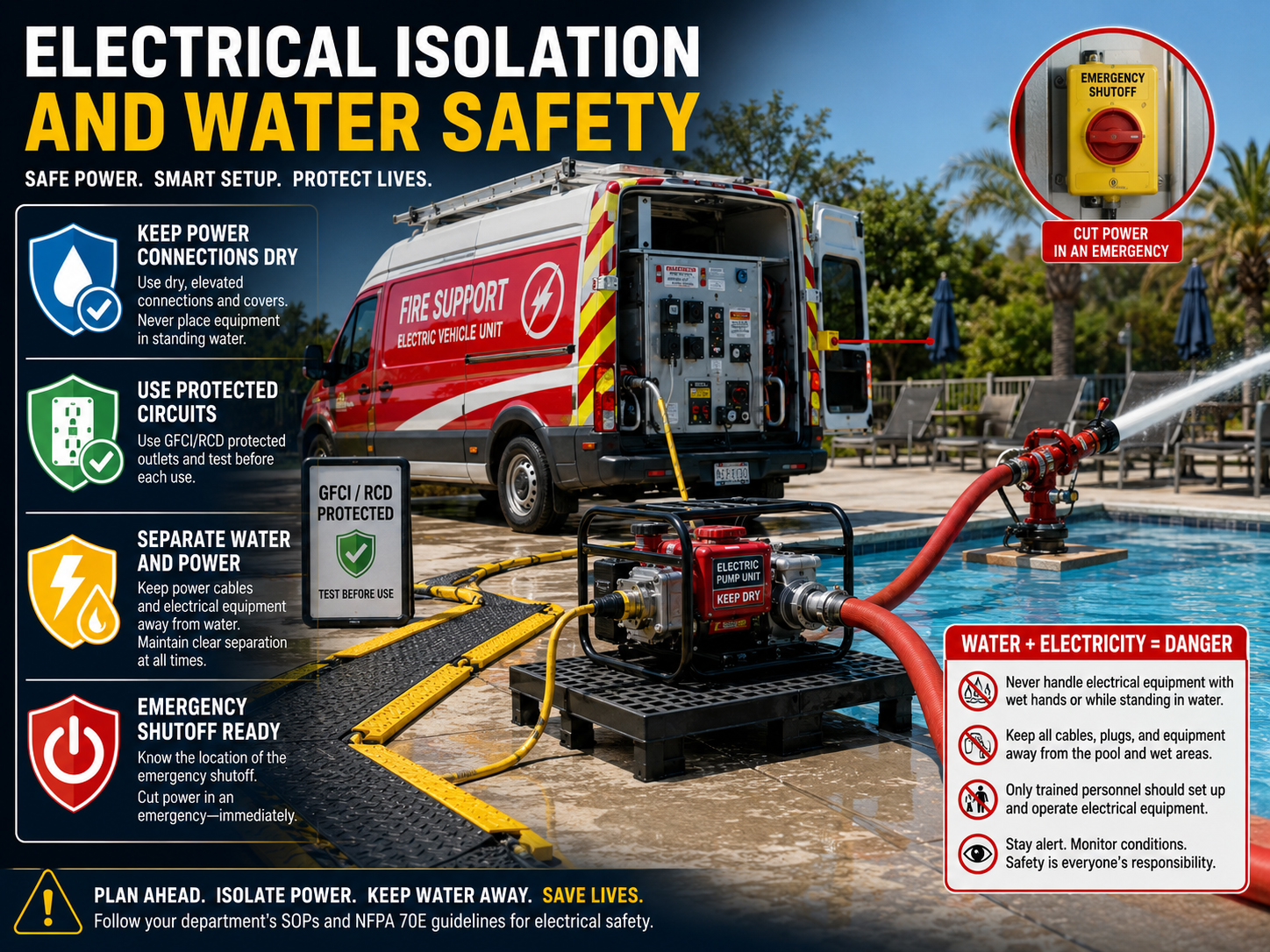
EV outlets, V2L limits, pumps, batteries, cords, GFCI/RCD protection, transfer equipment, grounding, bonding, cable routing, wet locations, and emergency shutoff must be reviewed by qualified electrical professionals.
Pool water drafting, pumps, pressure, discharge, hose routing, cross-connection, backflow, water quality, fittings, and safe operation must be reviewed by qualified professionals.
Mounting, spray targets, roofs, eaves, decks, fences, walls, driveways, trip hazards, and equipment anchoring may need building, structural, and site-specific review.
Fire access, defensible space, vegetation clearance, emergency staging, evacuation behavior, responder safety, and fire-code boundaries must be understood before any equipment is considered.
A private system must have clear “do not use” conditions. If the system creates added risk, it should not be used.
Do not deploy or continue operation if evacuation is ordered, visibility is poor, heat or smoke is unsafe, equipment is wet or damaged, cables are exposed to water, the EV may be trapped, emergency access is blocked, or responders need the area.
The SolarFireTruck concept includes EVs, batteries, pumps, water, hoses, cameras, controls, and people moving under stress. That combination requires conservative design.
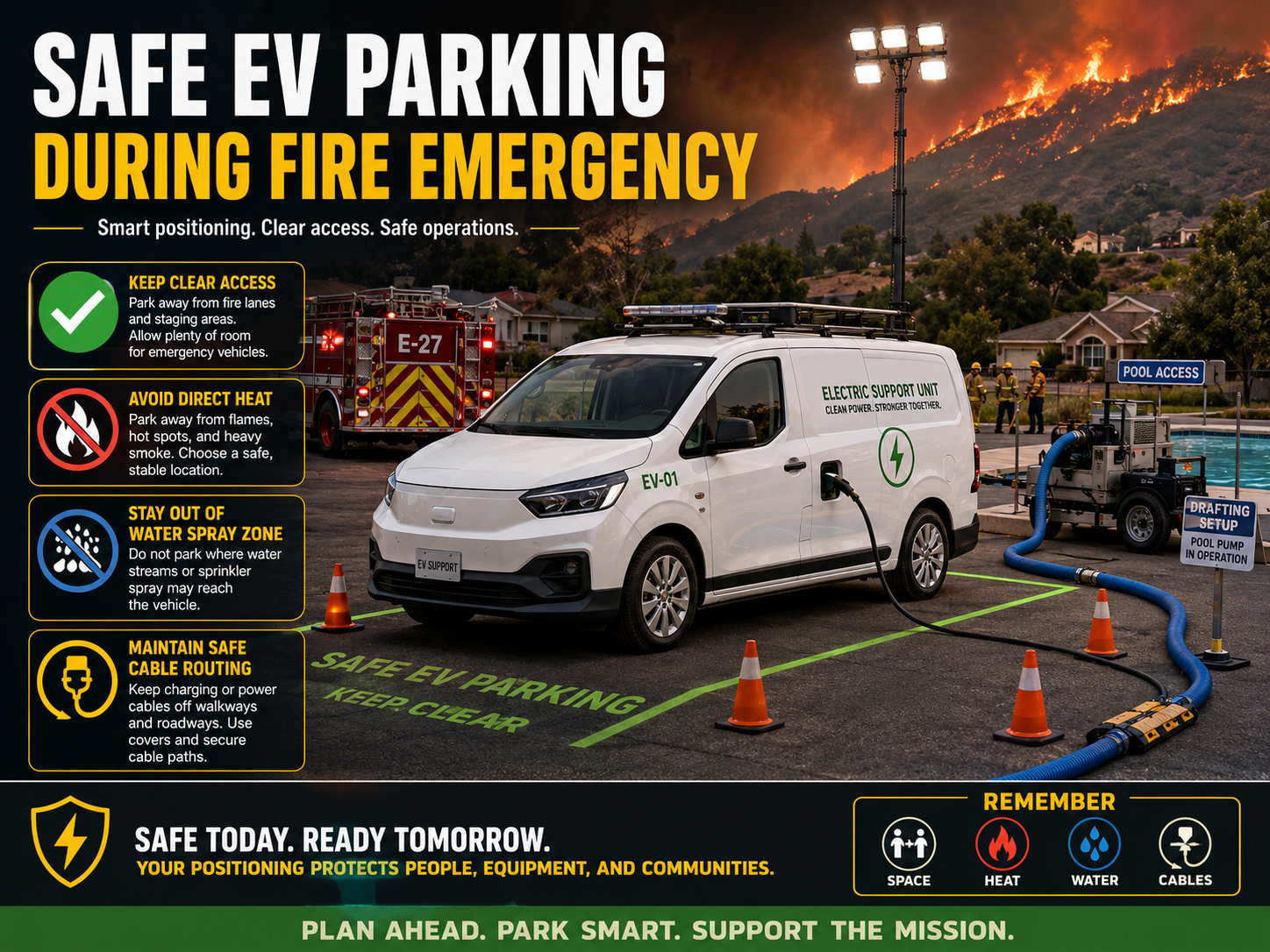
A Vehicle-to-Load EV is useful only if it can be staged safely. It must preserve evacuation range, avoid heat exposure, avoid spray hazards, and remain movable.
Wildfire behavior can overwhelm structures, water supplies, power systems, roads, and human judgment. Wind, embers, radiant heat, fuel conditions, topography, access, and response timing can change outcomes quickly.
SolarFireTruck.com does not claim that an EV, pool pump, water cannon, battery, solar system, camera, hose, or private readiness plan will save a home, protect property, stop a fire, comply with code, satisfy insurance requirements, or keep people safe during wildfire conditions. The site is for education, concept development, and discussion only.
The FAQ explains the common questions in plain language while keeping the same safety boundary: concept first, professionals always, firefighters in command.