🌀
Submersible pump
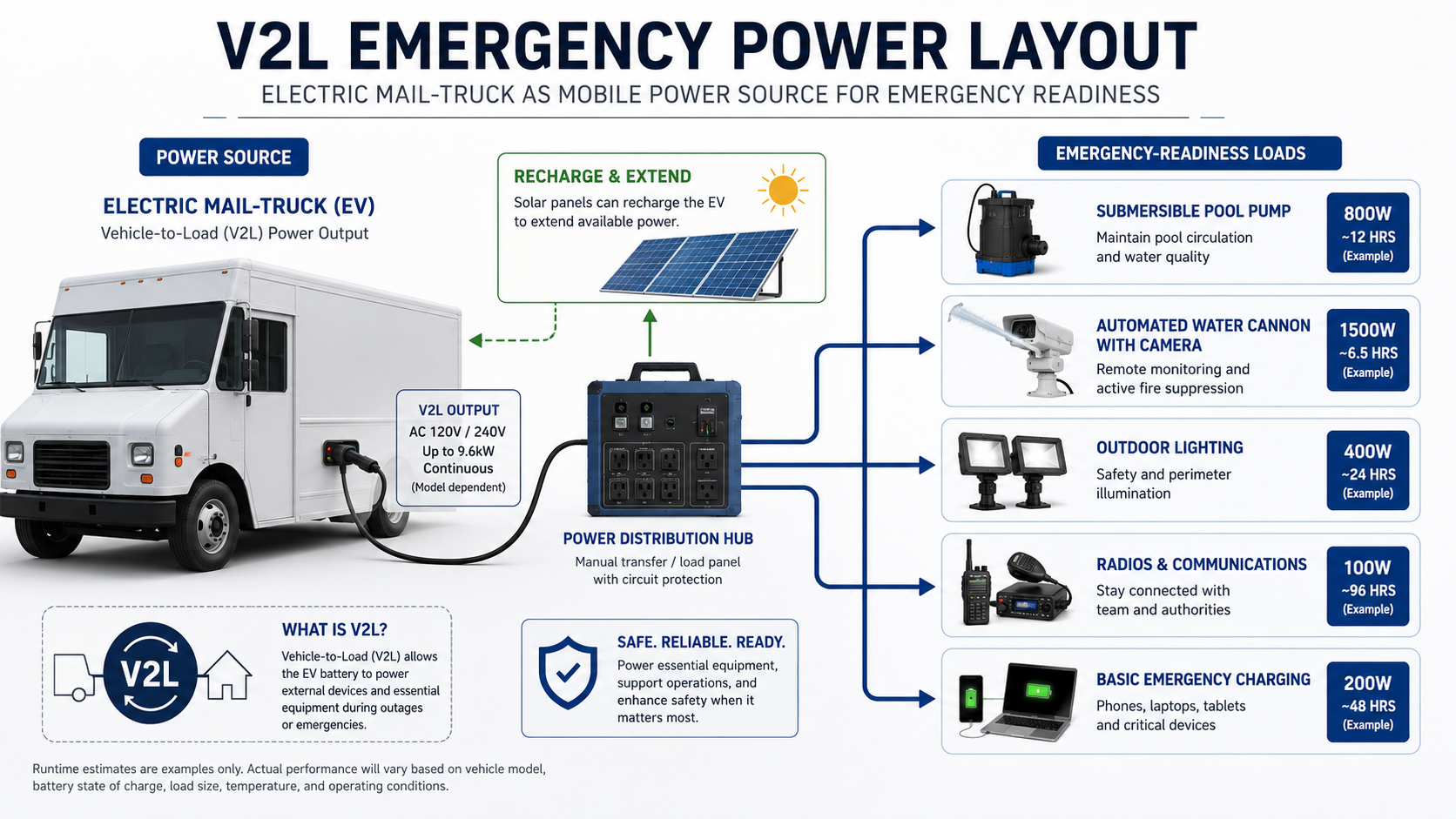
The most dramatic use is powering a pump that drafts water from a pool or approved water source.
SolarFireTruck.com focuses on the emergency value of EVs with Vehicle-to-Load capability: clean, mobile power that can support pumps, lights, cameras, radios, small tools, and neighborhood readiness equipment when planned safely.
Vehicle-to-Load means the EV can provide power to external devices. In the SolarFireTruck concept, that outside power can support a properly rated submersible pump, camera, lighting, communications, or control equipment.
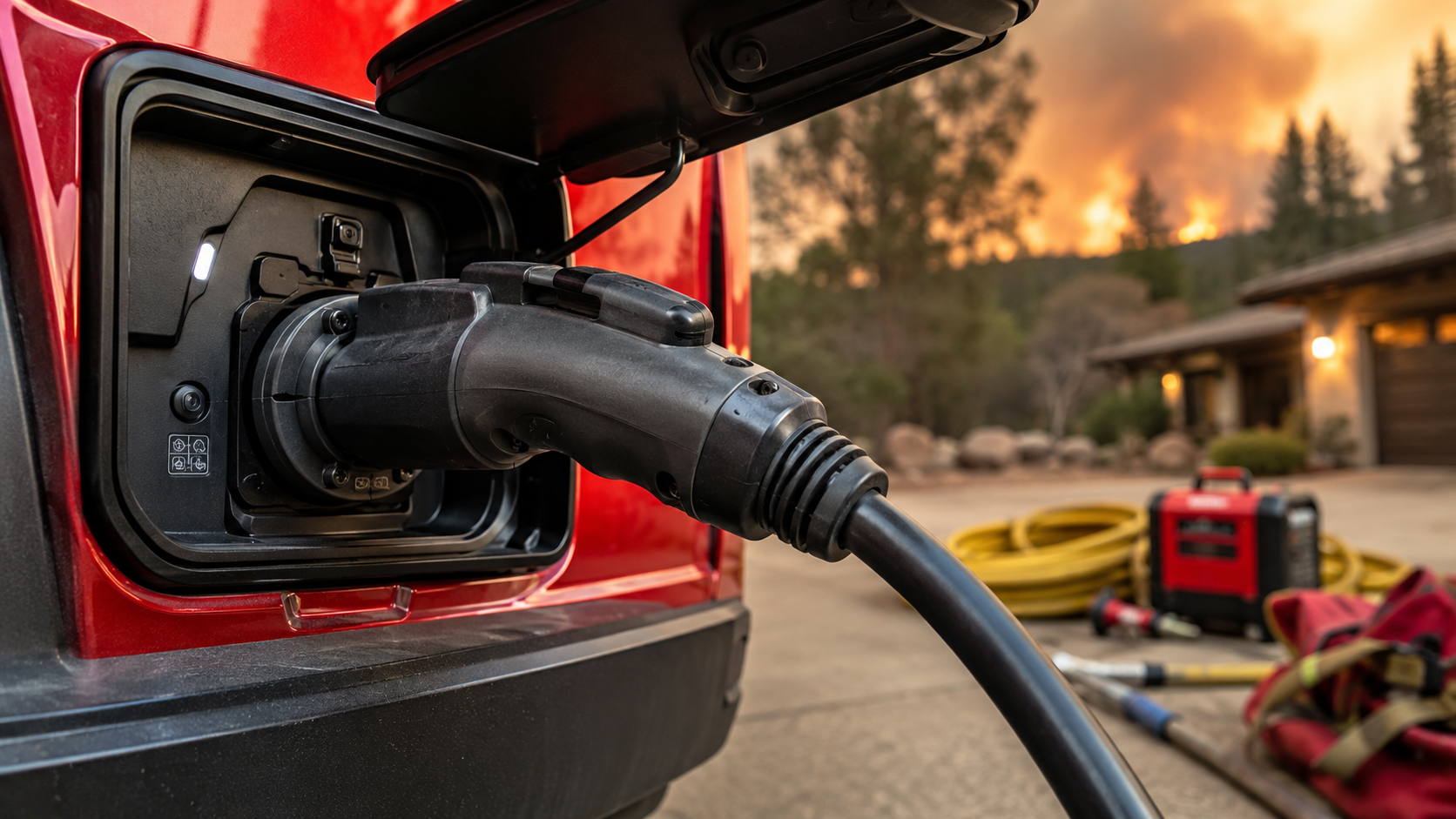
In a fire-readiness context, power priority matters. The EV should not be treated as unlimited power. It is a limited emergency resource that must be managed carefully.
The most dramatic use is powering a pump that drafts water from a pool or approved water source.
Cameras can help monitor embers, smoke, fences, eaves, and defensive spray areas.
Lighting helps neighbors move safely, check equipment, and avoid panic in smoke or darkness.
Radios, phones, routers, controls, and sensors may be small loads but important readiness tools.
A pump may draw much more power at startup than it does while running. Long cable runs, undersized cords, heat, water exposure, and overload conditions can create serious hazards.
V2L outlets have limits. The system must be designed around the EV’s actual voltage, wattage, duty cycle, outlet type, grounding behavior, and manufacturer instructions.
Pump selection must account for startup surge, running current, head pressure, flow rate, hose length, intake design, and expected operating time.
In a limited-power emergency setup, the pump usually comes first. Lights, cameras, radios, and controls should be planned as secondary loads.
The key SolarFireTruck example is the electric postal truck: it already travels neighborhood streets, already carries battery power, and could be imagined as a dual-use emergency platform if equipped and governed properly.
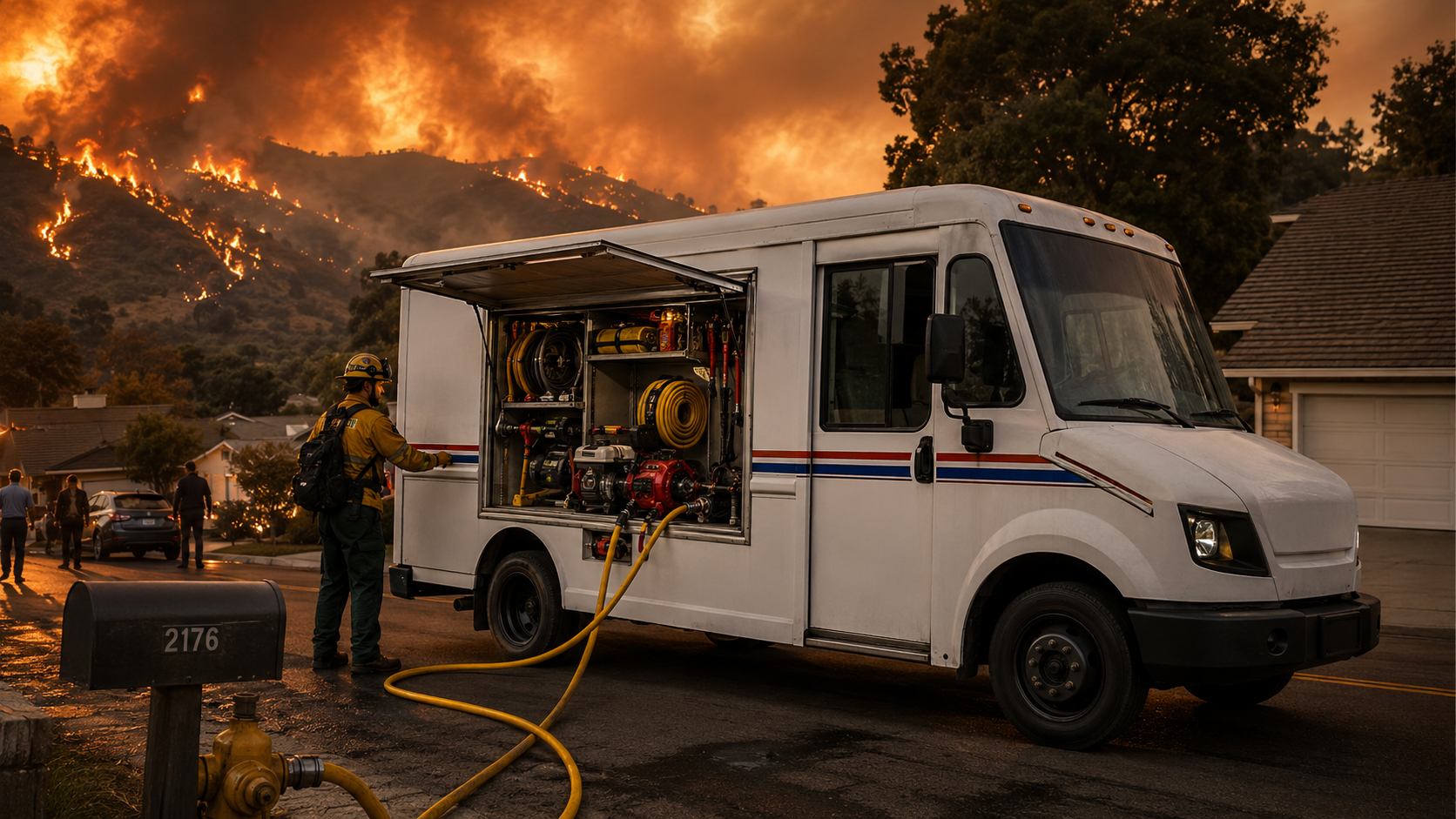
The everyday delivery vehicle becomes a visible emergency power resource during wildfire risk.
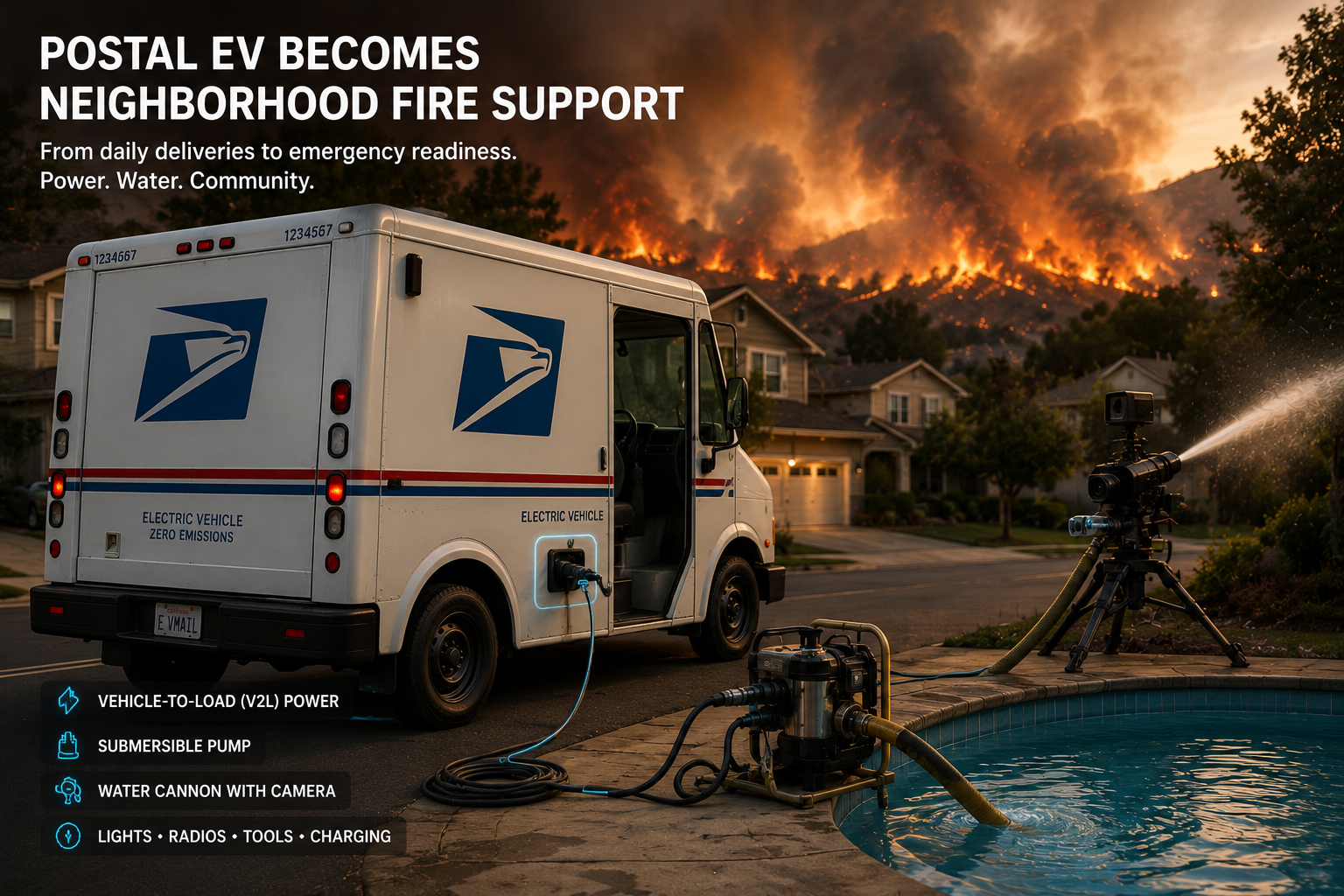
V2L power can support local readiness without pretending to be a professional fire engine.
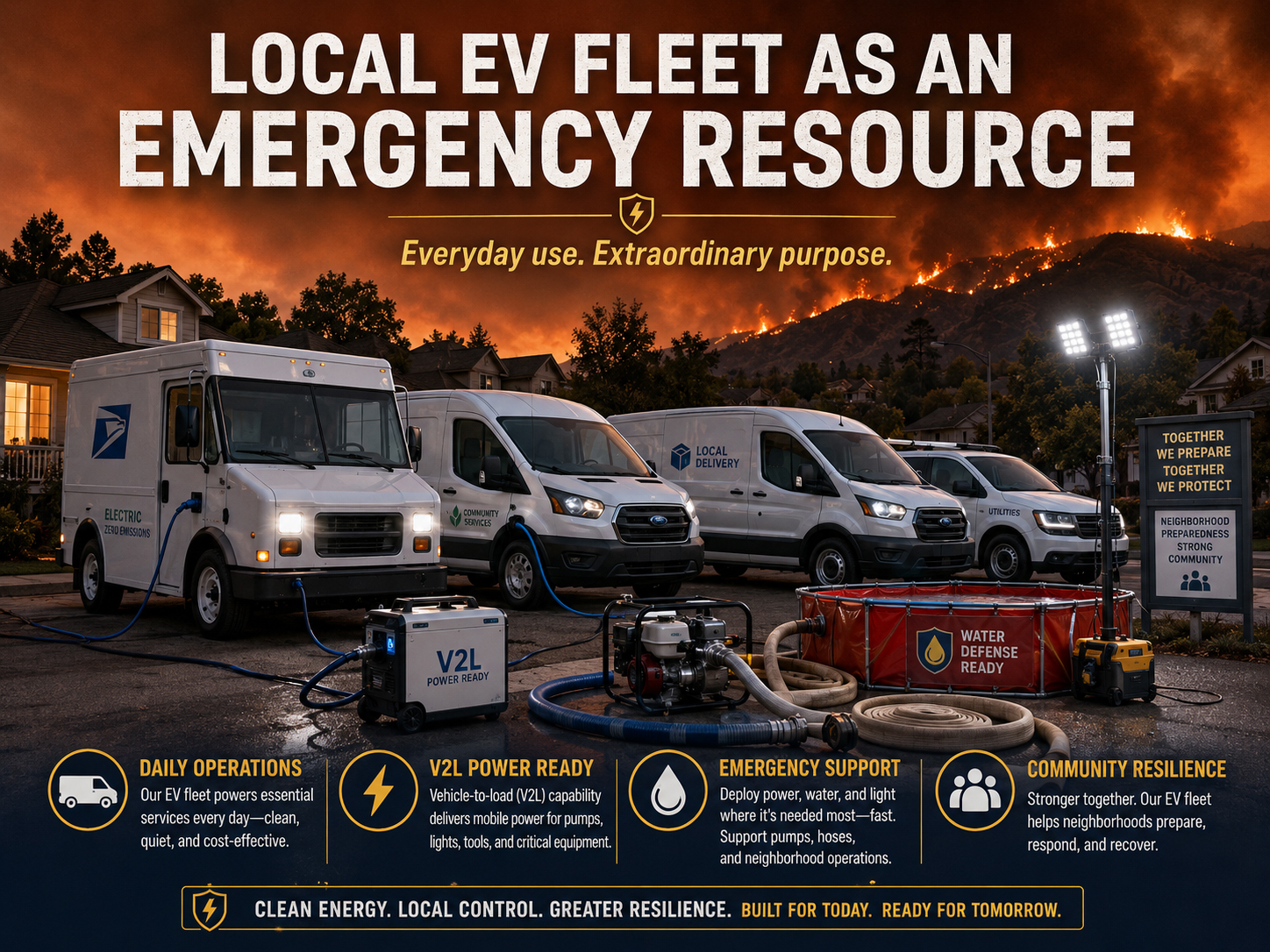
One vehicle is useful. A mapped fleet becomes a distributed emergency resource layer.
Water, smoke, panic, darkness, batteries, long cords, motors, and fire conditions are a dangerous mix. Real systems need professional electrical design and clear operating rules.
Do not improvise: Do not run random extension cords through wet areas, overload EV outlets, bypass electrical protection, energize unsafe equipment, block emergency access, or stay behind when evacuation is ordered.
The SolarFireTruck concept is strongest as a planning tool. Identify the vehicle, output rating, safe parking location, cable route, pump load, water source, spray point, and emergency authority before a fire.
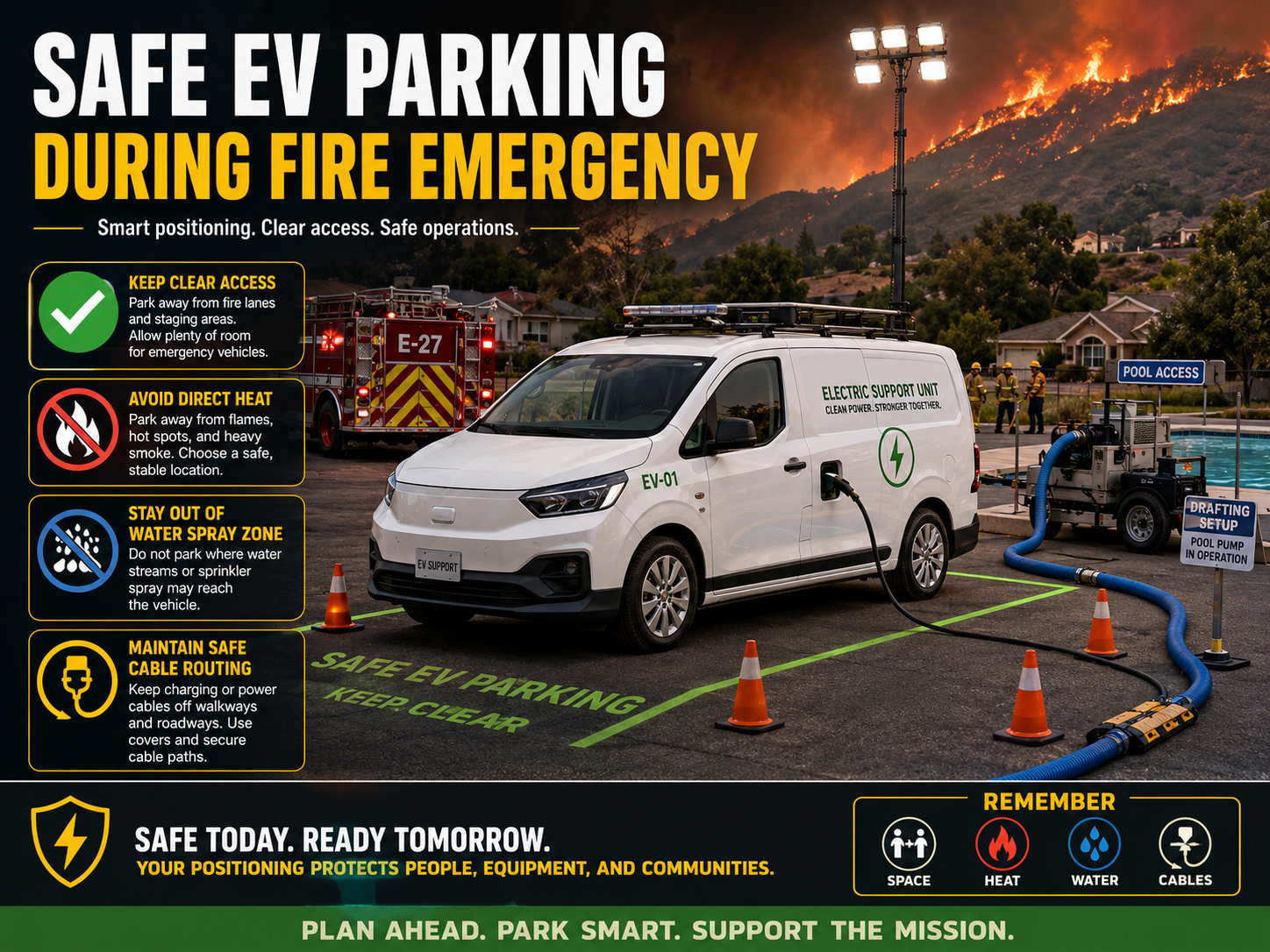
V2L power is only one part of the system. The next question is how pool water can be drafted, filtered, pumped, and delivered safely.