⚡
Power source
EV V2L, home battery, solar battery system, or approved generator power must be matched to the pump and control loads.
The automatic water cannon with camera is the most dramatic SolarFireTruck.com concept: EV power runs the pump, pool water becomes the reserve, and a monitored spray point helps defend selected zones around a home.
A defensive water cannon is not useful because it looks exciting. It is useful only if it can be aimed, controlled, shut down, and understood. The camera adds awareness: where are embers landing, where is smoke building, where are eaves exposed, and where is water actually going?
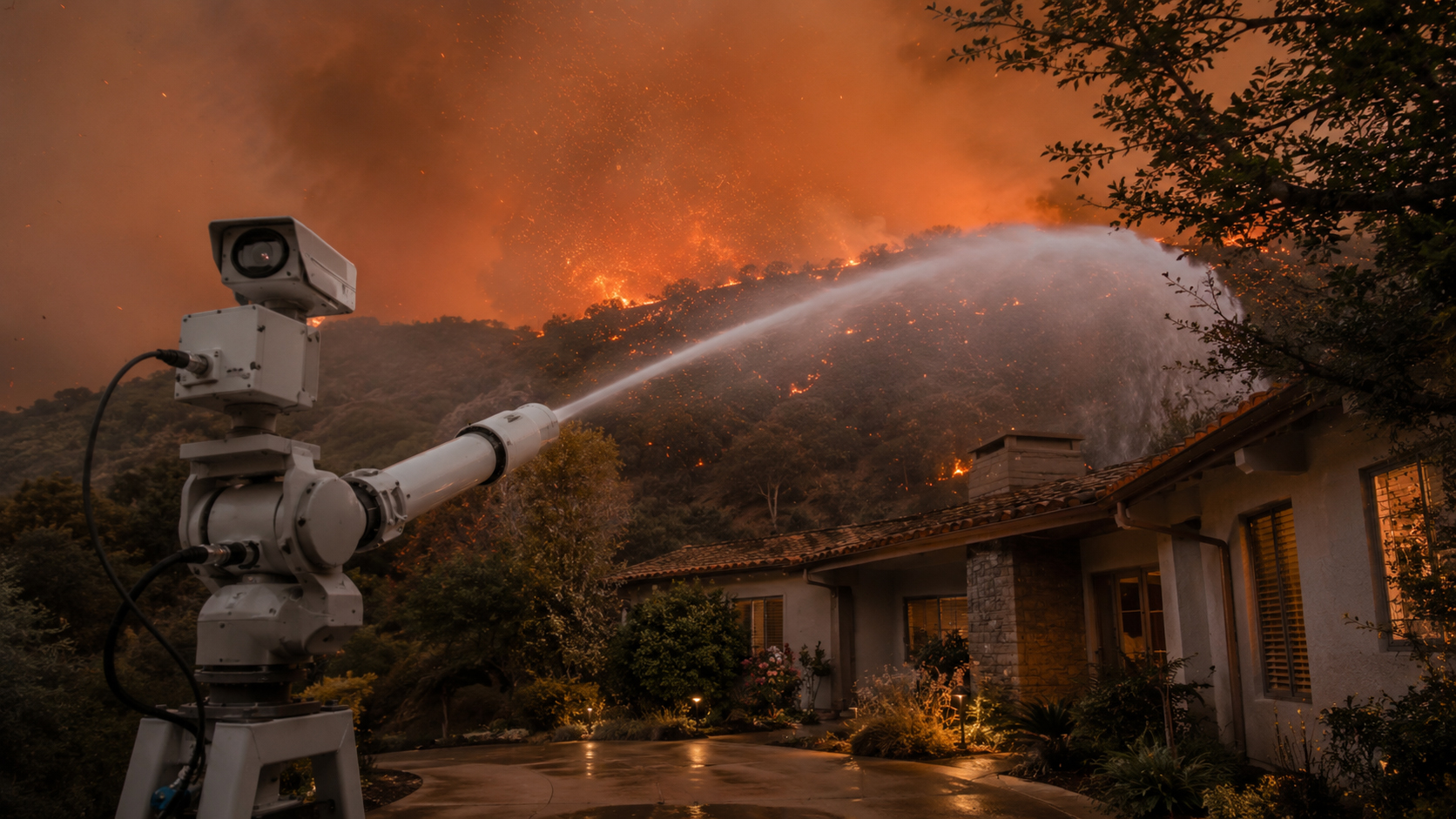
Water cannot appear at the nozzle by magic. The whole chain must work: power, pump, intake, hose, pressure, aiming, camera, control, and safety.
EV V2L, home battery, solar battery system, or approved generator power must be matched to the pump and control loads.
The pump must deliver useful flow through hose losses and elevation to the cannon.
The camera should show the target zone clearly enough to support responsible decisions.
Any real system needs manual stop, emergency stop, safe defaults, and operator control.
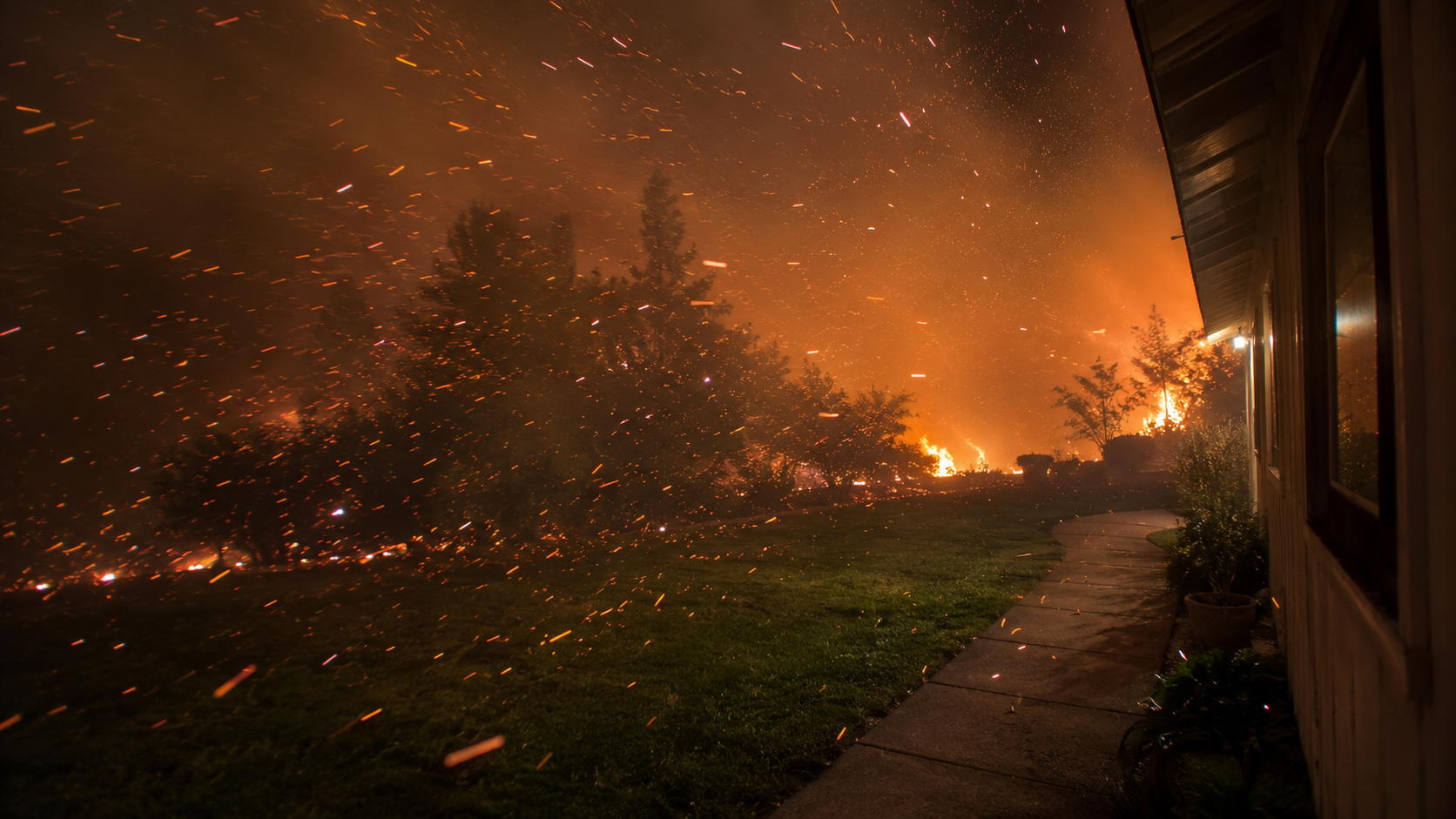
A camera can help people see what is happening at a specific defensive zone. But a camera is not a fire chief. It cannot evaluate structure risk, wind changes, evacuation timing, firefighter access, or the broader emergency.
Watching embers, checking where spray lands, confirming whether a fence line is wet, monitoring eaves, and verifying that the system has shut down.
Staying behind when evacuation is ordered, assuming the house is safe, aiming water blindly, or ignoring firefighters because the screen looks calm.
Use the camera to make the system safer and more controlled. Never use it as an excuse to take more risk.
A cannon should be aimed at specific defensive areas that were selected before the emergency. Random spray wastes water, power, and time.
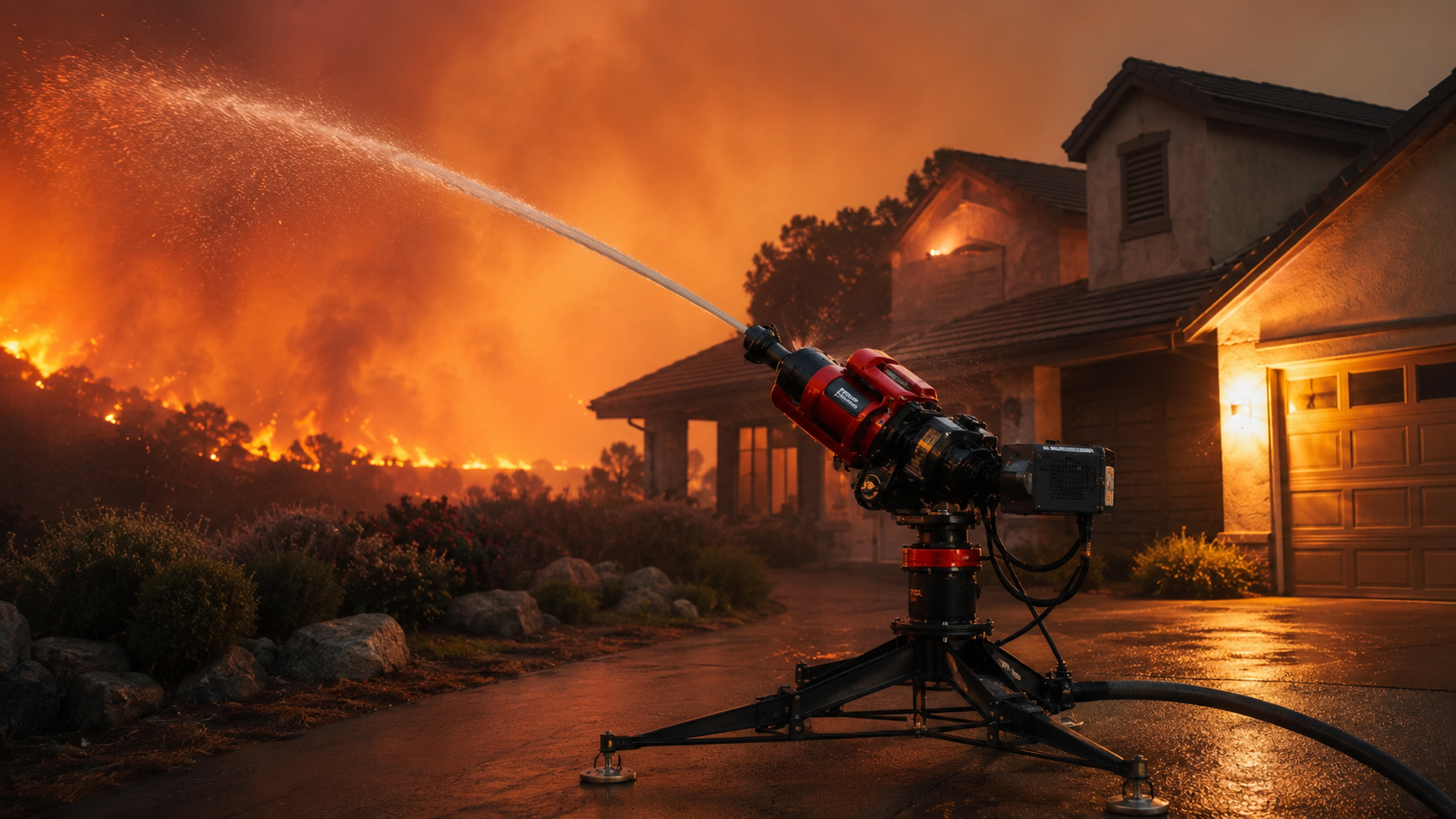
A driveway may provide a stable equipment zone if it does not block emergency access.
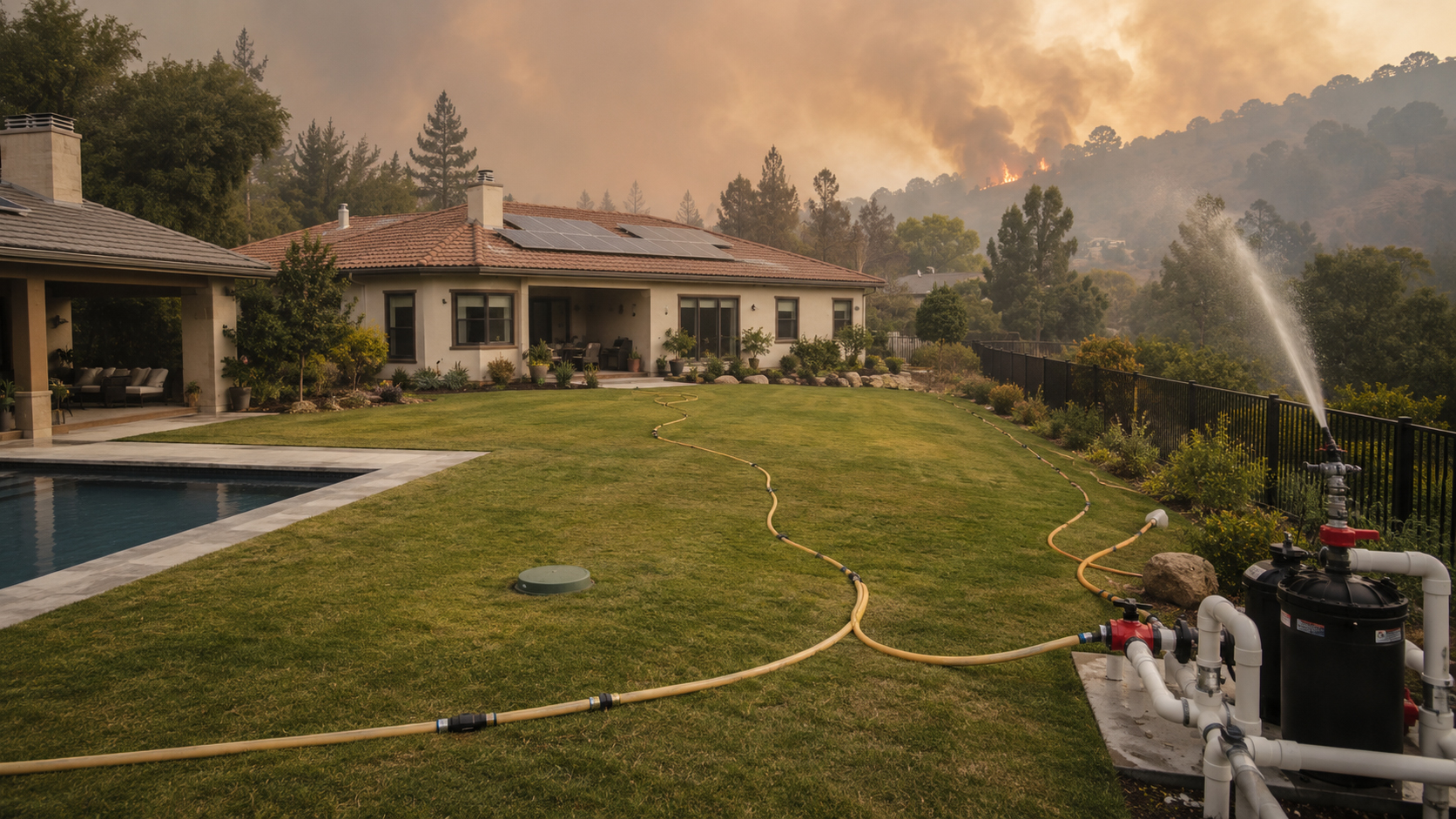
Fence lines, decks, vegetation edges, and side yards may be planned defensive targets.
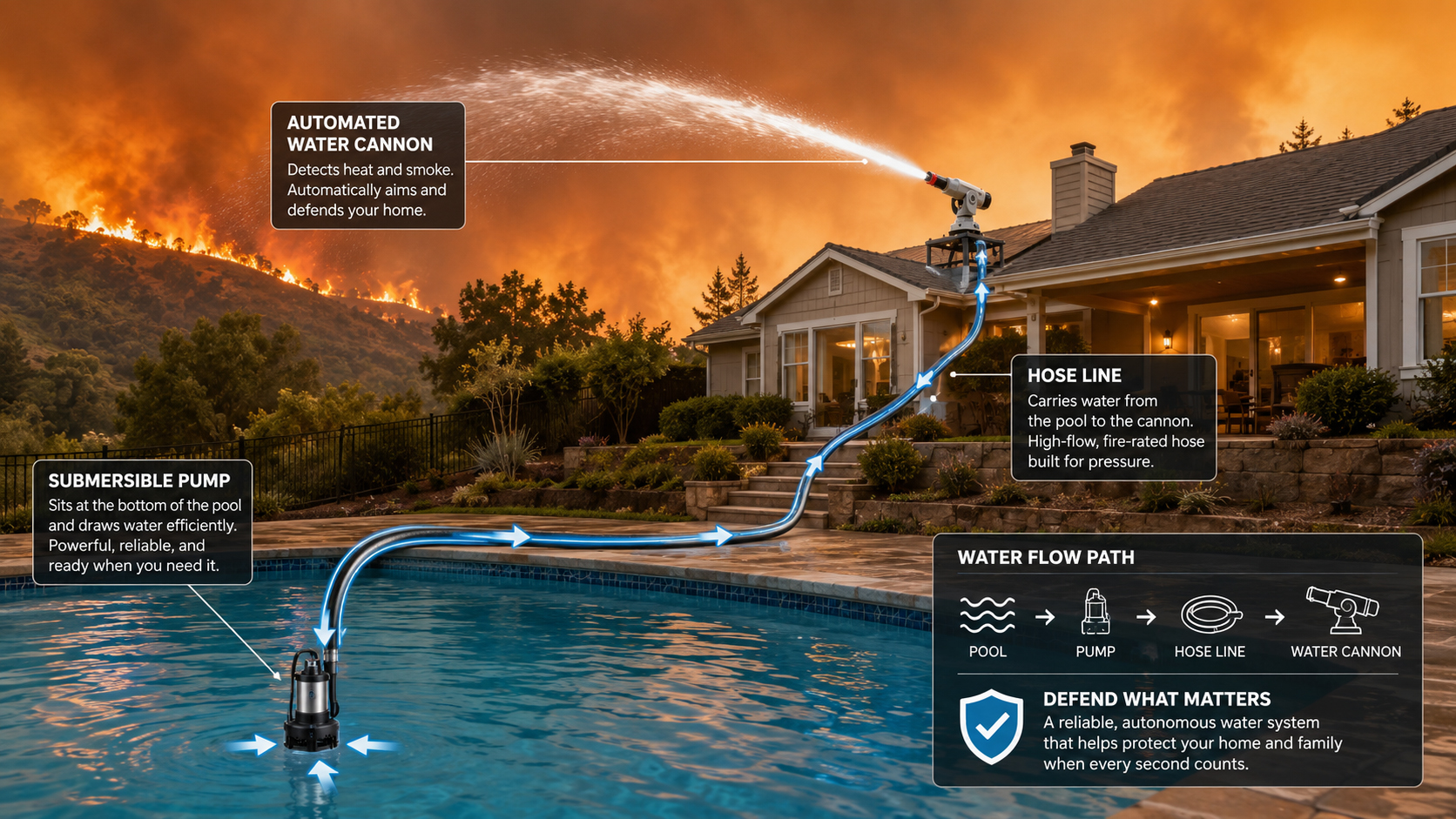
Flow, pressure, hose length, and nozzle design decide whether the cannon can do useful work.
The word “automatic” can be dangerous if it implies the machine makes all decisions. A responsible system should have clear limits, human oversight, manual override, emergency stop, and fail-safe behavior.
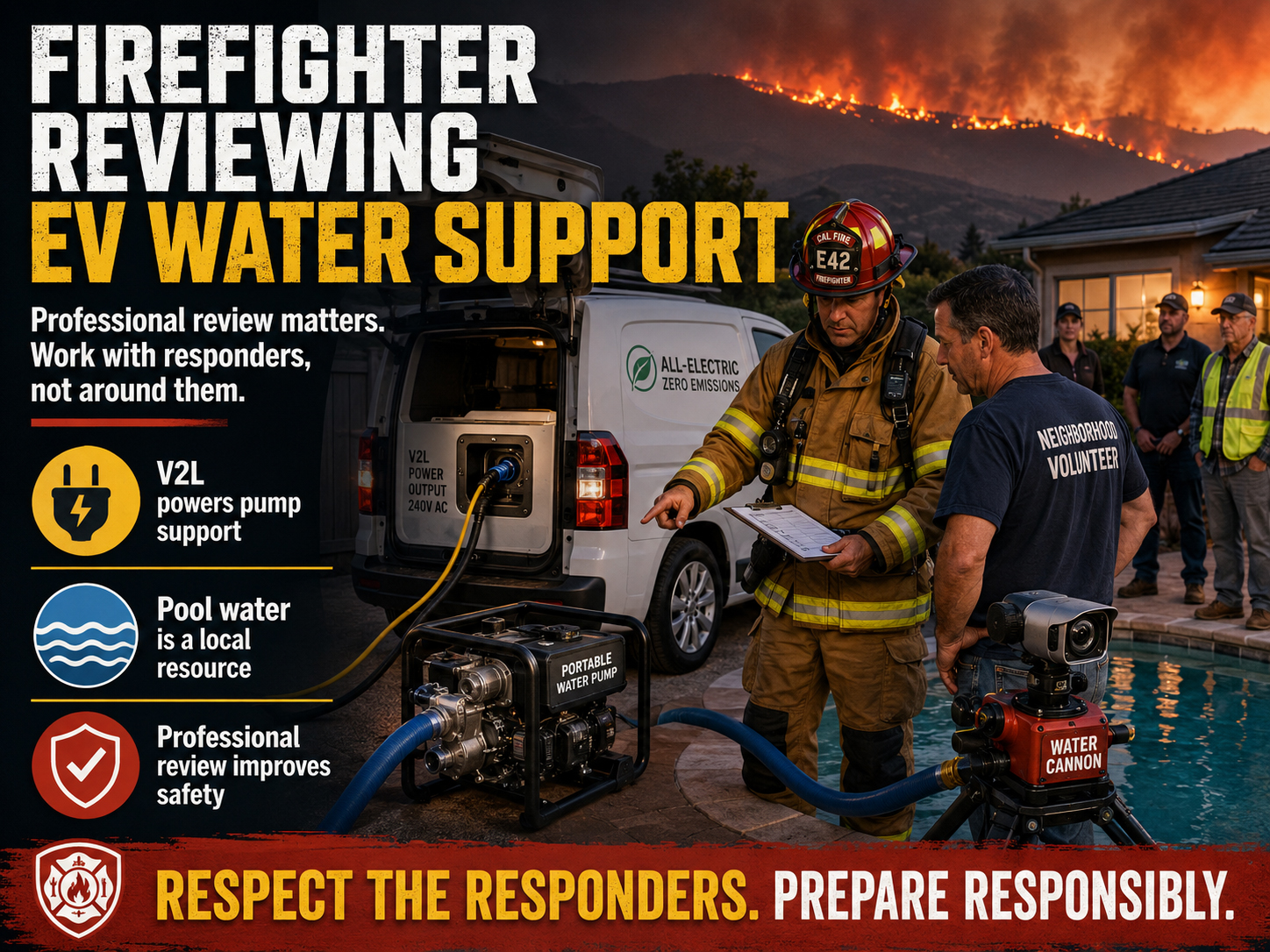
The SolarFireTruck water cannon concept is about readiness, not heroics. If authorities order evacuation, leave. If firefighters need access, clear the way. If the equipment becomes unsafe, shut it down.
Hard rule: A private water cannon must never be used to fight a major fire front, block emergency access, spray energized equipment, endanger people, or create false confidence during evacuation conditions.
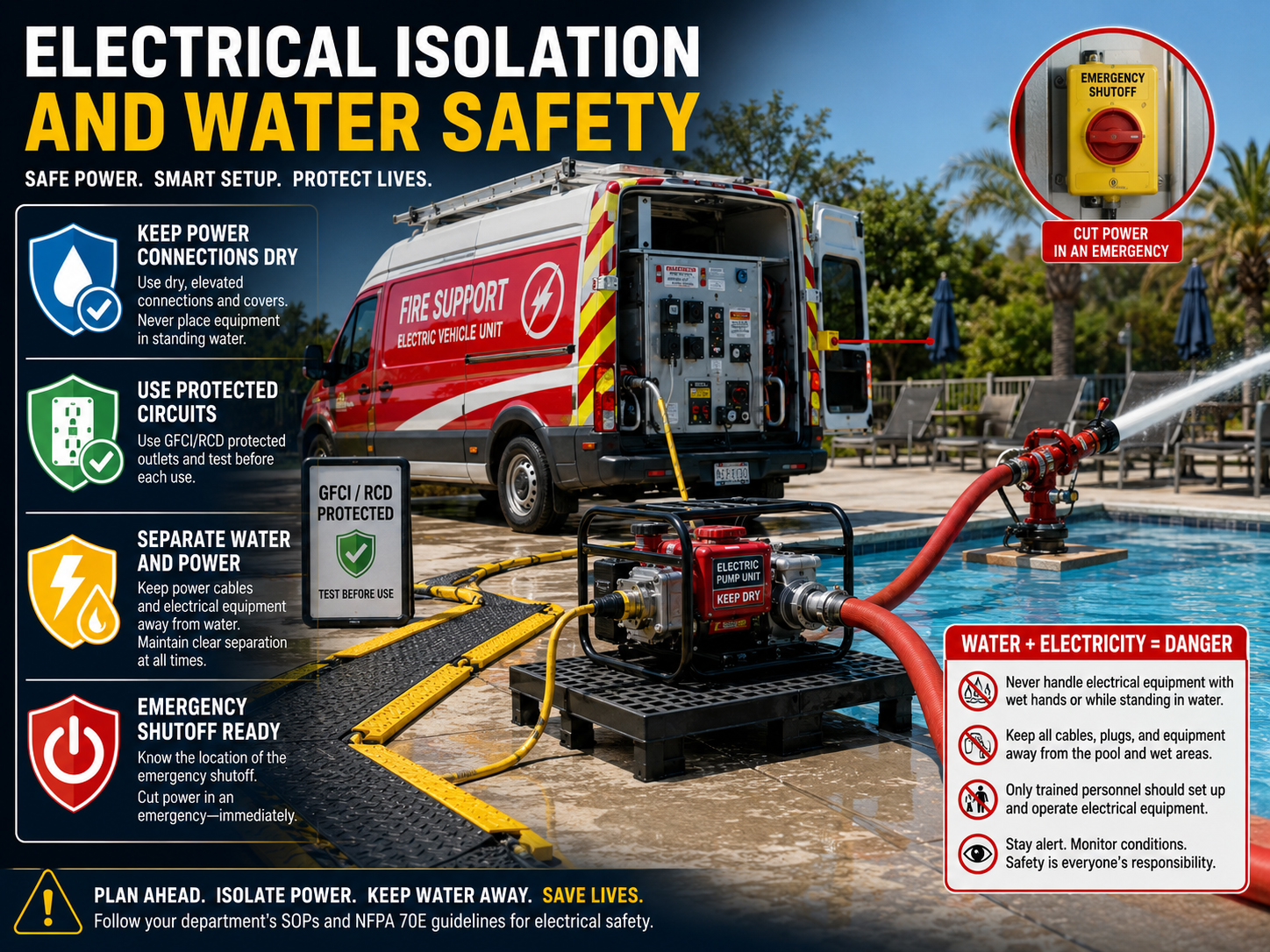
A cannon can overspray. Wind can shift. Hoses can leak. Pumps can trip. Cords can move. Any real installation must be designed so water and electricity are separated under bad conditions, not just ideal conditions.
A camera cannon is only useful if the water actually reaches it. The next page explains submersible pumps, floating intakes, hose routes, and practical deployment.