⚡
EV V2L Fire Readiness
An EV with Vehicle-to-Load capability can provide mobile electric power for selected emergency-readiness equipment.
EV + V2L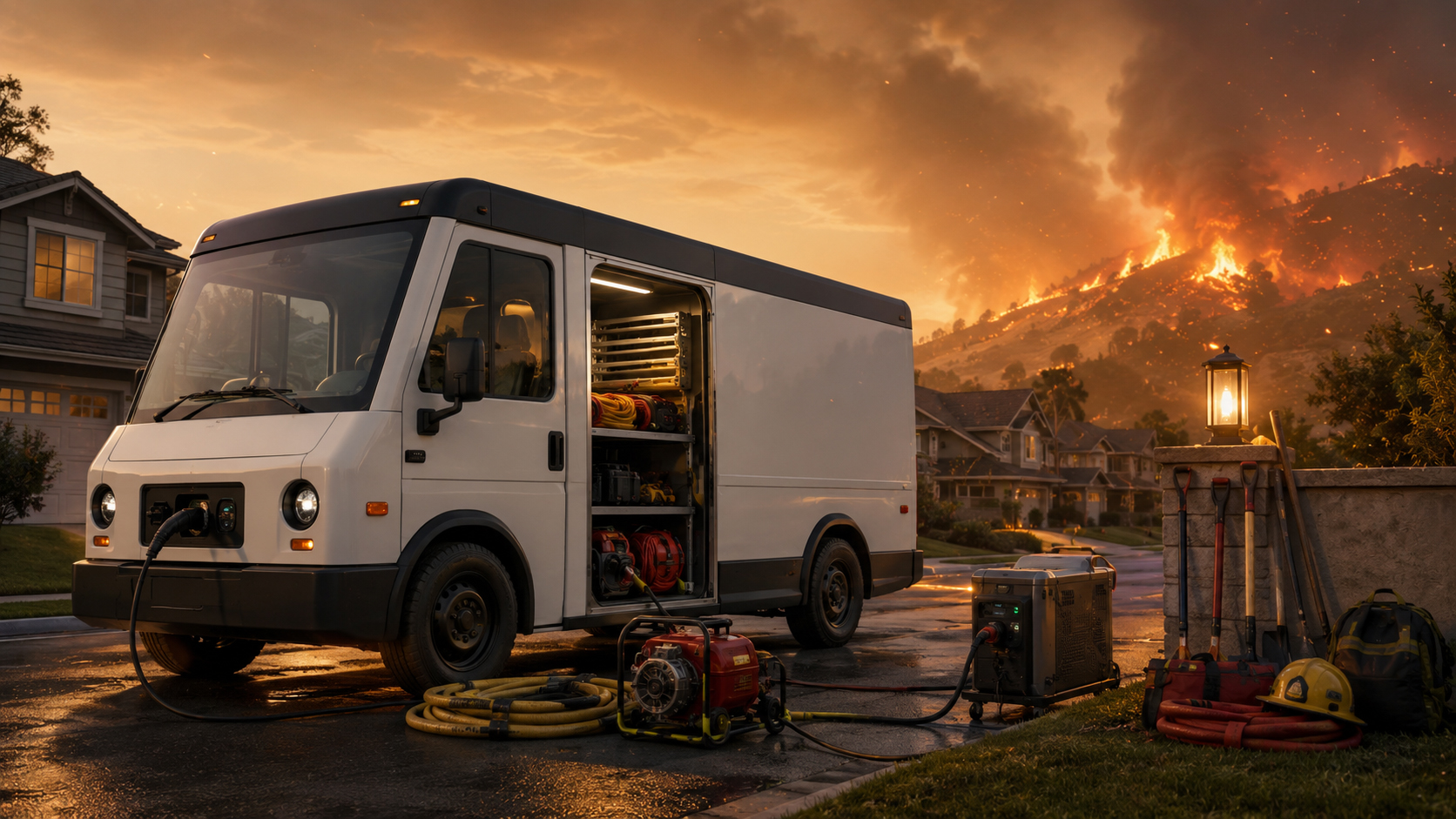
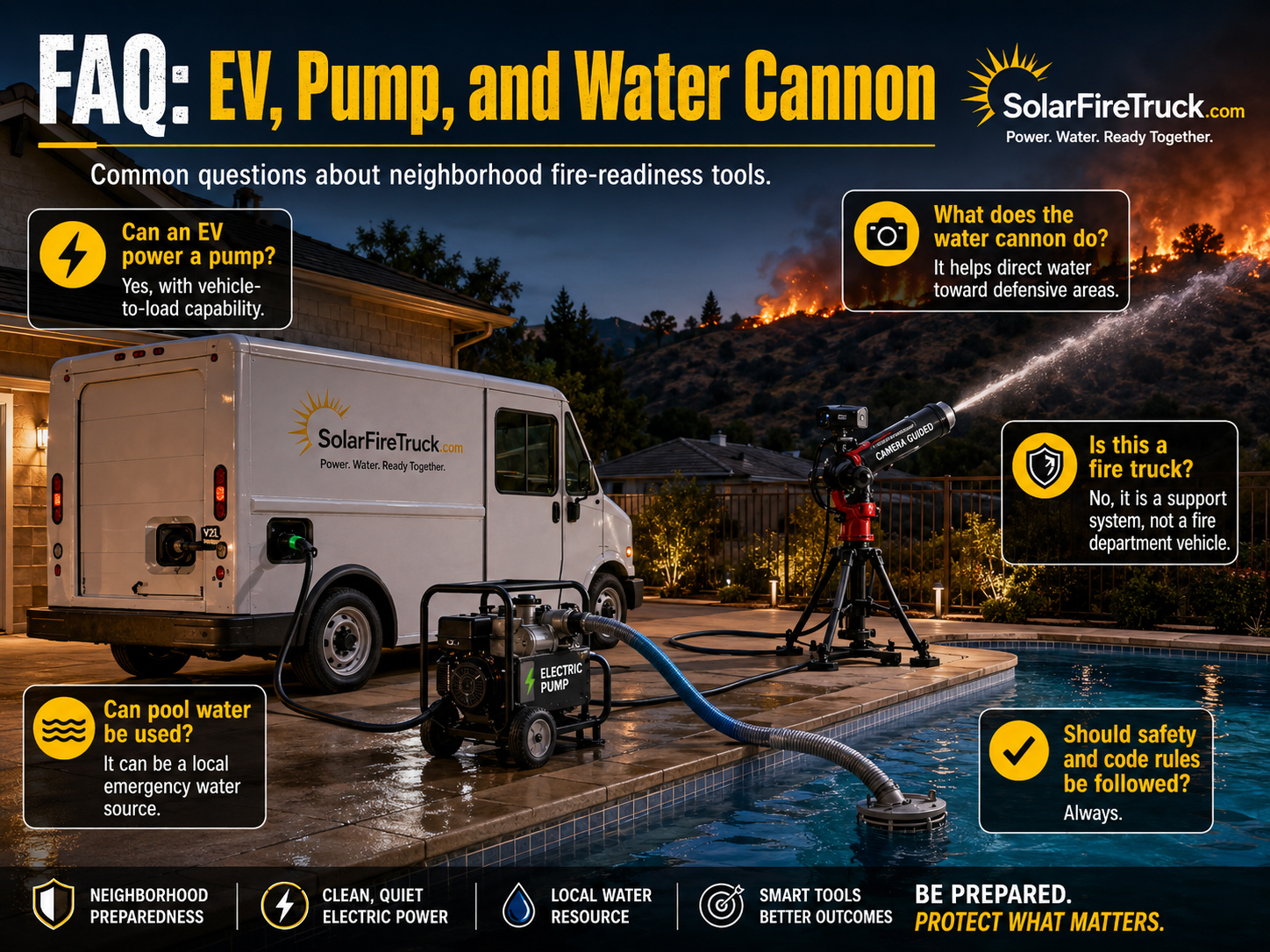
SolarFireTruck.com explores how electric postal trucks and municipal EVs with Vehicle-to-Load power could support pumps, pool-water drafting, cameras, lights, and automatic defensive water cannons during neighborhood fire emergencies.
SolarFireTruck.com is a concept and educational site. It is not a fire engine, not emergency instruction, not a fire-code system, and not a substitute for evacuation, firefighters, hydrants, permits, inspections, or professional design.
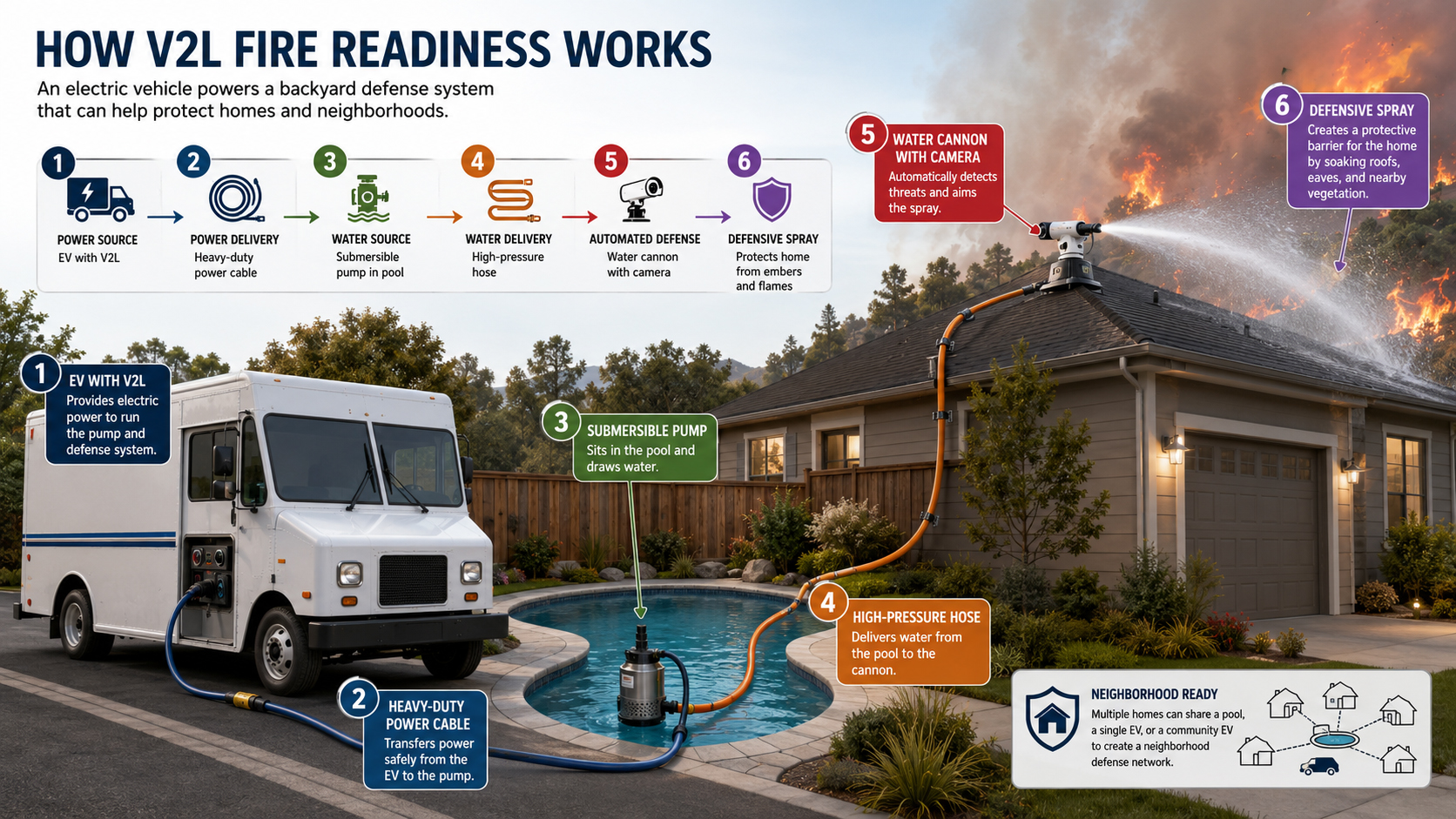
The concept is simple: the vehicle arrives with stored electric power. A pool already holds thousands of gallons of water. The missing link is a safe, engineered way to connect EV power to pumps, hoses, cameras, and defensive spray equipment.
SolarFireTruck.com is an educational concept site about dual-use emergency assets. The point is not fantasy firefighting. The point is practical preparedness before professional help arrives.
An EV with Vehicle-to-Load capability can provide mobile electric power for selected emergency-readiness equipment.
EV + V2LA pool can become a local water reserve when paired with the right pump, hose, strainer, and safety procedures.
Pool WaterA camera-guided cannon concept can focus water where it may help most, while humans remain responsible for safe use.
Water CannonThis is a private support concept. It does not replace firefighters, hydrants, evacuation, permits, or code-compliant systems.
Know the Boundary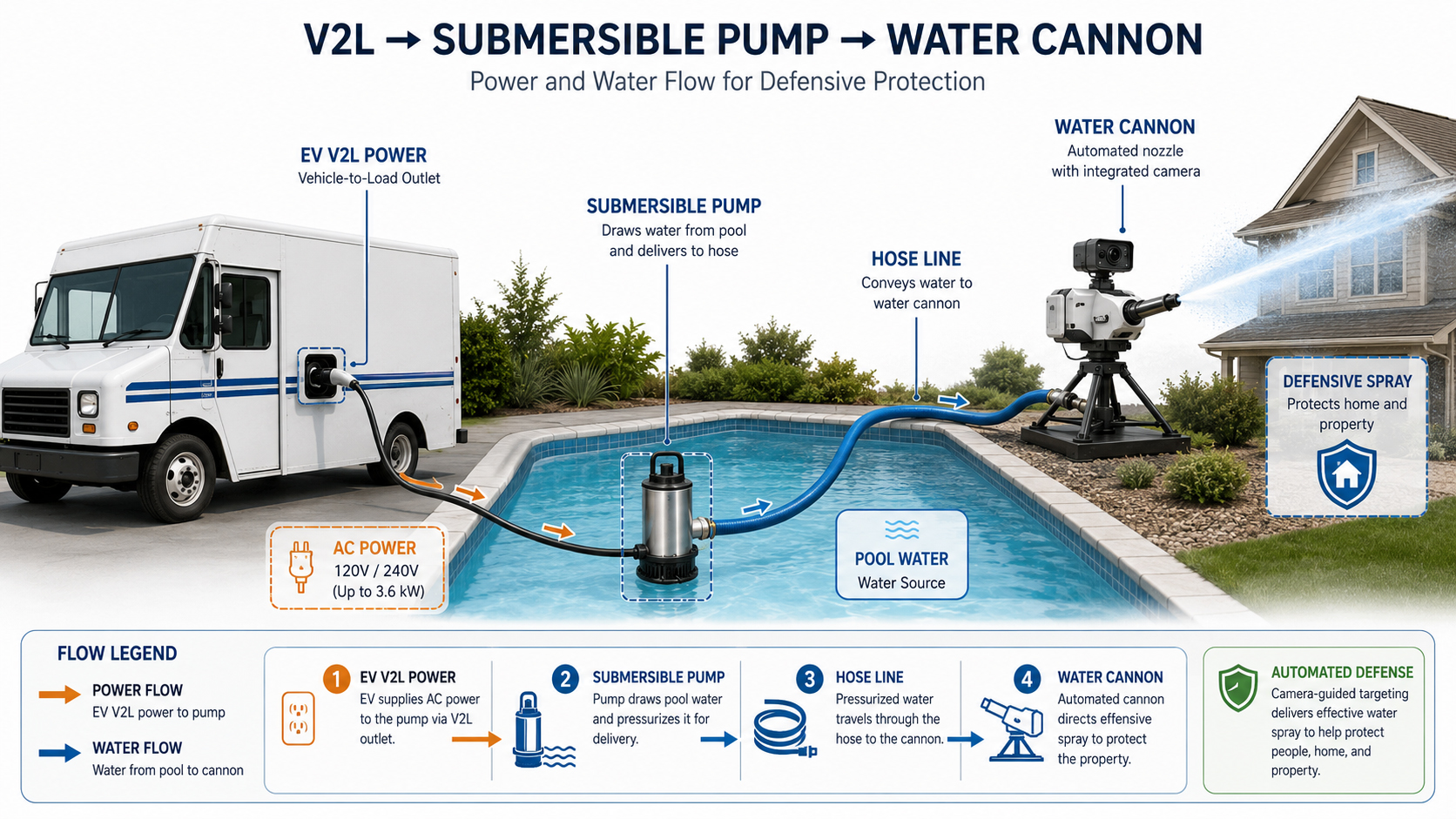
The SolarFireTruck concept works only as a complete chain. If the EV is parked wrong, the cable route is wet, the pump load is too high, or the hose blocks responders, the system fails the safety test.
In a neighborhood, one pool is useful. Many pools are a water map. One EV is useful. A local EV fleet is a readiness layer. SolarFireTruck.com turns that idea into pages, diagrams, and manga episodes that people can understand quickly.
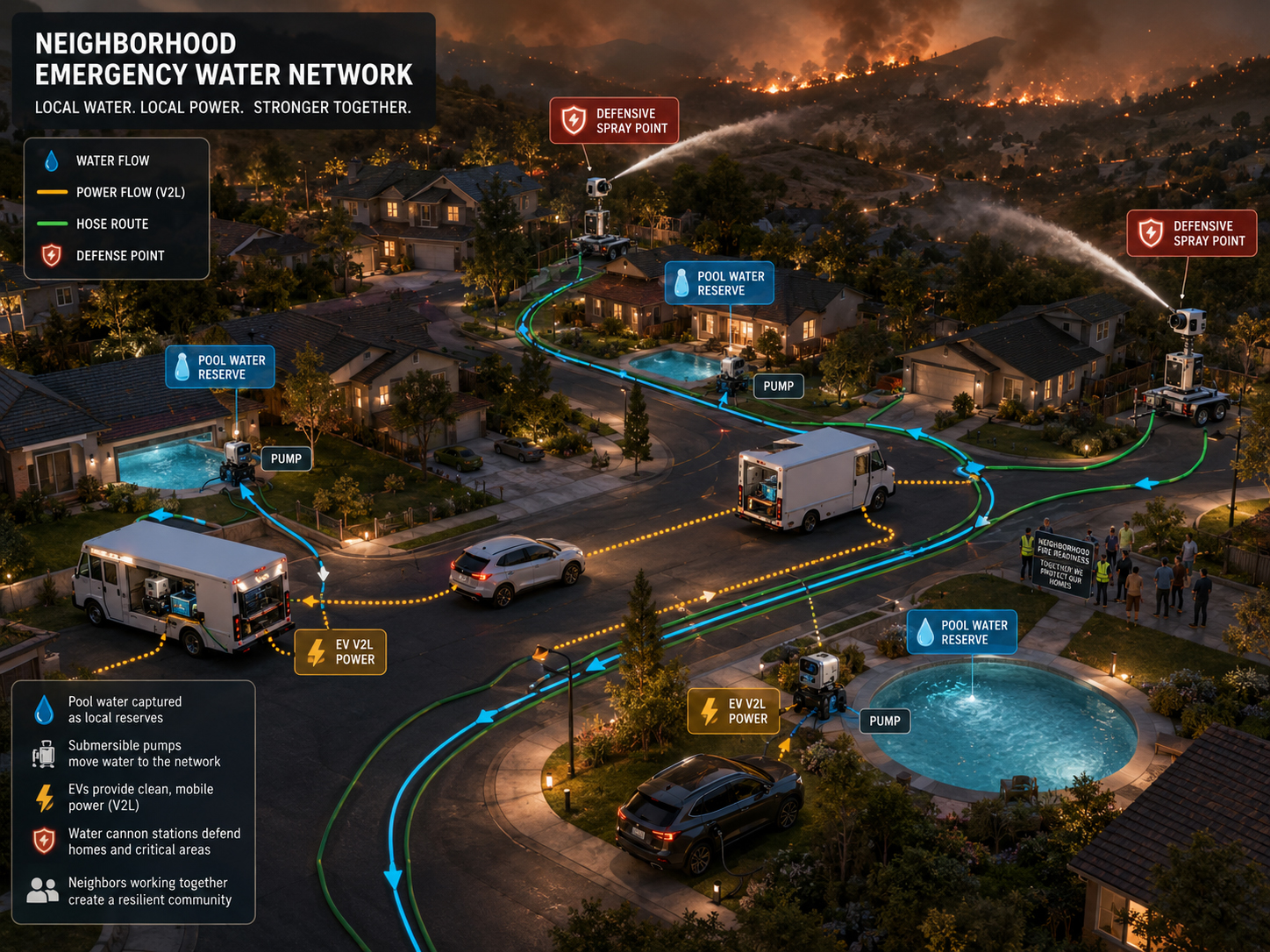
Visualize pools, pumps, and defensive points as local resources that can be planned before the emergency.
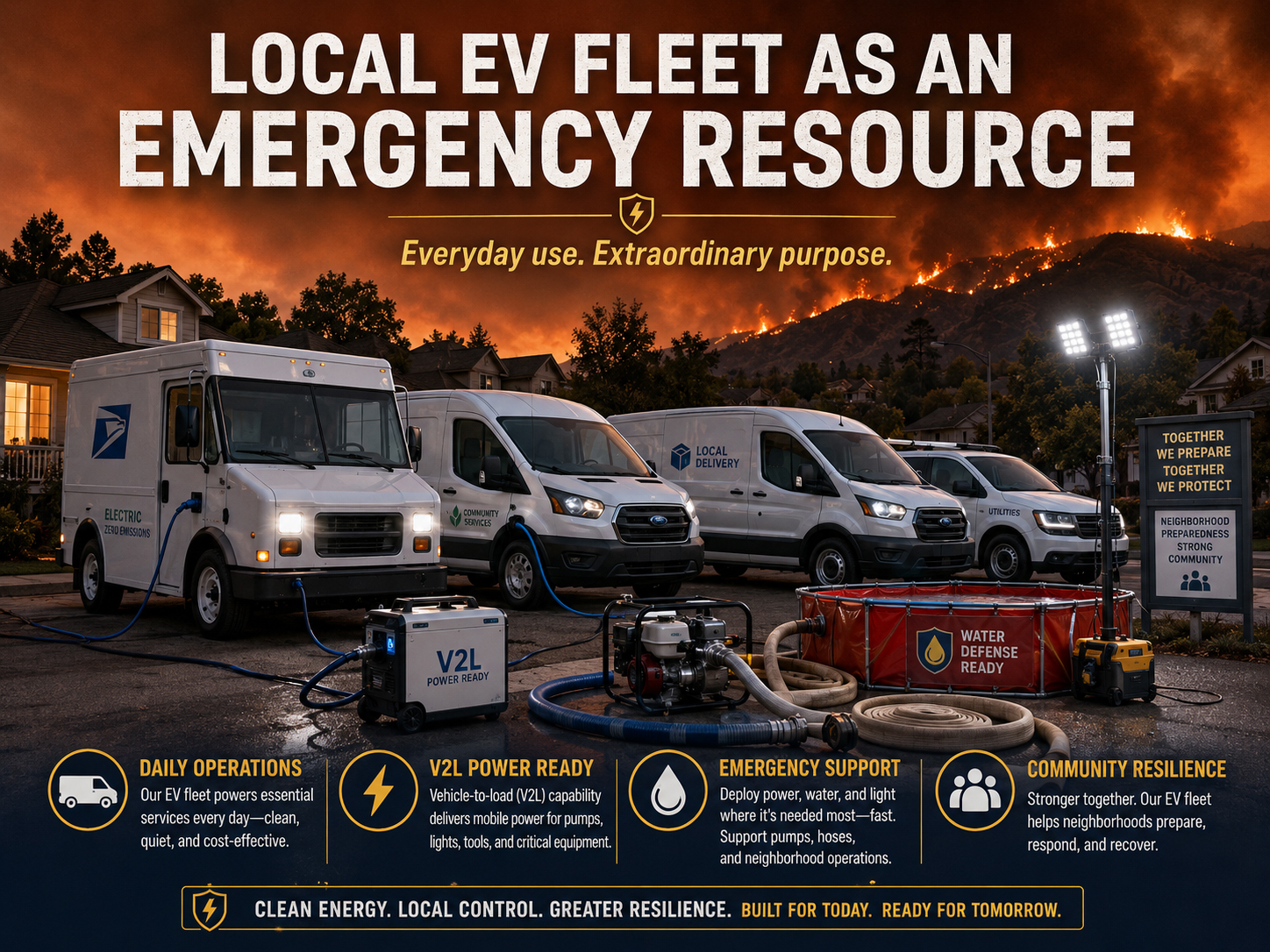
Postal trucks, municipal EVs, and work vans could become everyday assets with extraordinary emergency value.
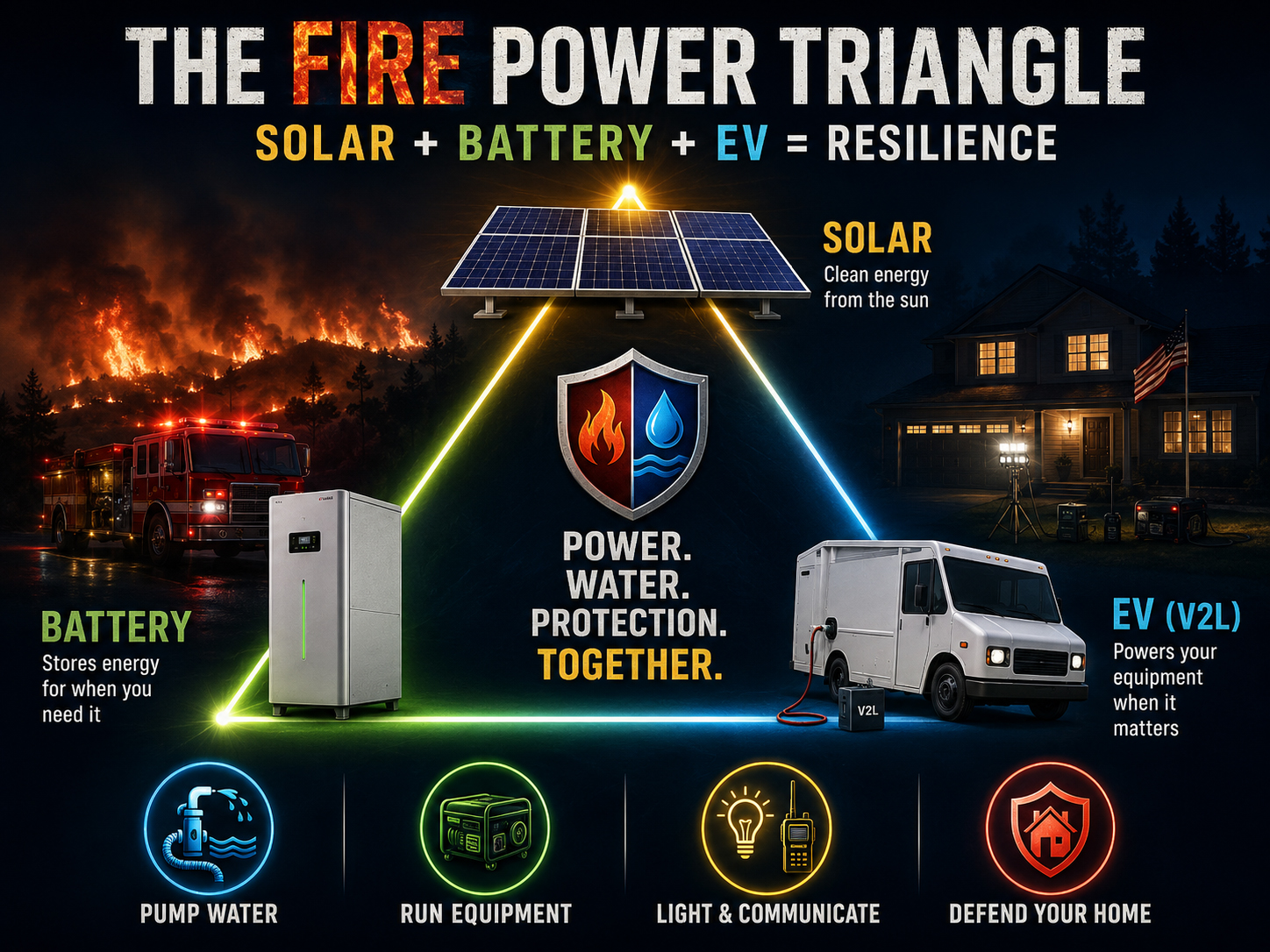
Solar, home batteries, and EVs can be explained as a clean power triangle for pumps, lights, and communications.
Any real-world system needs professional design, legal review, electrical safety, plumbing review, and fire-code awareness. This concept supports early situational readiness. It does not authorize anyone to ignore evacuation orders, block access, interfere with responders, or improvise unsafe electrical work around water.
Professional responders, public safety, fire codes, and permits remain the controlling framework.
Water and electricity demand serious separation, GFCI/RCD protection, dry routing, and emergency shutoffs.
Staging must preserve access, avoid heat and spray zones, and protect responders and neighbors.
A serious concept can still be taught with humor. The manga episodes turn V2L, pumps, pool water, cameras, safety boundaries, and firefighter respect into stories people remember.
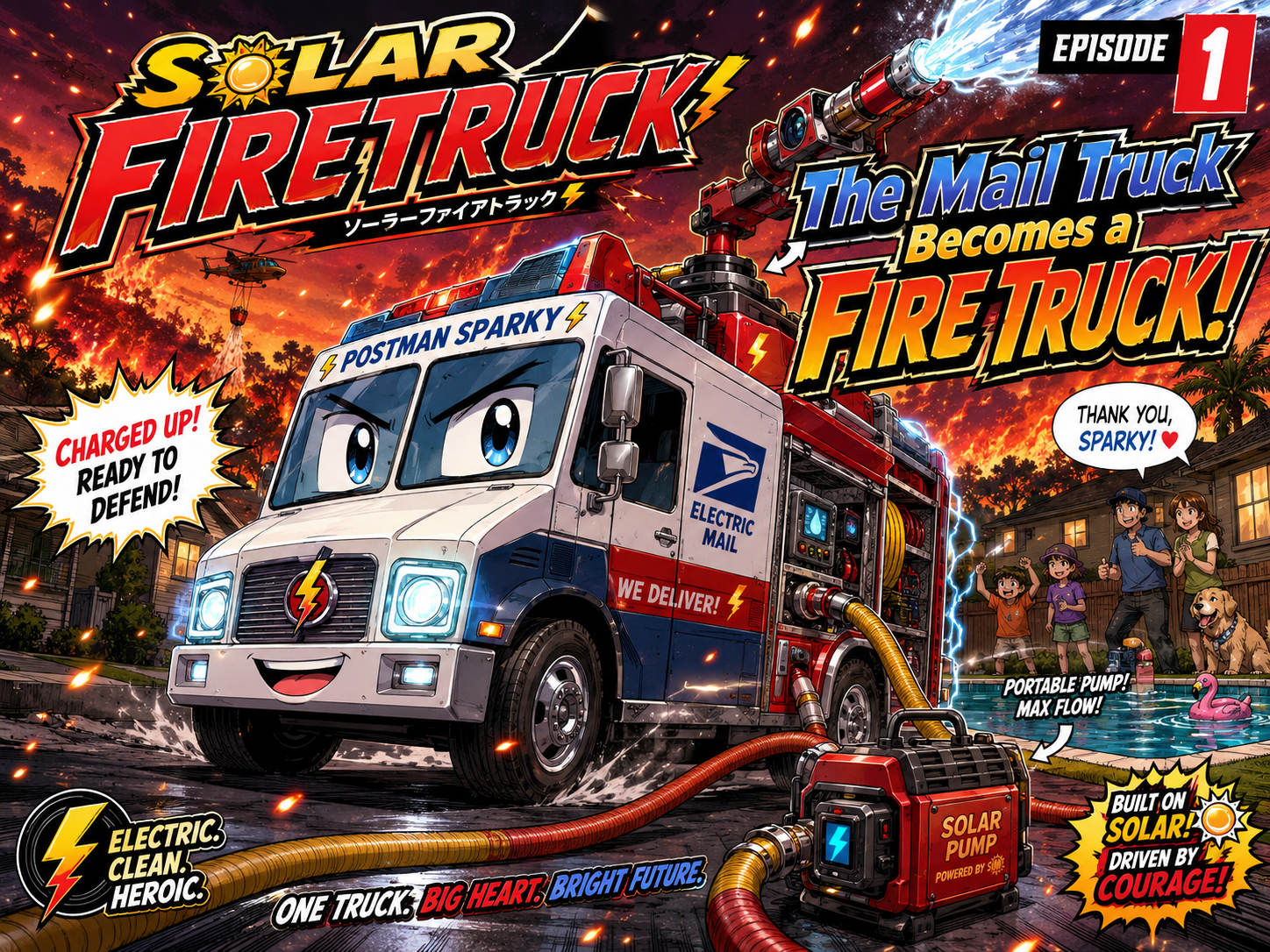 Episode 1
Postman Sparky discovers V2L power.
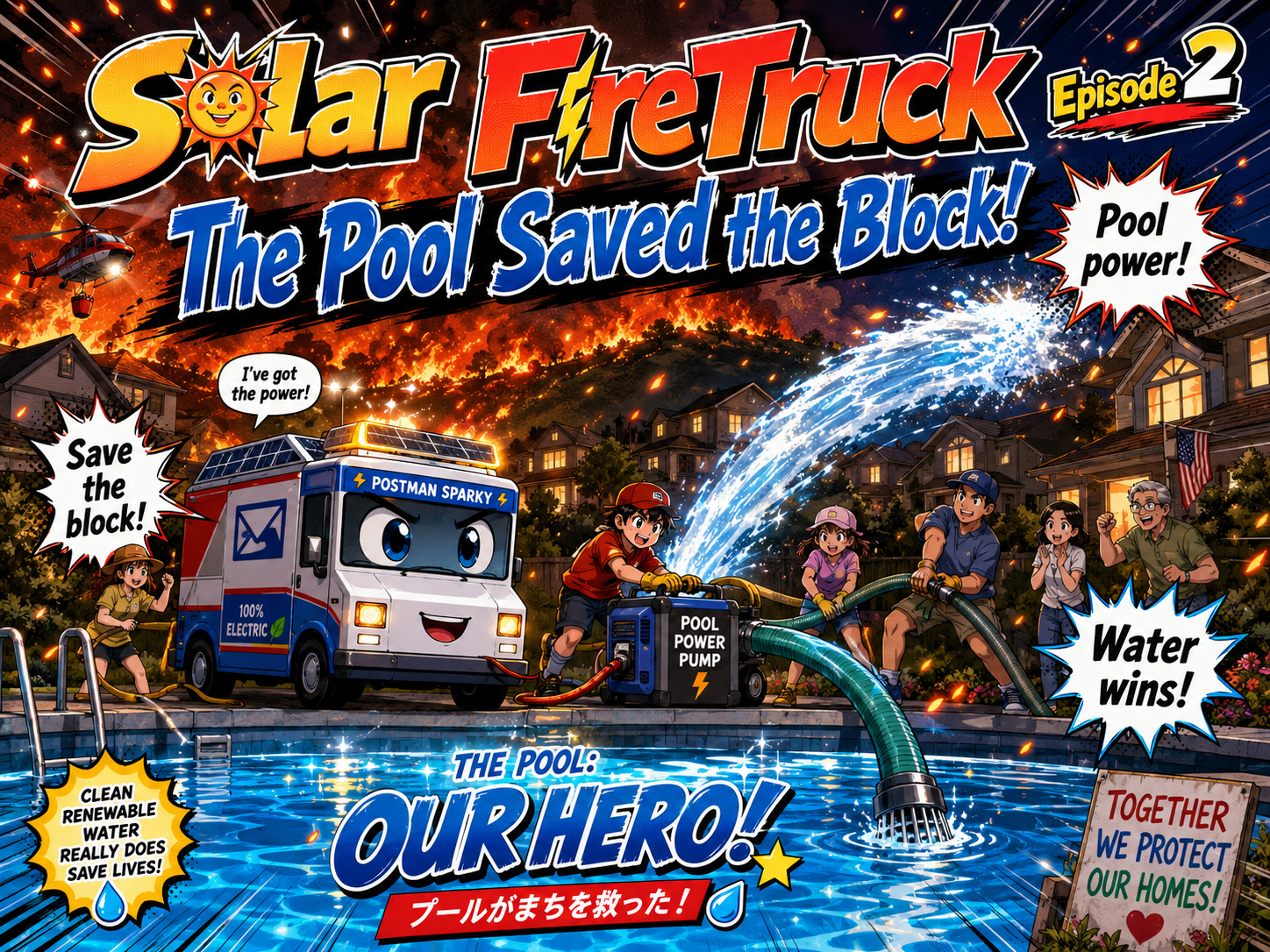 Episode 2
The neighborhood sees water differently.
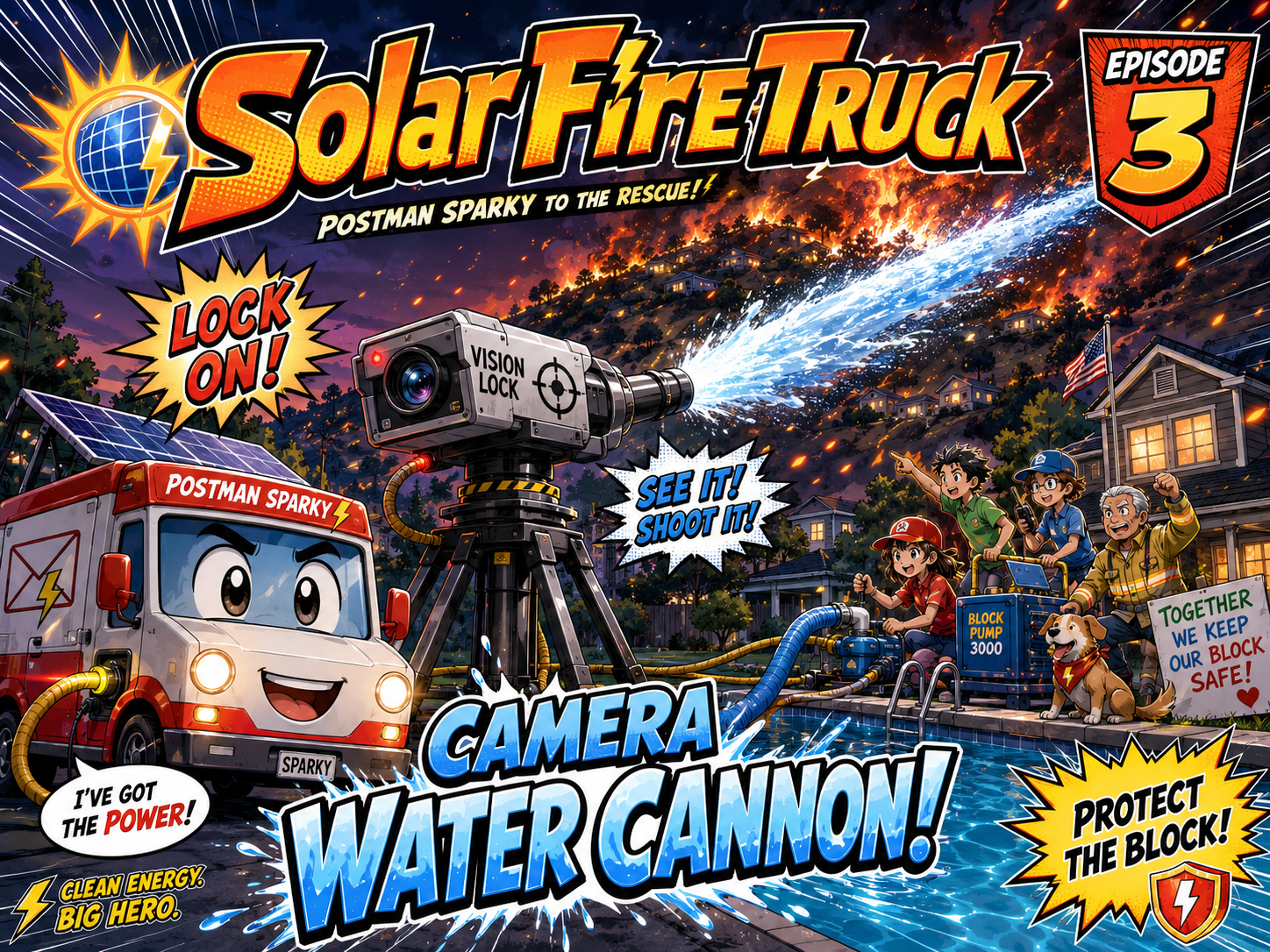 Episode 3
Seeing the threat changes the response.
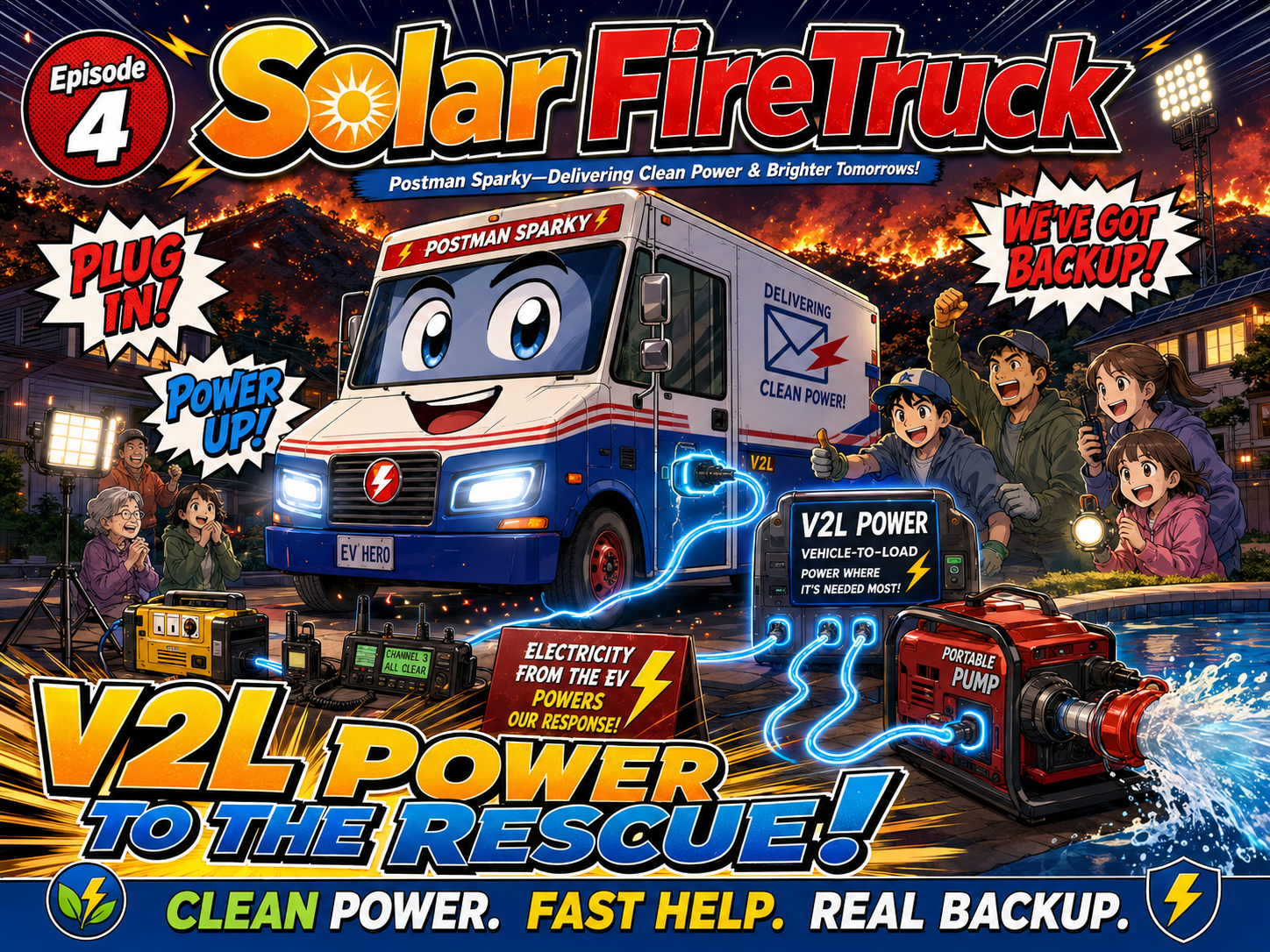 Episode 4
The EV becomes the neighborhood battery.
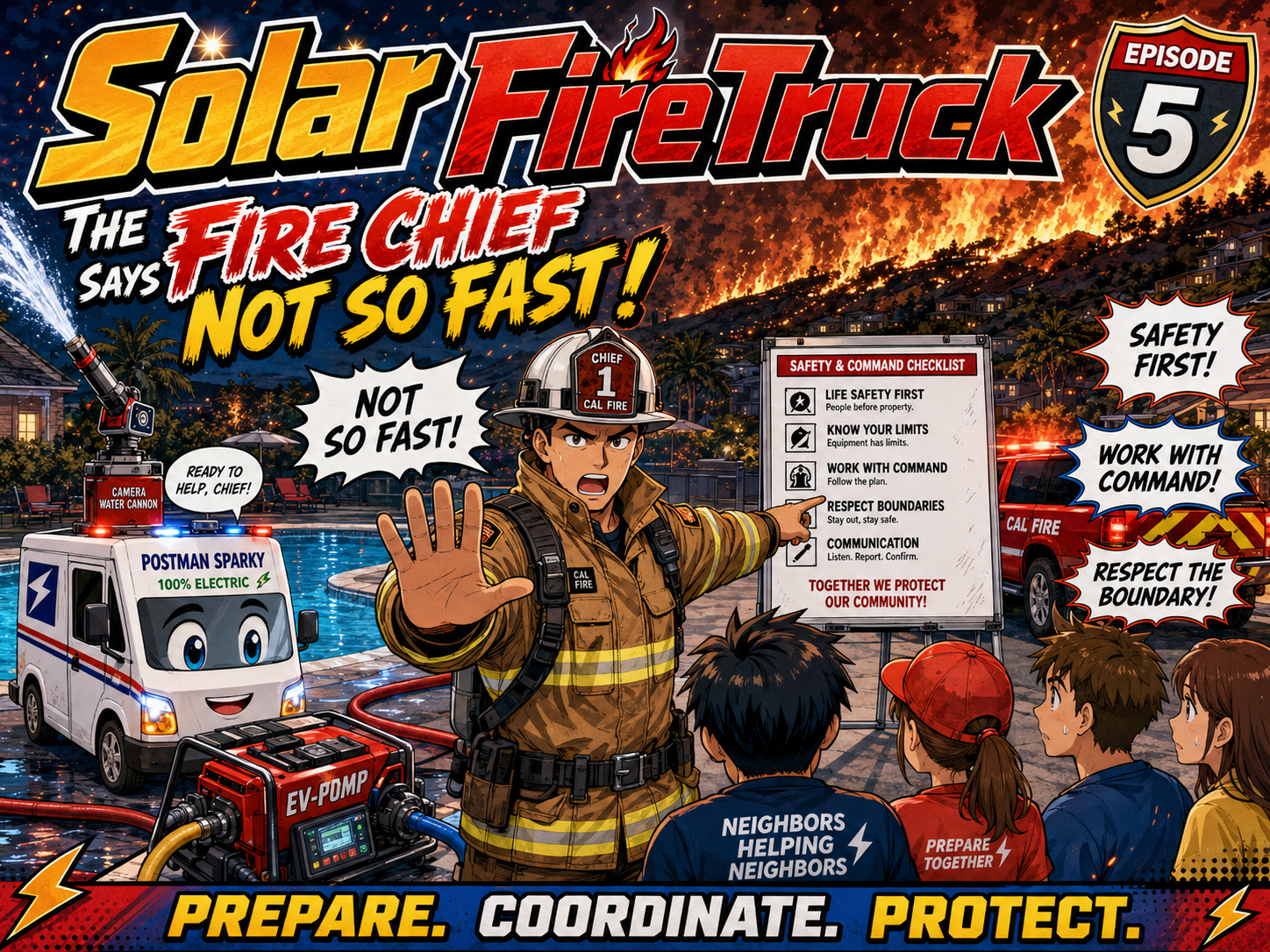 Episode 5
Respect command. Respect safety. Prepare responsibly.
Sometimes, if the vehicle has the correct V2L capability and the pump load is within the rated limits. But the real answer depends on equipment ratings, electrical protection, duty cycle, cable routing, water safety, and professional design.
SolarFireTruck.com is a concept and educational project. Real systems require licensed electrical, plumbing, fire, structural, and safety professionals before equipment is purchased, installed, or trusted.