⚡
Dry power zone
EV outlets, plugs, controls, extension connections, adapters, and battery equipment should stay dry, protected, and accessible for shutdown.
SolarFireTruck.com discusses EV Vehicle-to-Load power, pool water, pumps, hoses, cameras, batteries, and emergency-readiness concepts. The most dangerous failure is casual electrical thinking near water.
A SolarFireTruck-style setup may look simple: EV outlet, cable, pump, pool, hose, cannon. In reality, it combines wet surfaces, portable power, motor loads, trip hazards, smoke, stress, and moving people. That combination needs conservative professional design.
Hard warning: This page is educational only. It is not electrical design, emergency instruction, code approval, or permission to build. Use qualified electrical professionals and follow local codes, product instructions, utility rules, and emergency authority.
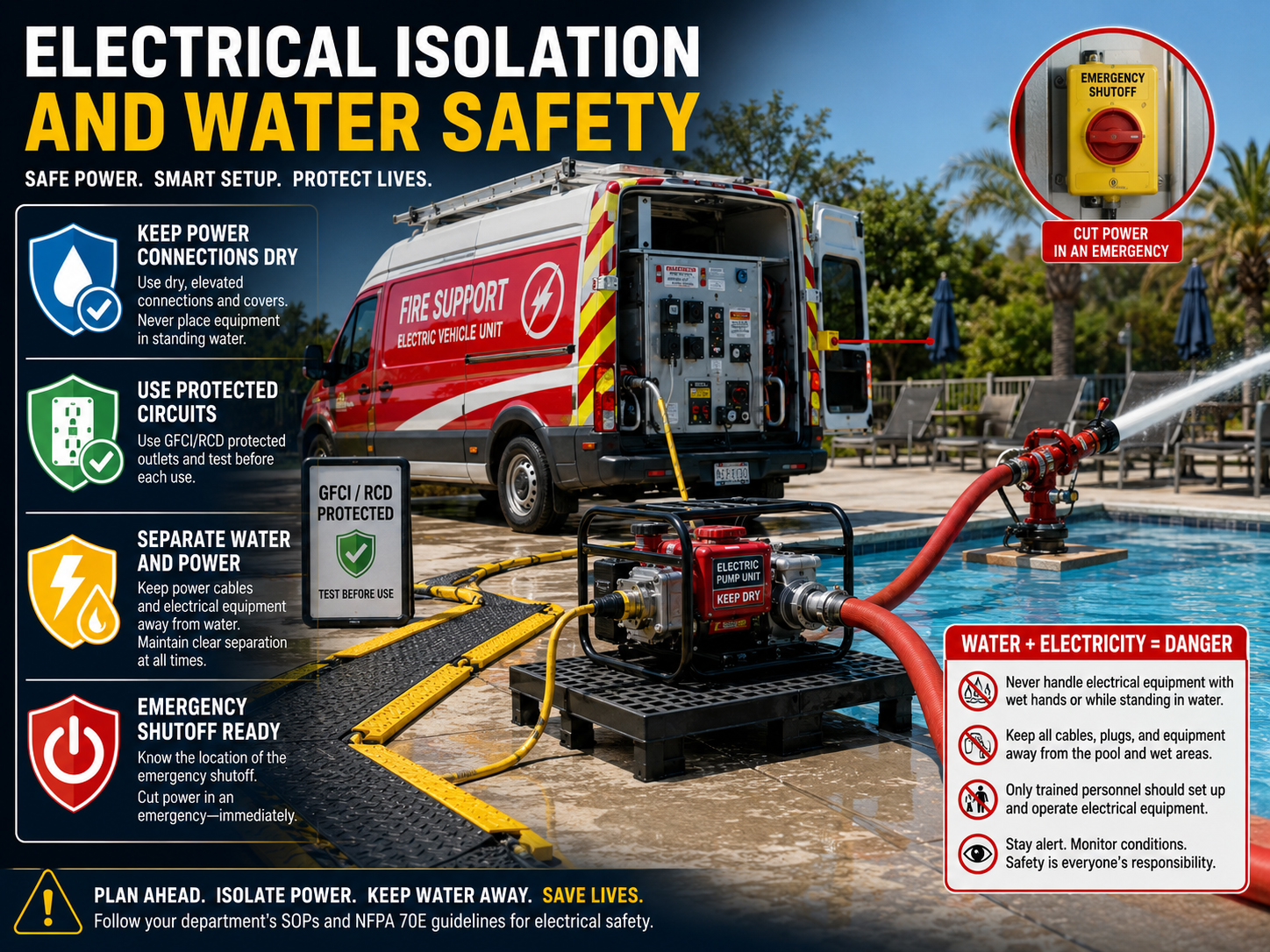
A safer design treats the system as zones: dry power zone, wet pump zone, hose route, spray zone, people zone, EV parking zone, and firefighter access zone.
EV outlets, plugs, controls, extension connections, adapters, and battery equipment should stay dry, protected, and accessible for shutdown.
The pump and intake may be near or in the water source, but power connections must not be casually placed at pool edges or wet walking areas.
The cannon or nozzle can overspray. The EV, battery, cords, controls, people, windows, and responders must be kept out of hazard areas.
Firefighters, engines, gates, hydrants, driveways, turnarounds, and evacuation routes must remain clear of cables, hoses, and vehicles.
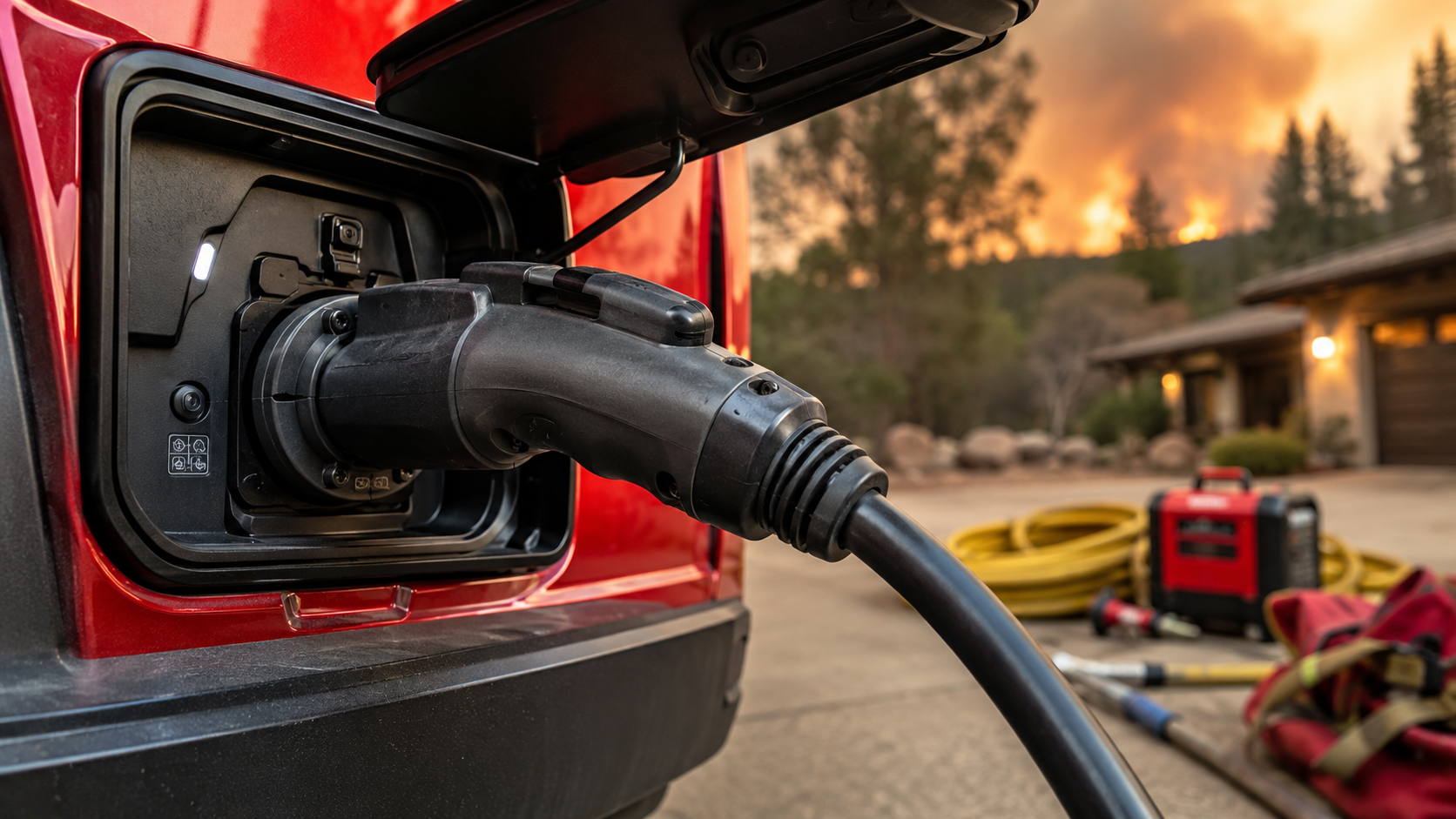
Vehicle-to-Load output has voltage, wattage, current, duty-cycle, grounding, and manufacturer limits. Pumps can have startup surge. Long cords can overheat. Wet connectors can become dangerous.
Good planning looks for the obvious failure points before red-flag wind, smoke, darkness, or panic.
A wet hose path can become a wet electrical path. Cables and hoses should be separated, protected, labeled, and routed so people do not trip or drag water across power connections.
A water cannon can overspray, wind can shift, and hoses can leak. EV outlets, doors, charging ports, battery systems, and operators should be outside spray hazard areas.
A pump may draw far more power at startup than while running. A V2L outlet can be overloaded if pump behavior is not understood.
If a hose bursts, cable gets wet, or responders need access, the system needs fast, obvious shutdown. A hidden plug or confusing control box is not acceptable.
The SolarFireTruck idea becomes unsafe if people treat EV power like a casual backyard outlet and pool water like a harmless toy. The combination deserves respect.
Do not: run ordinary cords through puddles or pool decks, overload V2L outlets, bypass protection, backfeed home circuits, place connectors on wet ground, aim spray at electrical equipment, or keep operating when evacuation is ordered.
A safe readiness kit should be understandable at a glance. People under stress should not be guessing which cable, hose, switch, pump, or parking zone is correct.
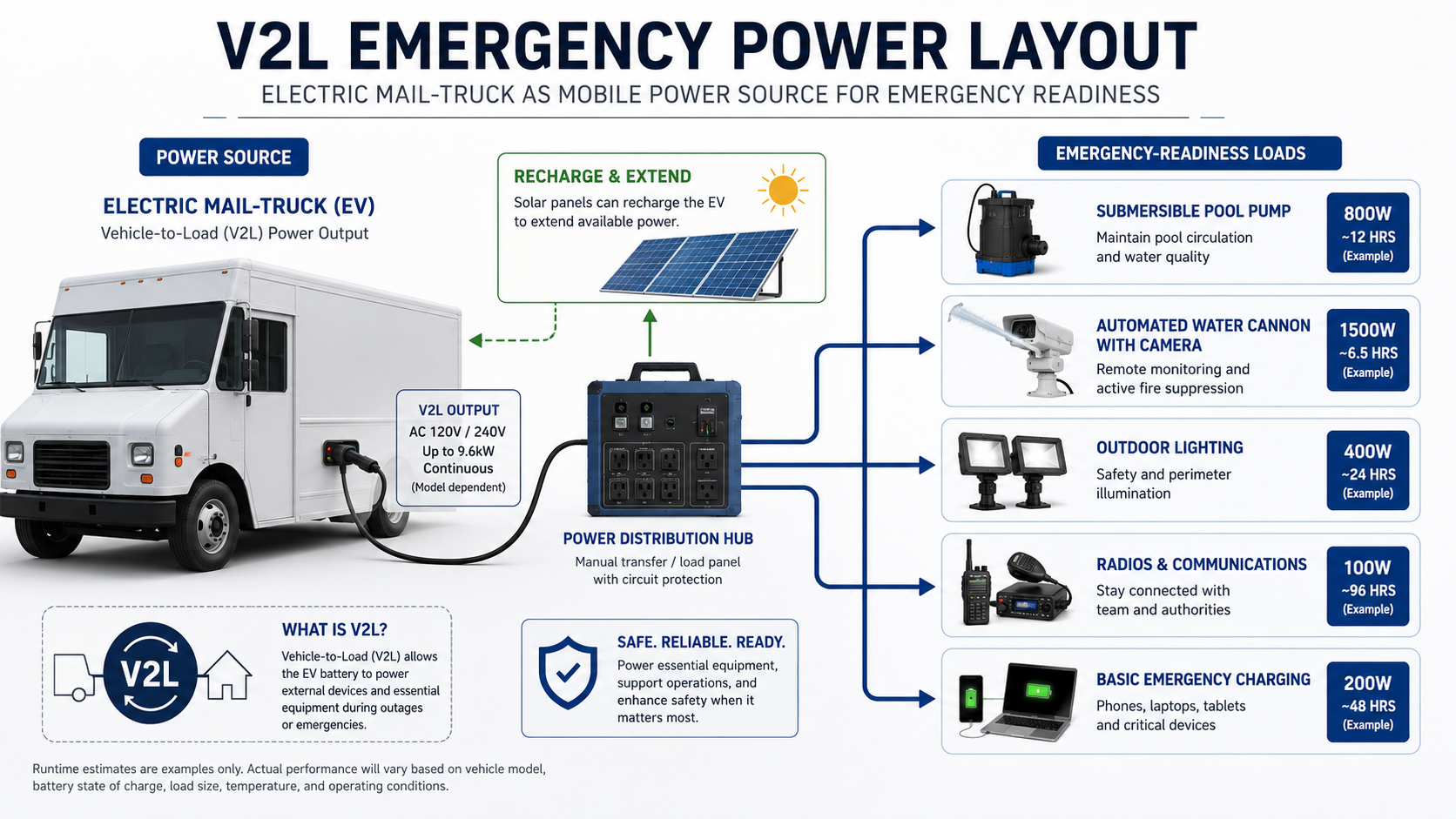

An EV providing V2L power can become trapped by its own cords and hoses if the layout is bad. It can also block responders if staged incorrectly.
The SolarFireTruck concept can be explained on a website. A real installation cannot be approved by a website.
Electrical codes, fire codes, manufacturer instructions, utility rules, building rules, and local requirements must be reviewed.
Transfer equipment, battery systems, EV power export, wet-location devices, and pump circuits require qualified professionals.
The system should be understandable to firefighters and should never create new hazards during response.
Electrical isolation is one part of the boundary. The firefighter and code disclaimer explains the larger safety framework.