🚚
EV power zone
The EV should be close enough to power equipment, but far enough from water spray, heat, smoke, and vehicle entrapment.
In the SolarFireTruck.com concept, an EV with Vehicle-to-Load power can support pumps, lights, cameras, radios, and controls. But the EV is useful only if it is parked safely, kept movable, outside spray and heat zones, and never blocking firefighters or evacuation.
A V2L-capable EV can be valuable during outage or wildfire-readiness planning, but a badly staged EV can block fire engines, trap people, block gates, stretch cords through wet areas, or sit inside a water-cannon spray zone.
Hard rule: If official evacuation is ordered, leave. If firefighters need access, clear the way. If the EV blocks a road, gate, hydrant, driveway, or responder work area, it is not helping.
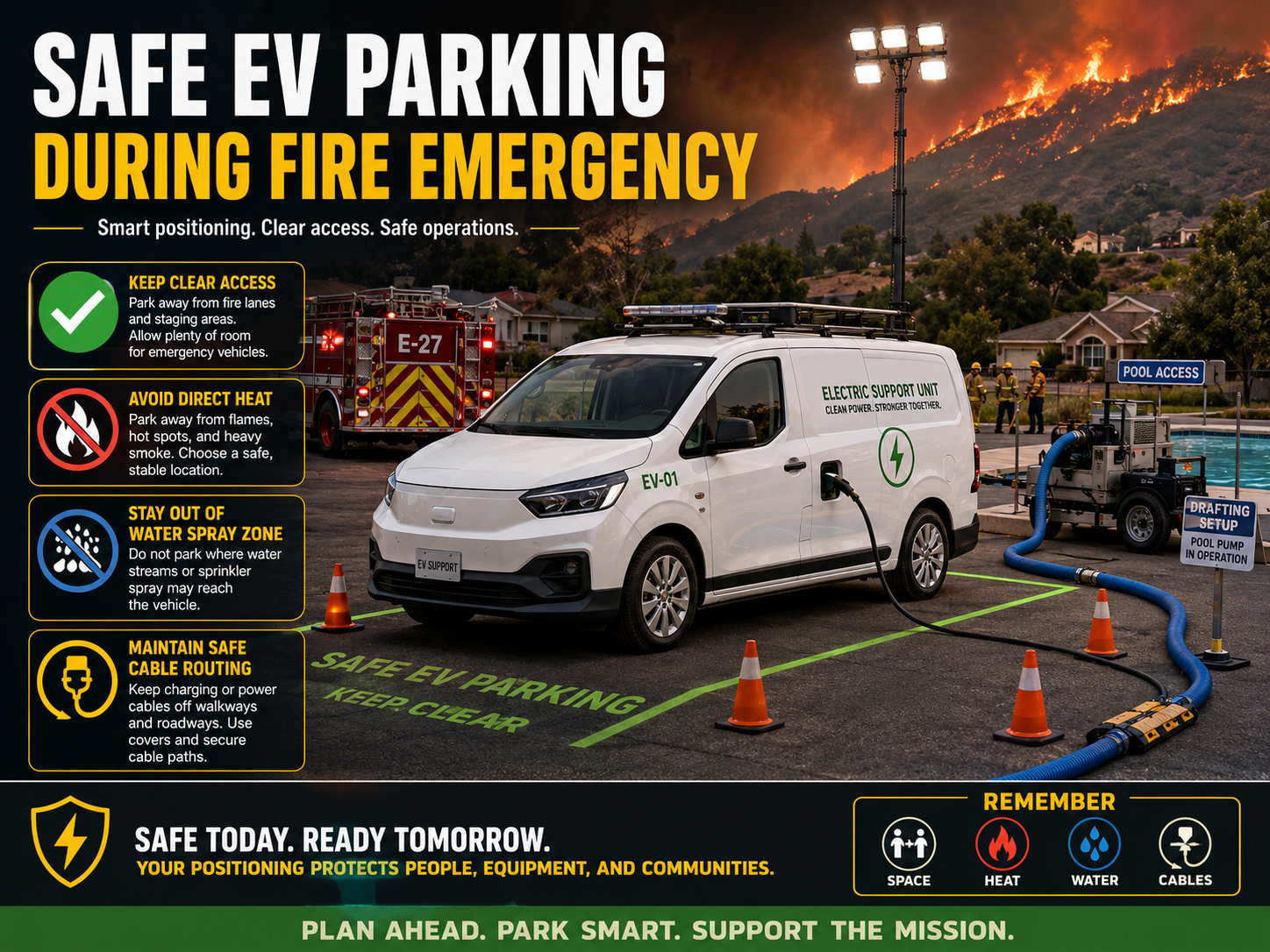
A responsible SolarFireTruck layout separates the EV power zone, pump zone, hose route, spray zone, evacuation path, and firefighter access path.
The EV should be close enough to power equipment, but far enough from water spray, heat, smoke, and vehicle entrapment.
Pool, pump, intake, hose, and wet work areas should be separated from EV outlets, cable connections, batteries, and controls.
Water cannon overspray, wind drift, leaking hoses, and nozzle movement should not reach the EV or electrical gear.
Fire engines, firefighters, hydrants, gates, driveways, turnarounds, and evacuation routes must stay open.
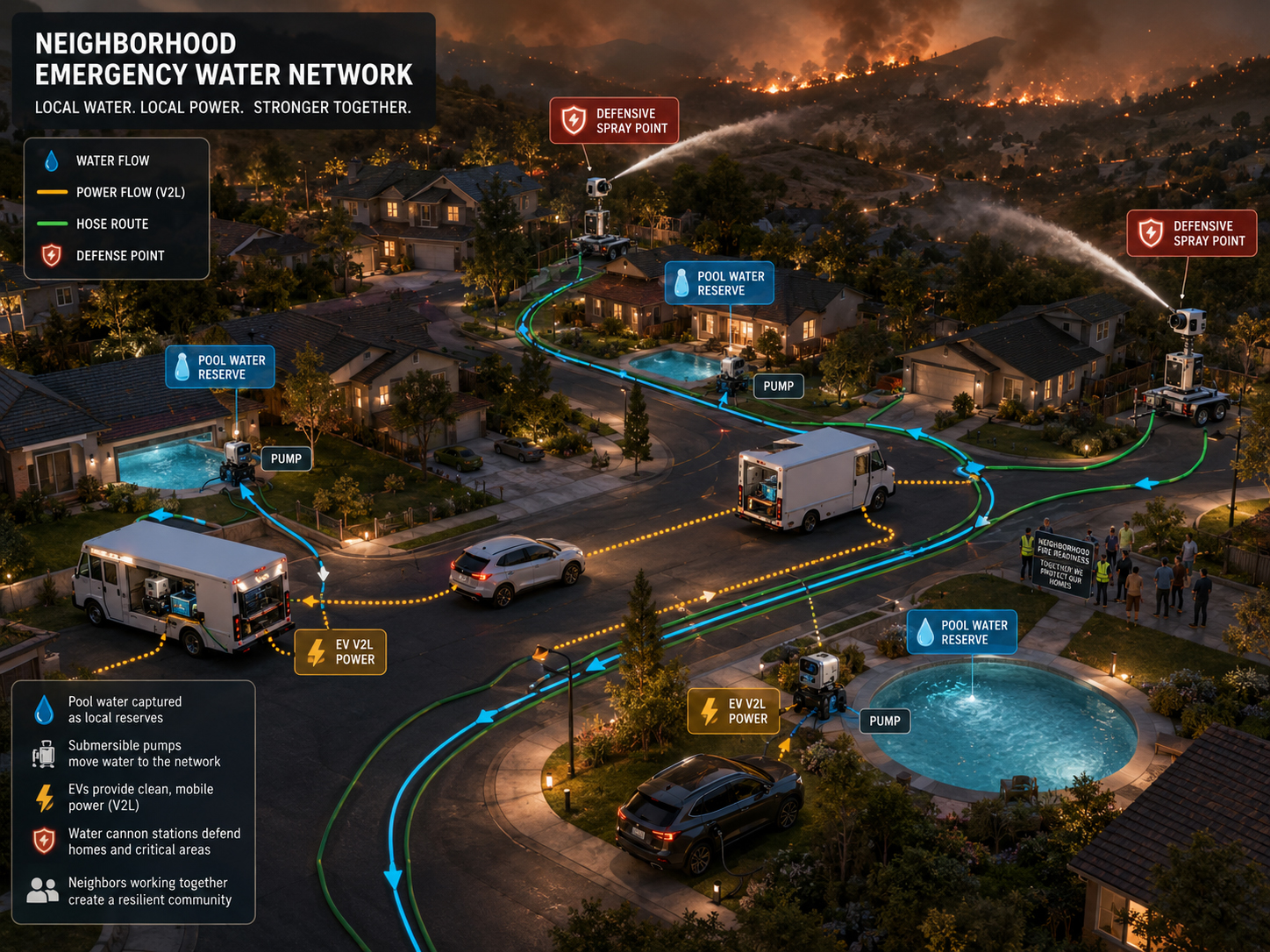
The EV should not be staged just because an outlet or hose route is easy. It must be staged where it preserves emergency movement and can be relocated quickly.
These mistakes can turn a potentially useful EV into a liability.
Parking near the pool may shorten the cord run, but it may expose the EV to wet decks, spray, puddles, hose leaks, and people carrying wet equipment.
A camera water cannon can overspray, wind can shift, and hose connections can fail. Keep the EV and its power connections out of spray hazard zones.
A support EV parked in a narrow street, cul-de-sac, or fire lane can prevent emergency vehicles from reaching the danger.
If hoses, cords, smoke, heat, or other vehicles trap the EV, the resource may be lost and people may be put at risk.
A Vehicle-to-Load EV can run equipment, but it may also be needed to leave. A readiness plan must preserve enough charge and a clear path for relocation or evacuation.
Battery reserve matters: Do not use V2L power in a way that leaves the EV unable to move away from danger. Preserving evacuation range may be more important than running a pump or camera.
A badly parked EV forces cables across wet paths, hoses across driveways, and people across trip hazards. The correct parking spot reduces the entire site’s risk.
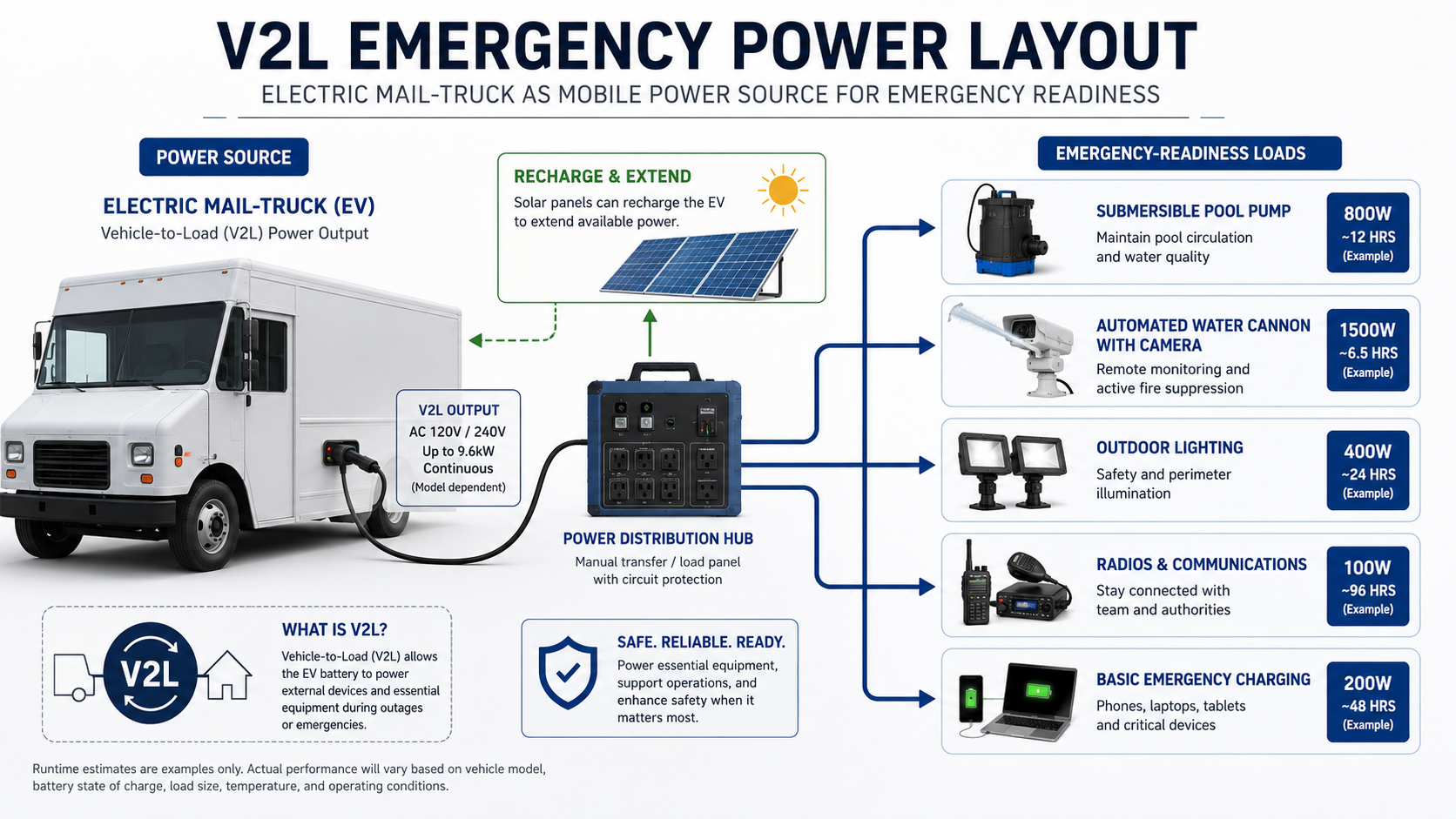
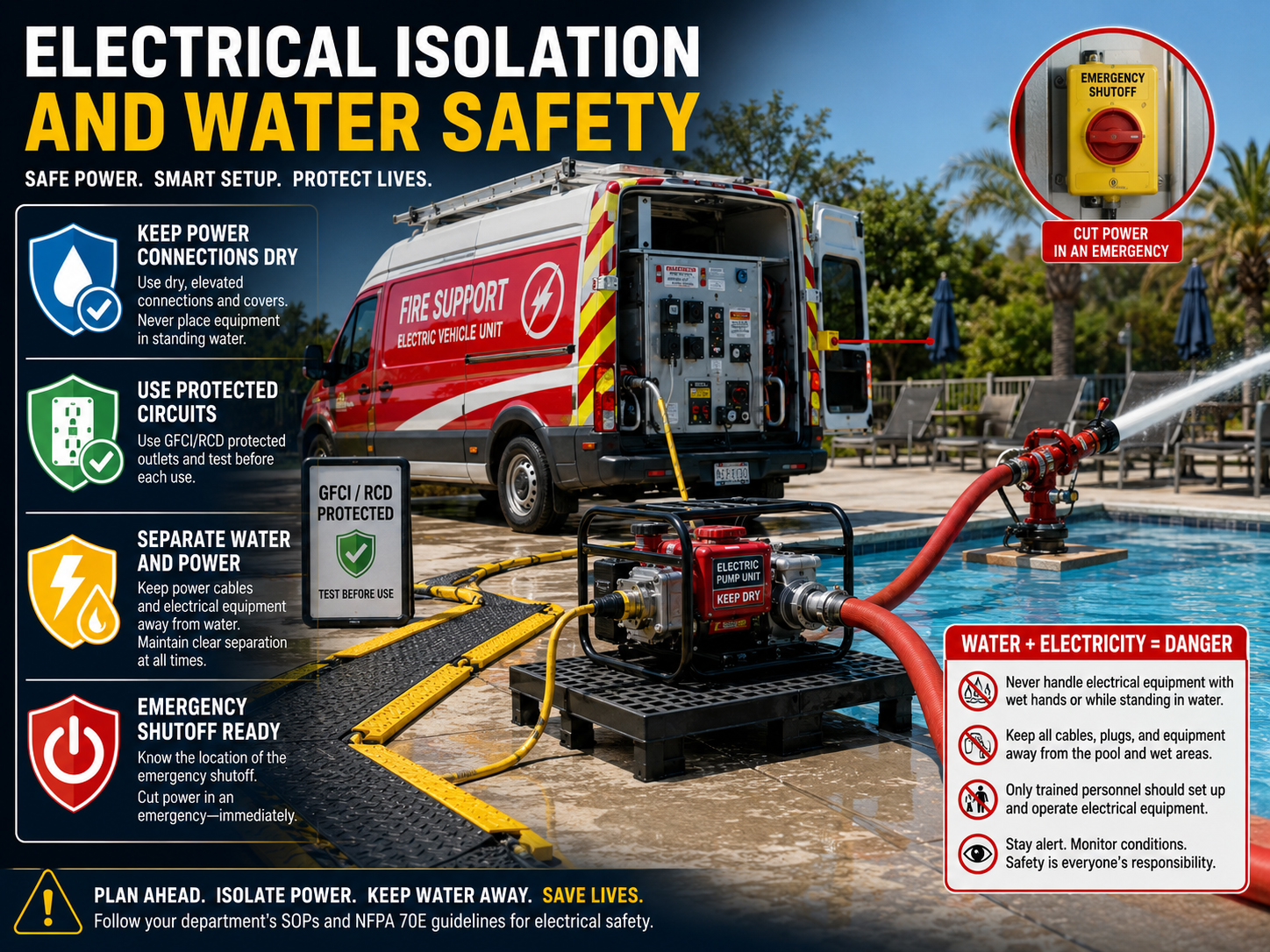
The EV should not be treated like a casual extension-cord outlet. It is a battery-powered vehicle with a specific power-export rating, safety rules, and manufacturer limitations.
Put V2L connections where they are protected from spray, hose leaks, wet ground, and people carrying wet equipment.
The operator should be able to shut down and disconnect power quickly if conditions change.
Any real setup should be reviewed by qualified electrical professionals before anyone relies on it.
If the answer is unclear, the site is not ready for deployment.
Streets, hydrants, gates, driveways, and turnarounds must remain open.
The vehicle must not be trapped by hoses, cords, gates, heat, smoke, or other vehicles.
V2L outlets, connectors, and controls must be outside water and spray zones.
No wet crossings, trip hazards, crushed cords, or hidden connections.
Keep enough charge for evacuation, relocation, and safe shutdown.
Shutdown steps must be obvious to the operator and compatible with emergency response.
Safe parking and electrical isolation are the same safety story. The EV is the power source, so where it sits determines many of the hazards.