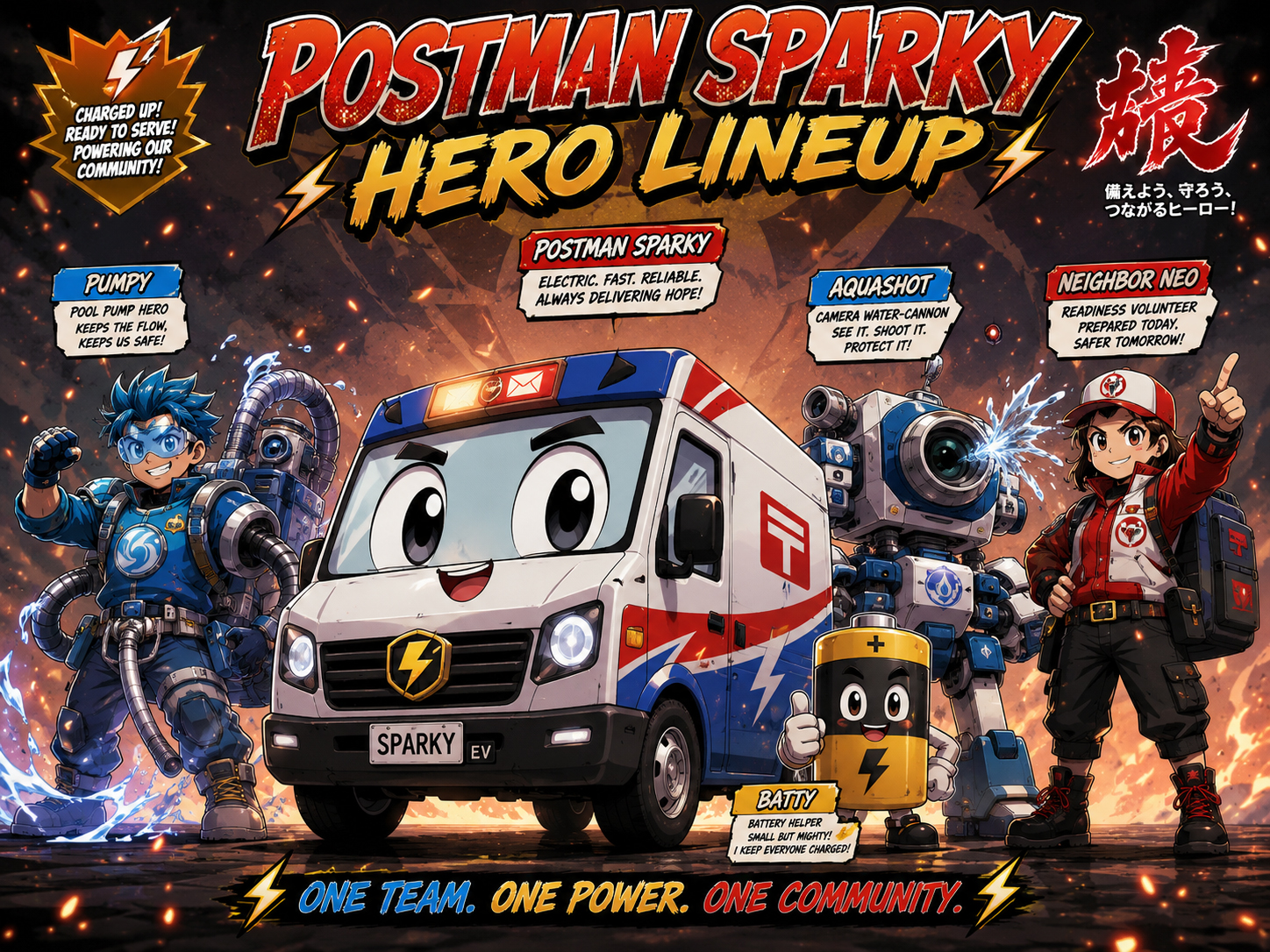
Postman Sparky
The electric postal truck who discovers that V2L power can help run pumps, lights, cameras, and communication tools — but only within strict limits.
SolarFireTruck.com uses manga comedy to explain a serious concept: an electric postal truck with Vehicle-to-Load power can help people understand pumps, pool water, cameras, backup power, and the hard safety boundary between private readiness and professional firefighting.
The character is funny because he is ordinary. He is not a fire engine. He is not a superhero fire department. He is a neighborhood EV that discovers his battery can do more than move packages — if humans plan safely and obey emergency officials.
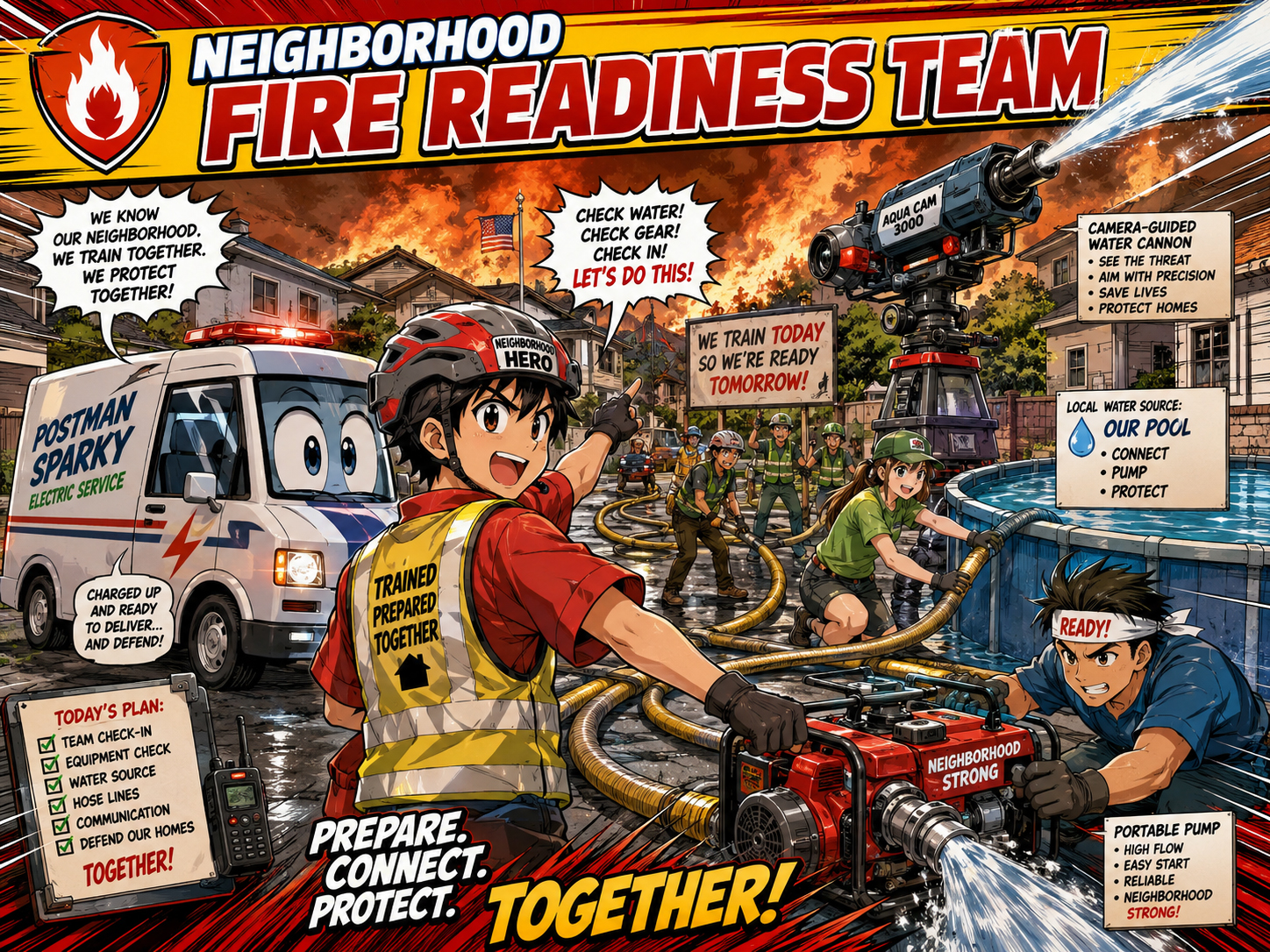
Each episode carries one practical idea and one safety boundary. The comedy opens the door. The engineering caution keeps the site responsible.
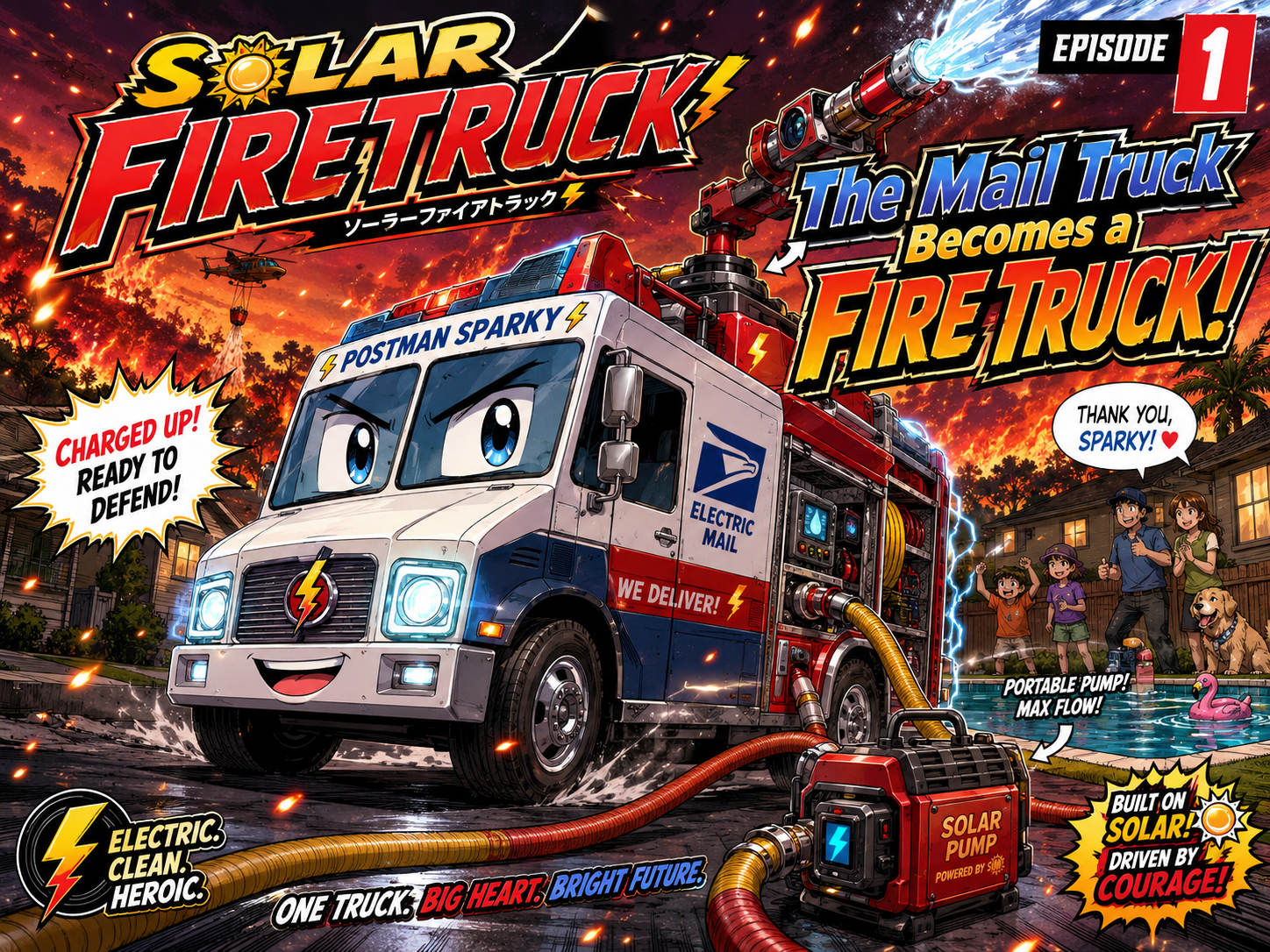 Episode 1
Postman Sparky discovers V2L power and immediately needs a safety lecture.
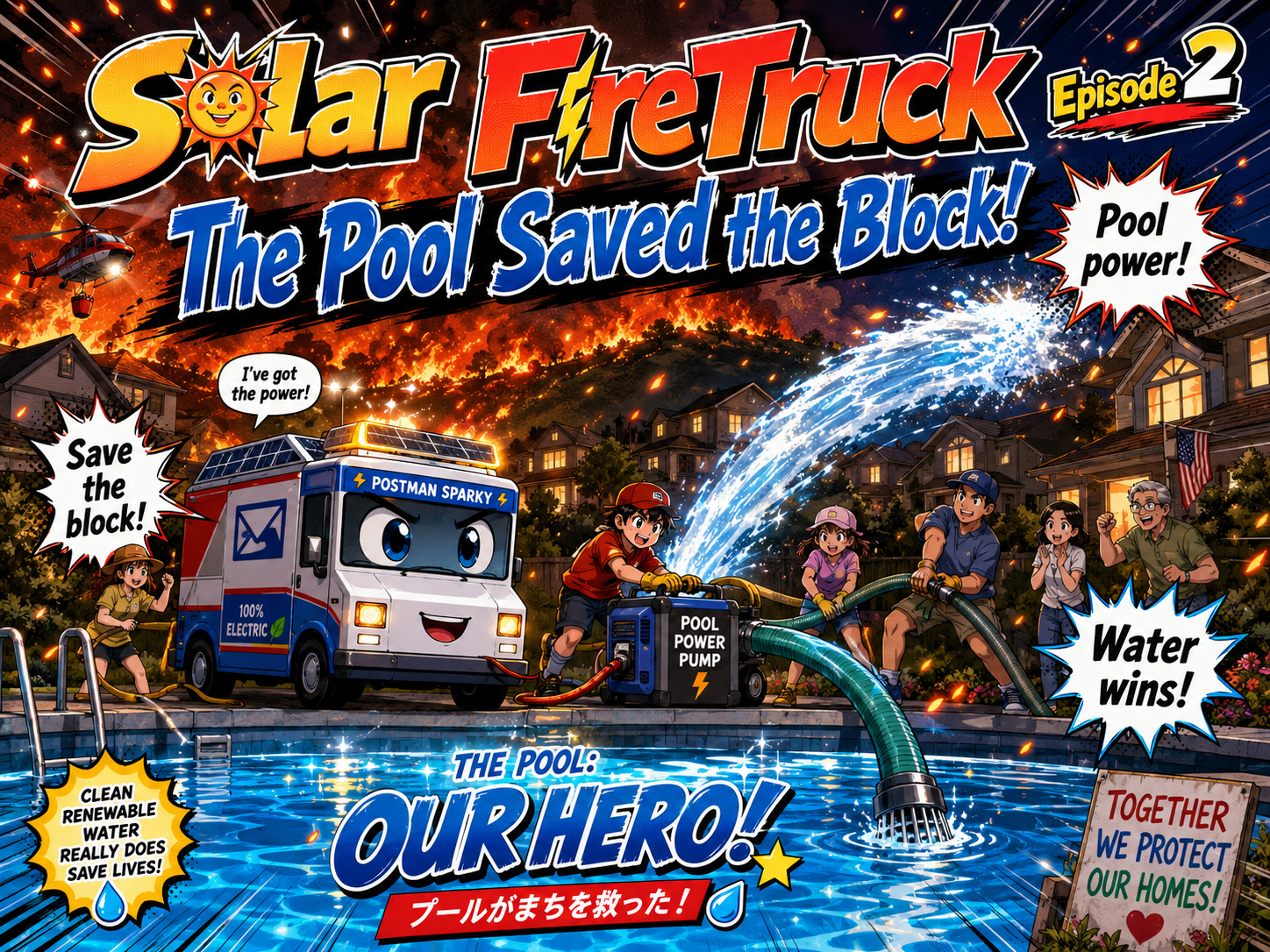 Episode 2
The neighbors realize the backyard pool is more than summer fun.
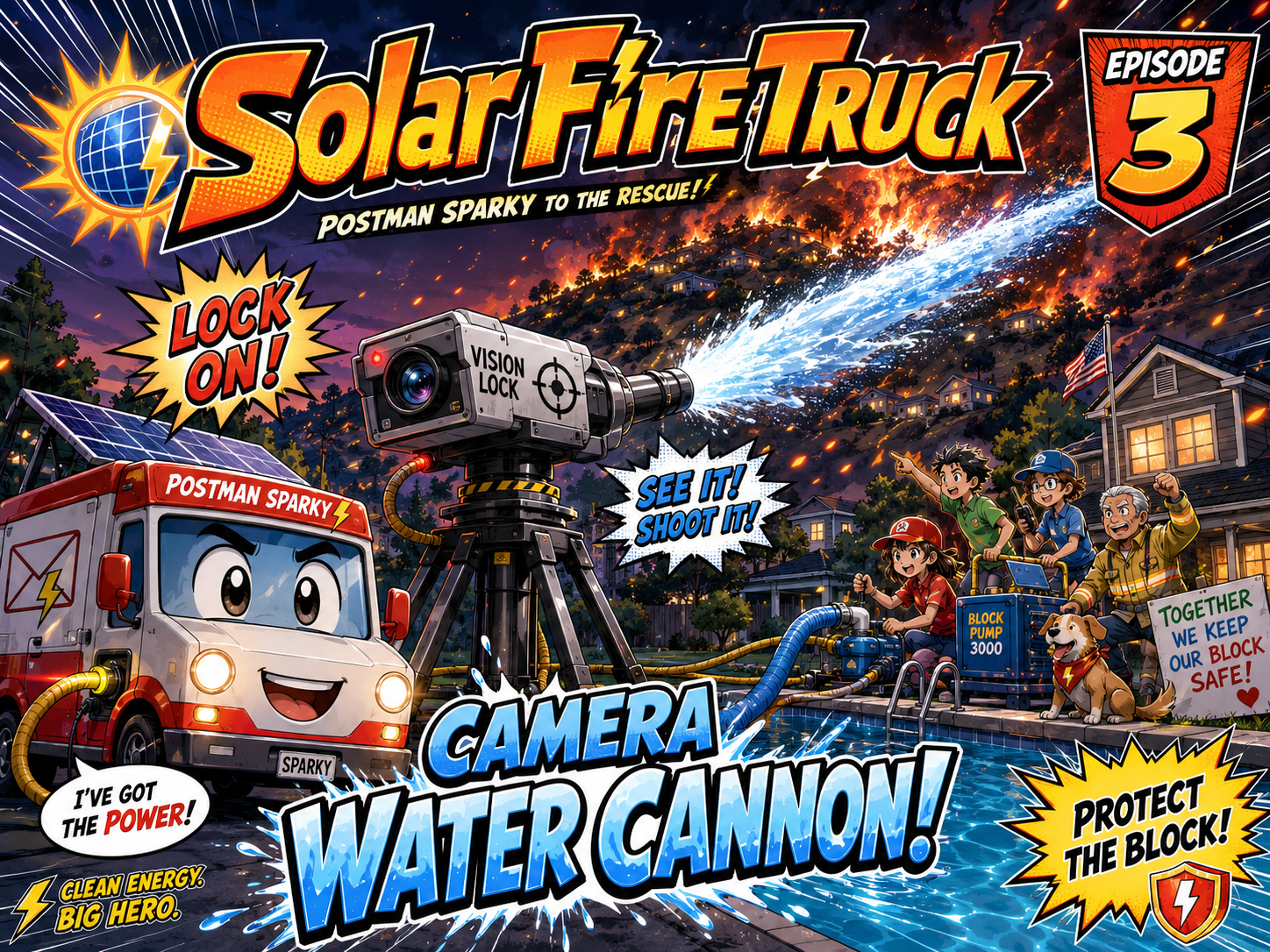 Episode 3
The cannon wants to be a hero, but the camera teaches it to aim responsibly.
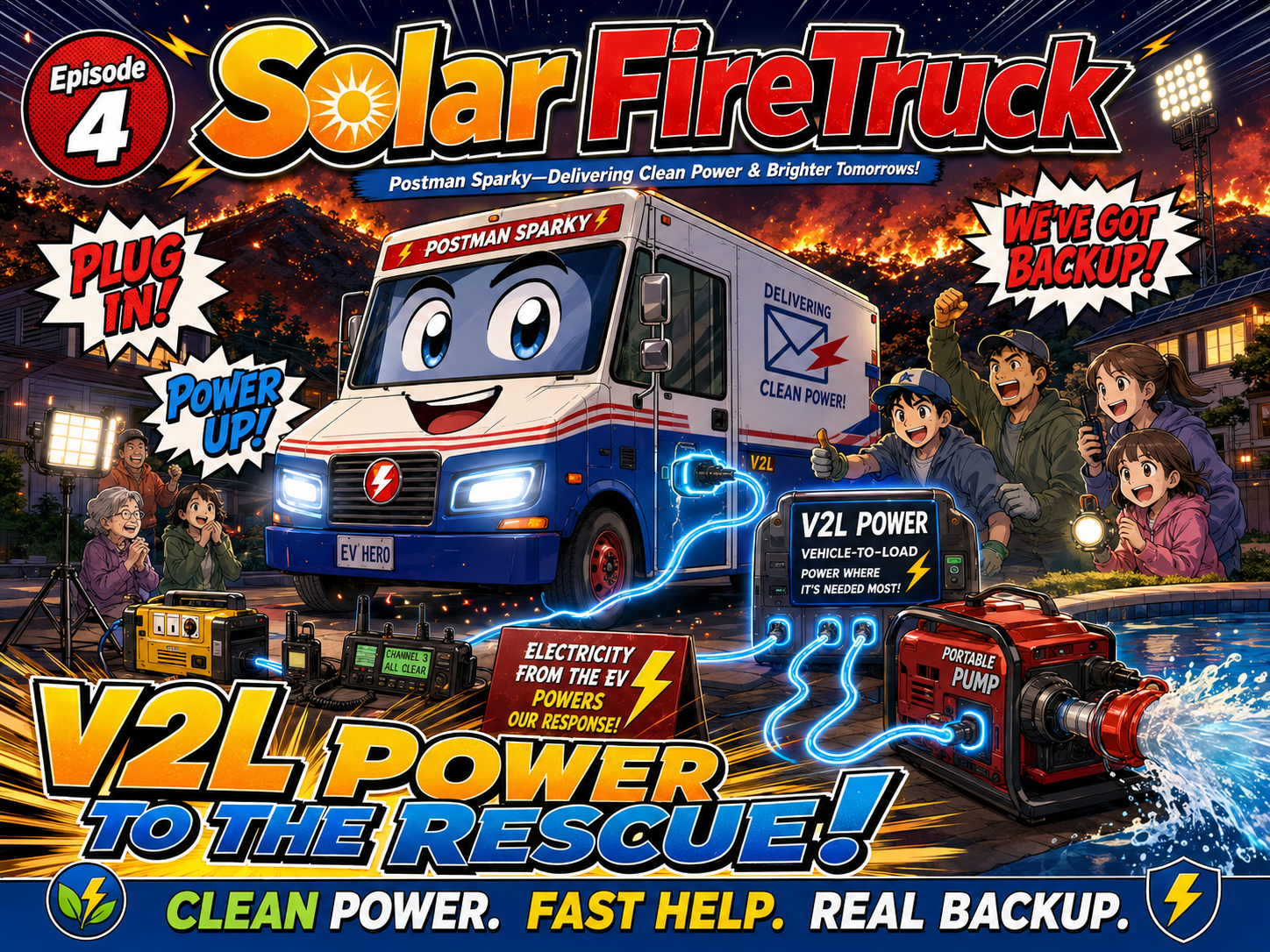 Episode 4
The EV powers the pump, lights, camera, and common sense.
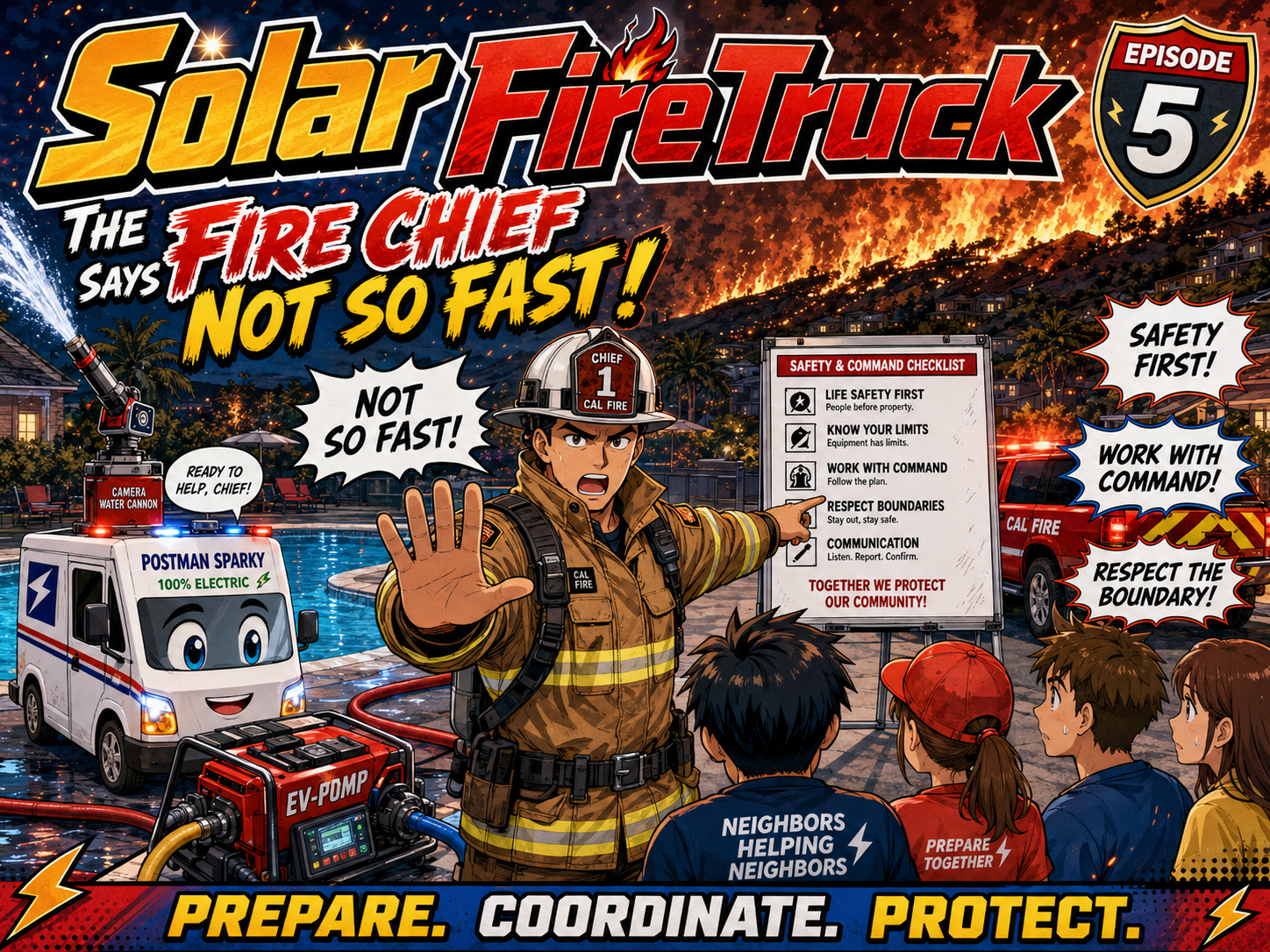 Episode 5
The real hero is the person who obeys evacuation and keeps access clear.
SolarFireTruck.com can explain serious technical and safety ideas by giving each concept a character role.
The electric postal truck who discovers that V2L power can help run pumps, lights, cameras, and communication tools — but only within strict limits.
Neighbors, tools, hoses, batteries, and water sources become memorable when each one has a clear job.
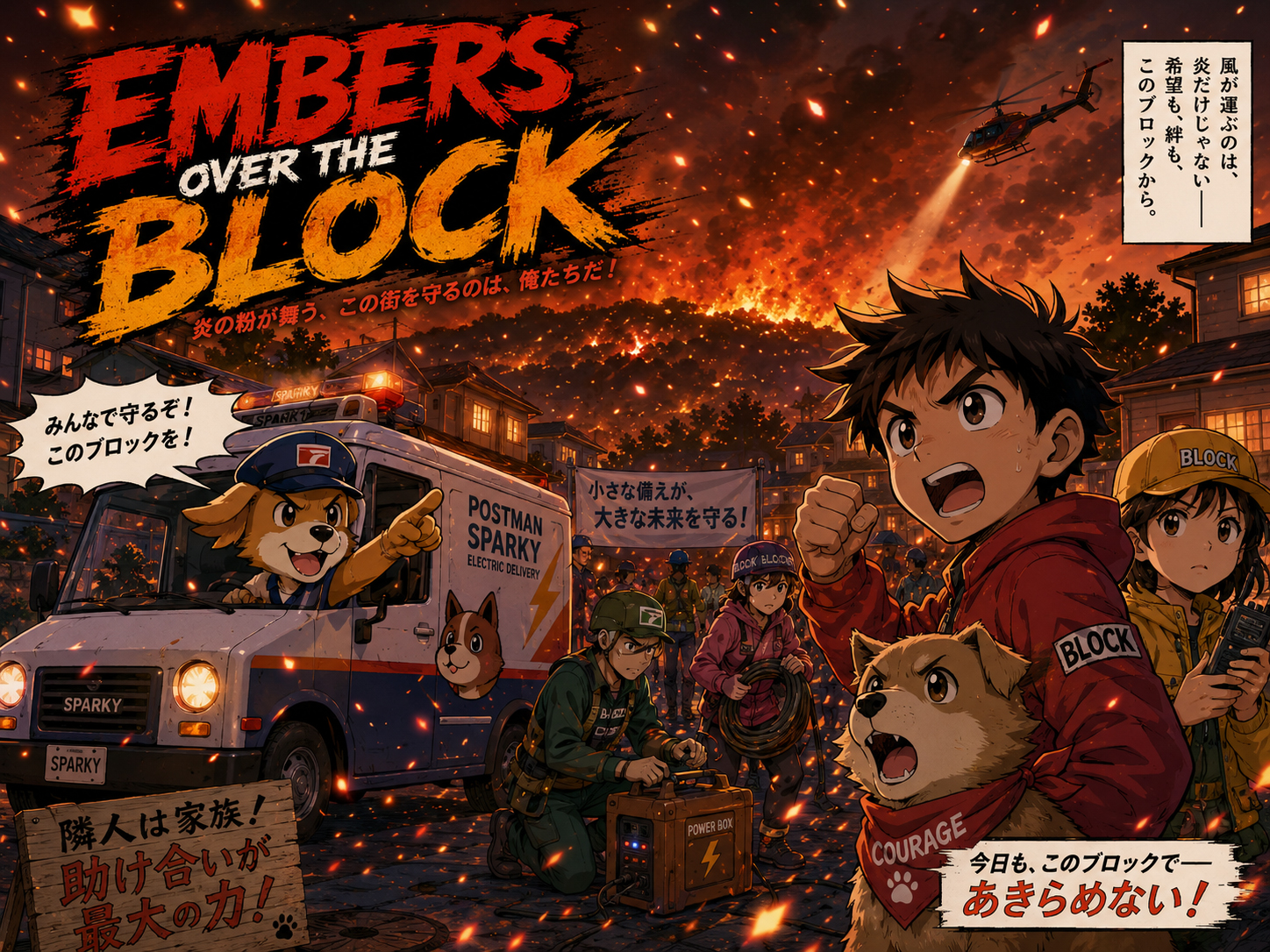
The comic threat: tiny glowing troublemakers that remind everyone why eaves, fences, decks, and dry vegetation matter.
The comedy should never blur the safety message. Each episode should make the concept exciting, then land the responsible lesson clearly.
The best recurring joke is also the most important rule. Every time Postman Sparky gets too excited, the fire chief says: “Not so fast.” That line protects the whole concept.
Manga rule: The characters can be dramatic, but the message must be clear: private equipment is support only. Evacuation orders, firefighter command, electrical safety, and codes come first.
V2L power enters the story. Postman Sparky learns he is useful, but not in charge.
The neighbors discover water reserve thinking and learn why pump planning matters.
The cannon gets a camera, then learns control is more important than drama.
Power priorities decide what gets plugged in, what stays off, and what stays safe.
The fire chief makes the core disclaimer unforgettable.
For readers who finish the manga and need the plain-language safety explanation.
The mail truck discovers its second life as an emergency power resource — and immediately learns that safety comes before swagger.