🏊
The pool speaks
The pool finally gets respect: “I am not just a weekend luxury. I am emergency water with patio furniture.”
Postman Sparky has power. Now the neighborhood needs water. One kid points at a backyard pool and asks the question that changes everything: “Why are we treating that like a toy?”
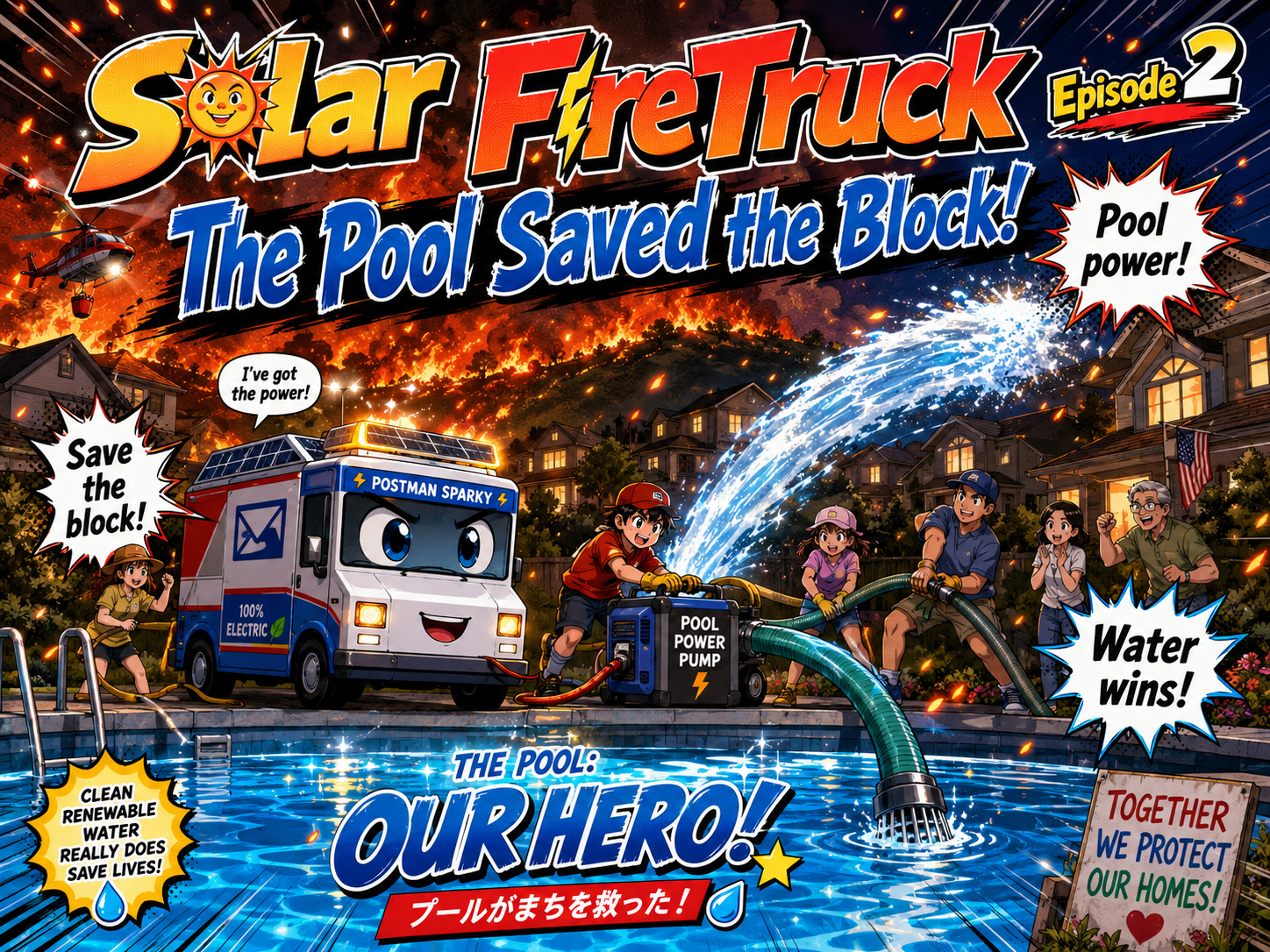
The neighbors are staring at smoke, dry fences, and a powerless pump. Postman Sparky can provide electricity, but electricity alone cannot wet a roofline or protect a fence. Then everyone looks at the pool.
The pool is not just a place for summer cannonballs. It is stored water. The problem is not finding water. The problem is moving water safely, with the right pump, hose, intake, power, and supervision.
The neighborhood sees the pool and immediately over-simplifies the problem. The comedy is in the rush. The lesson is in slowing them down.
The pool finally gets respect: “I am not just a weekend luxury. I am emergency water with patio furniture.”
The submersible pump announces it can help, then admits it needs the right power and hose.
The hose refuses to be dragged across driveways, steps, cords, cactus, and somebody’s flamingo float.
The fire chief points at the EV, the water, and the street: “Great idea. Now make it safe.”
A pool may hold thousands of gallons, but the emergency value depends on intake, pump size, power rating, hose length, elevation, nozzle pressure, and safe routing.
This episode makes the water-chain concept easy to remember.
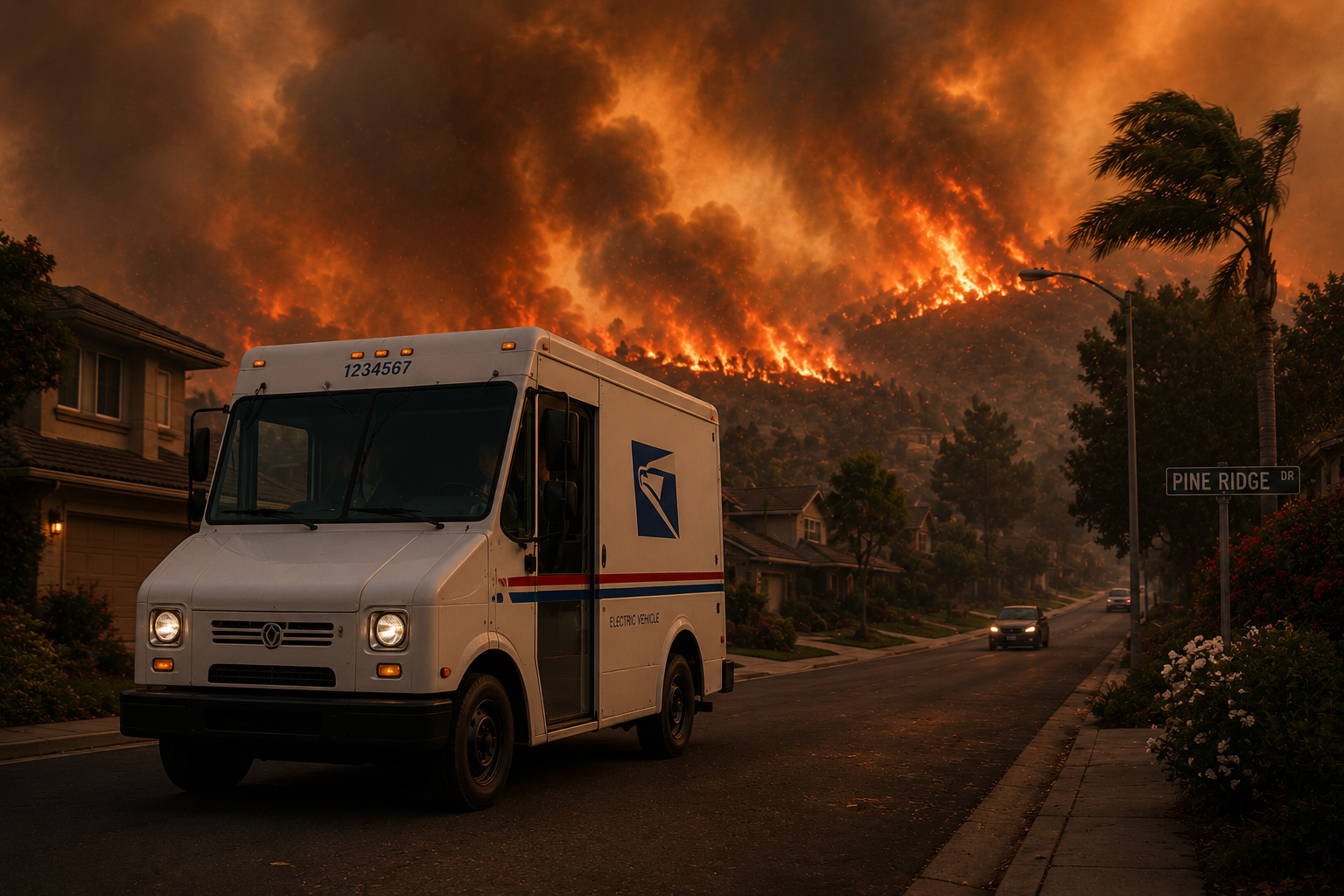
The neighborhood sees dry fences, hot wind, and a powerless pump. Sparky rolls up, charged and nervous.
A kid points at the pool. Everyone suddenly hears heroic music. The pool wears sunglasses.
The submersible pump leaps in like a tiny action hero, then asks if anyone checked its wattage.
The neighbors try a ridiculous hose path until the hose refuses to cross the EV cord and driveway.
The crew marks a dry cable path, a clear hose line, a safe EV position, and a no-blocking access lane.
Pool water reaches the defensive spray zone. Everyone cheers. The fire chief says, “Now remember the limits.”
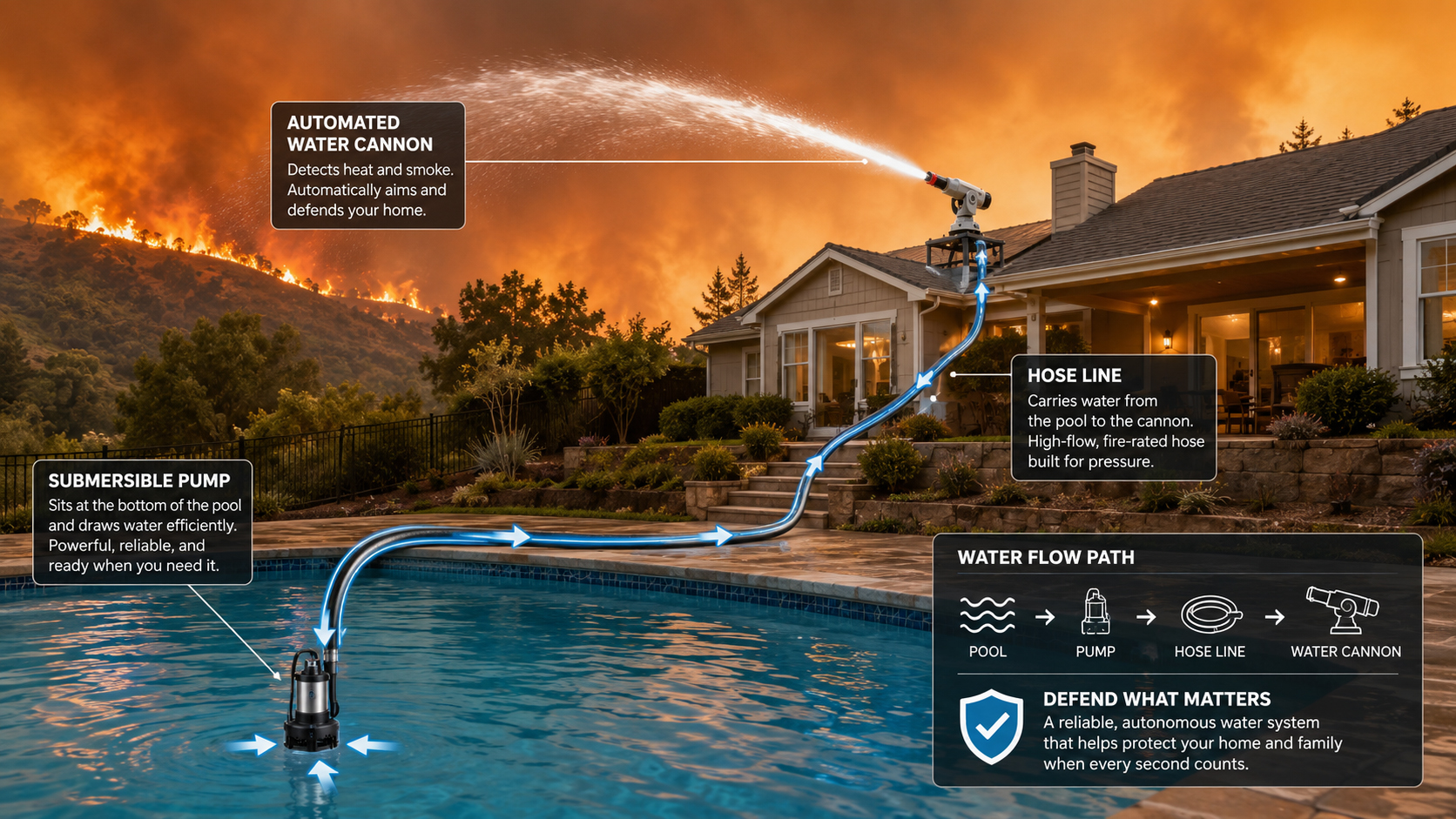
Episode 2 teaches a simple mental model. Water must travel. If the path is blocked, too long, underpowered, unsafe, or improvised, the pool’s water stays trapped in the pool.
The pool may be valuable, but only if it is reachable and safe to draft from.
Sparky’s V2L outlet can help only if the pump is within the EV’s safe output rating.
The water has to arrive at the defensive point with enough flow to matter.
This is where the episode stays responsible. The pool-water idea is powerful, but it must not create unsafe confidence or sloppy electrical work.
Episode 2 safety rule: Do not improvise pumps, hoses, cords, or pool drafting during a fire. Plan before the emergency, keep electricity away from water, and obey evacuation and firefighter instructions.
Episode 2 should make people look at local water differently without overstating what private equipment can do. The responsible idea is readiness support, not guaranteed structure protection.
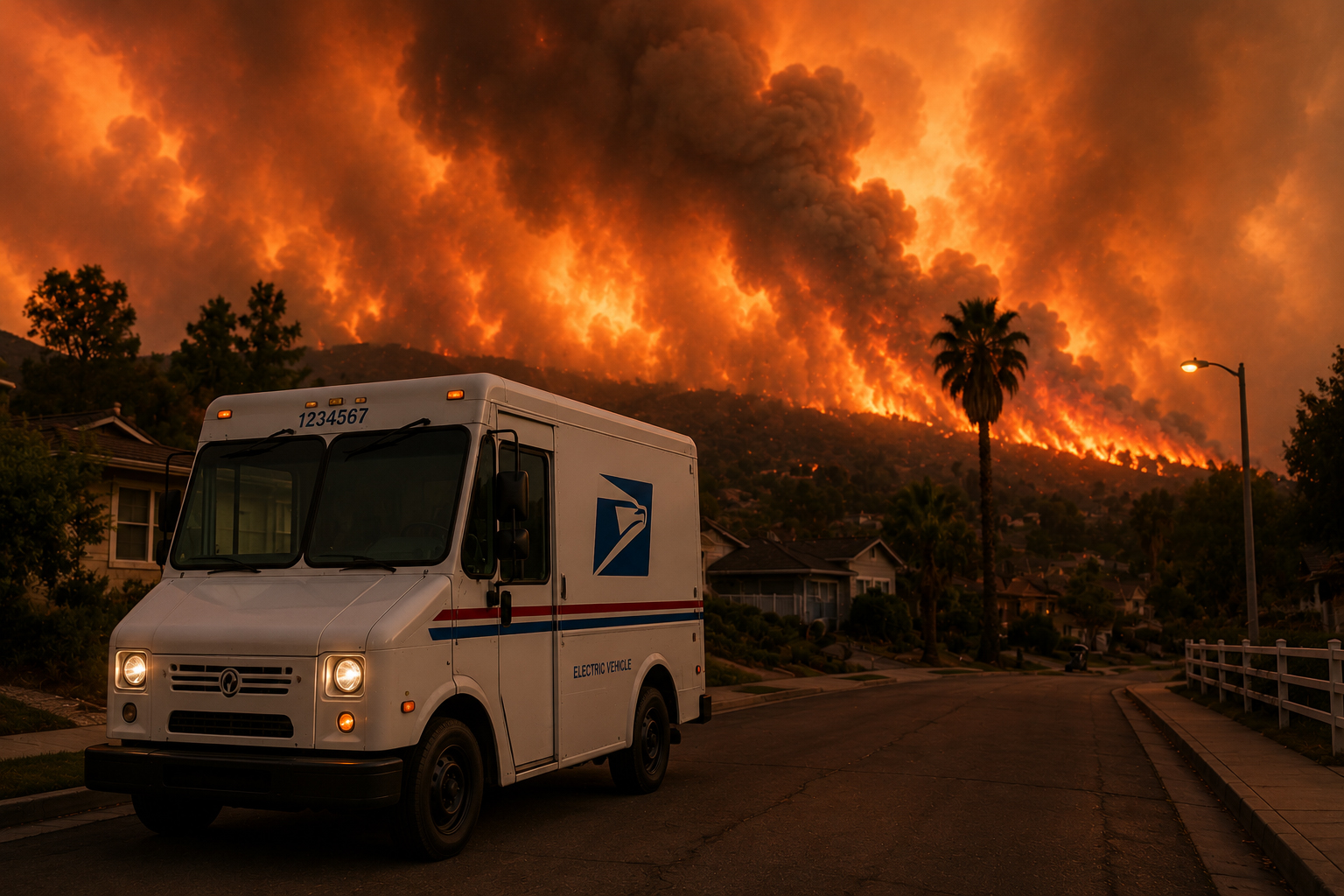
The pool can provide water. The pump can move it. Episode 3 asks the next question: where should the water go?