💦
The cannon arrives
It rolls onto the driveway like a movie star and immediately asks for dramatic lighting.
The neighborhood has EV power and pool water. Now the water cannon rolls out, declares itself a hero, and learns that the camera is not there for drama — it is there for control, awareness, and safety.
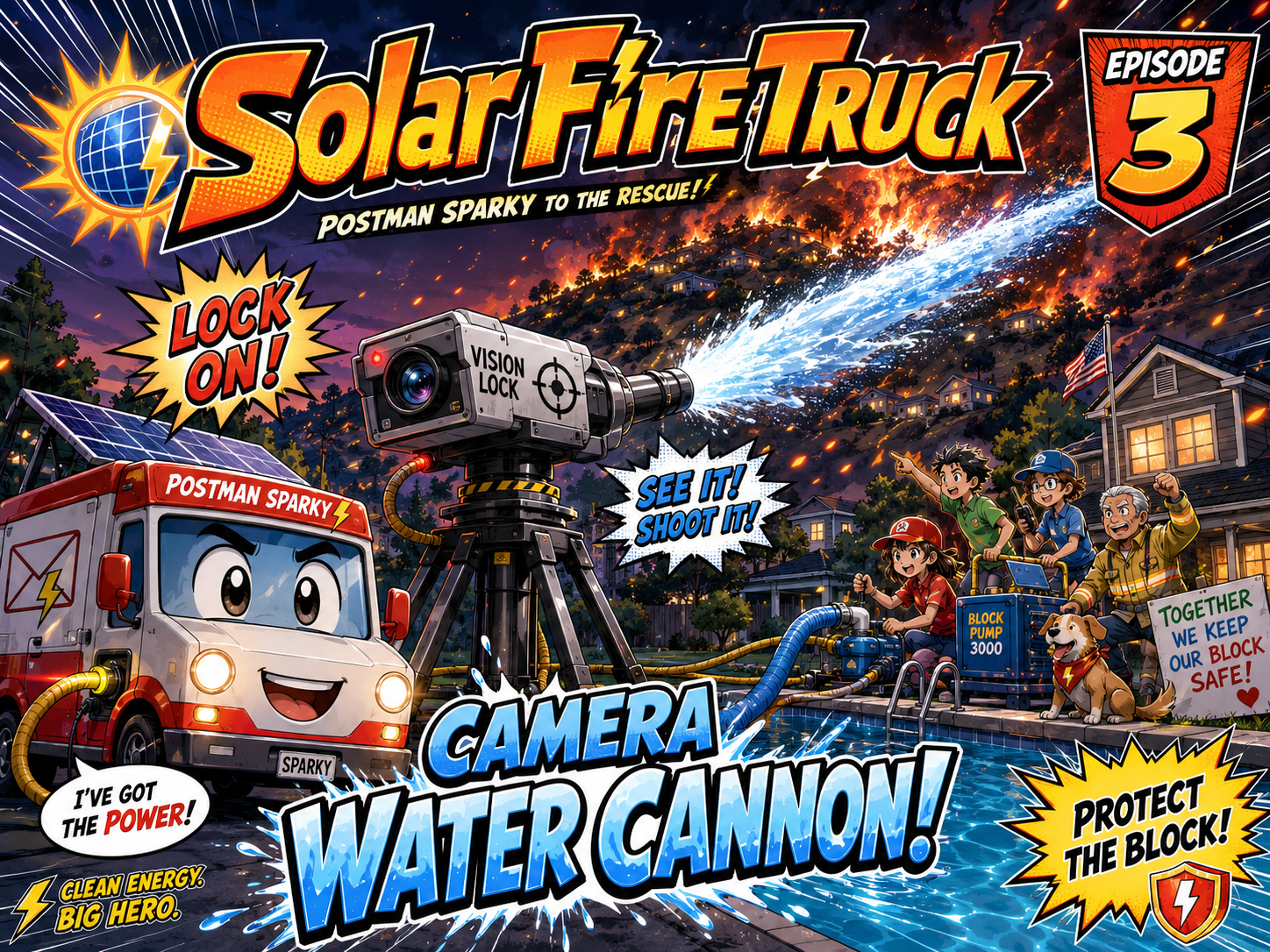
Postman Sparky powers the pump. The pool supplies the water. The hose fills with pressure. Then the automatic water cannon turns toward the smoky sky and shouts, “Point me at the flames!”
The camera interrupts: “No random spraying. First we look. Then we aim. Then we decide if it is safe to operate at all.”
The water cannon is exciting because it can move water. The camera is important because it can show where that water is actually going.
It rolls onto the driveway like a movie star and immediately asks for dramatic lighting.
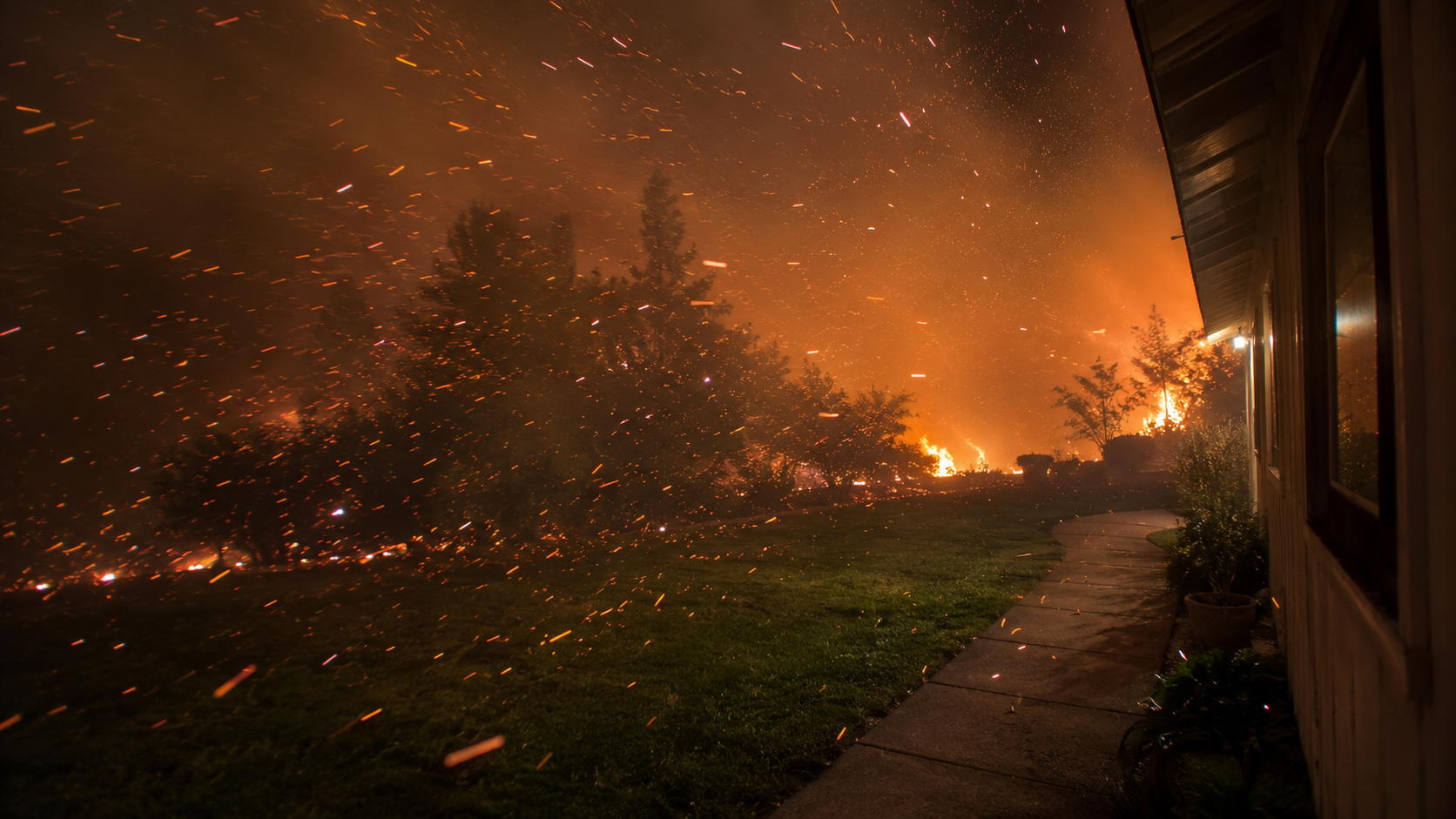
The camera shows embers, eaves, fences, and the actual spray zone — not the cannon’s imagination.
The emergency stop insists on being introduced as the most important character in the scene.
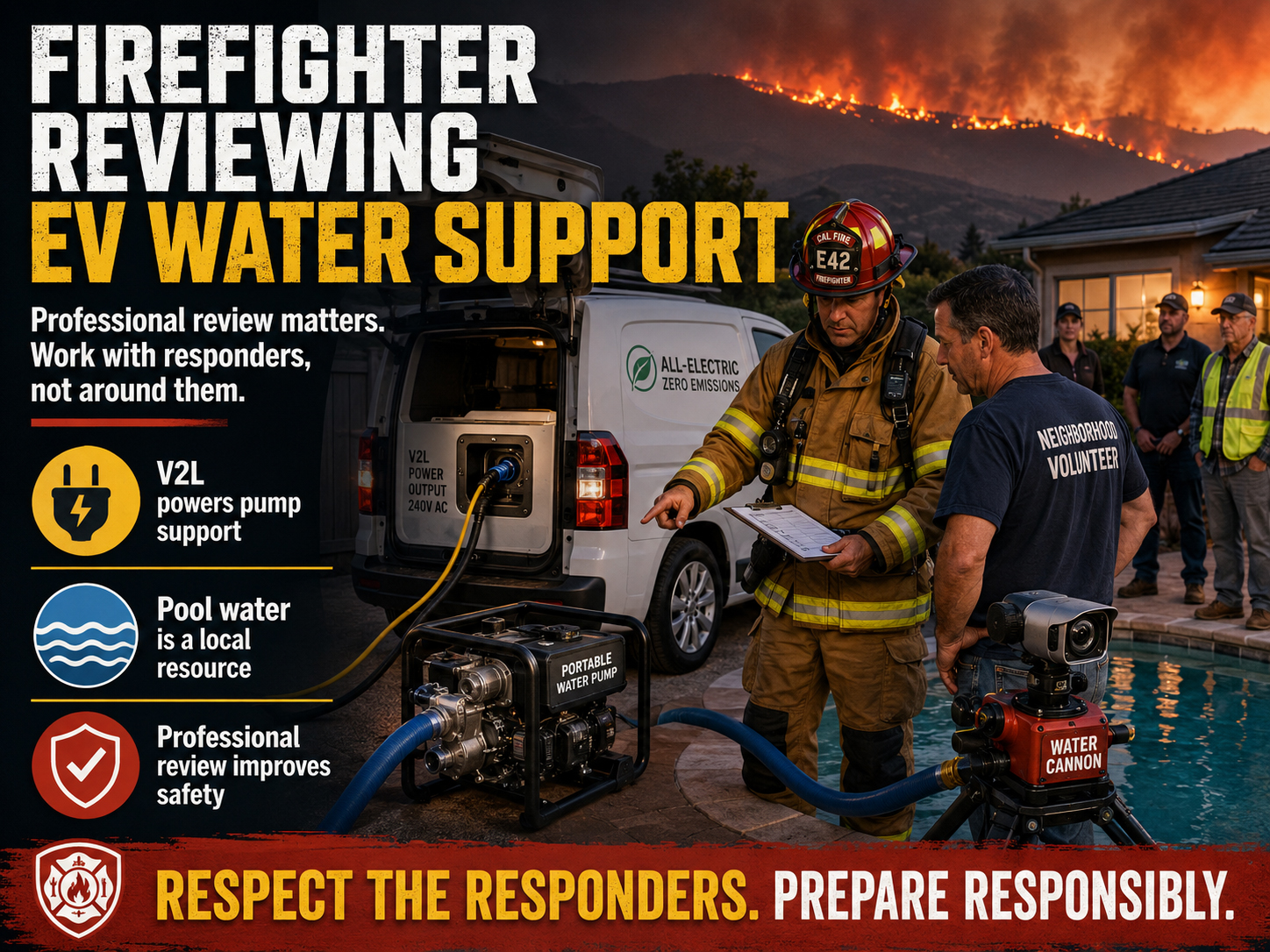
The chief says: “Aiming water is not firefighting command. Keep access clear. Know when to stop.”
The point is not to spray wildly. The point is monitored defensive water delivery to selected zones, with clear safety boundaries and human oversight.
This episode turns “automatic water cannon” from a fantasy gadget into a controlled readiness tool.
The cannon appears in the driveway, flexing its nozzle and asking if anyone needs a hero pose.
The camera turns on and shows smoke, embers, eaves, fences, and the hose path.
The cannon tries to swing dramatically toward the sky until the camera yells, “We aim at zones, not feelings.”
The crew marks a safe arc, a no-spray zone for the EV, and a clear path for firefighters.
The emergency stop gets a close-up and demands respect from everyone, including Sparky.
The fire chief says the cannon may support readiness, but it must never replace evacuation or firefighters.
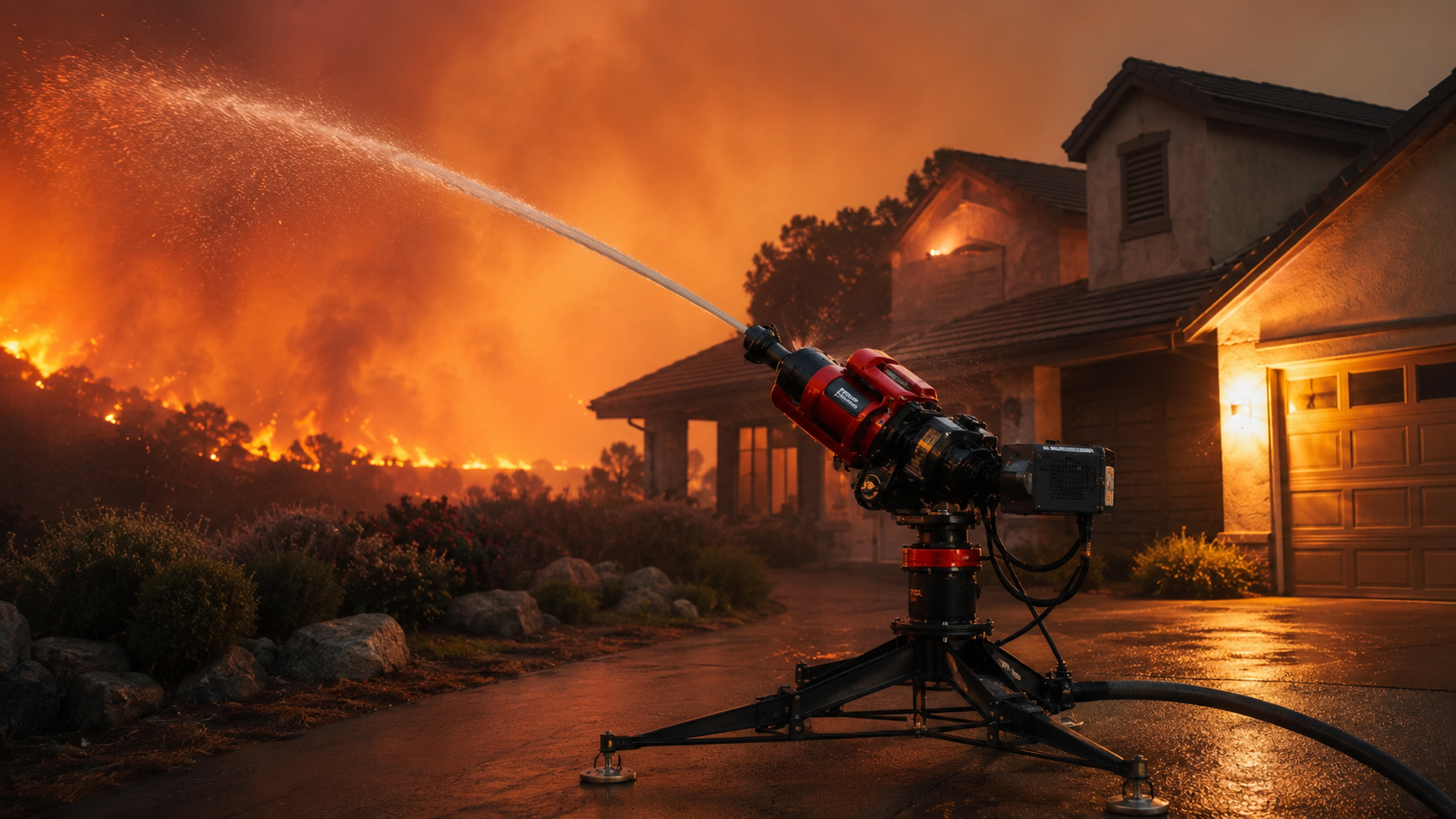
A good defensive spray concept does not try to fight the whole fire. It protects selected exposure points under limited conditions: eaves, fences, decks, vegetation edges, or other planned zones.
Wetting a planned target area, checking where spray lands, and monitoring conditions from a safer position.
Spraying blindly, aiming at active responders, wetting electrical equipment, blocking access, or staying when ordered to leave.
If the cannon cannot be used safely, it should not be used at all.
Episode 3 keeps the spectacle but lands the rule: aiming water is a responsibility, not a cartoon power-up.
Episode 3 safety rule: A camera water cannon is a monitored support concept only. It must have safe spray limits, fast shutoff, professional review, and full respect for evacuation orders and firefighter command.
The episode makes the automatic cannon exciting, then pulls it back into responsible design. The system needs eyes, labels, limits, and a stop button.
The cannon wants power. The pump wants power. The lights want power. Episode 4 teaches that stored energy has limits and priorities matter.