🌀
The pump demands priority
The pump flexes and says, “Without me, the pool is just a mirror.”
The pump wants power. The camera wants power. The lights want power. The radio wants power. Postman Sparky discovers that being useful means choosing priorities, not plugging in everything at once.

The neighborhood has a plan: pump pool water, aim the camera water cannon, turn on lights, charge radios, and keep the control box alive. Then Sparky’s dashboard coughs politely: “I have limits.”
Sparky gathers the pump, camera, light tower, radio, and control box for a serious talk: “I can help, but I am not a utility grid on wheels.”
This episode makes the invisible problem visible: emergency power is a budget. The crew has to spend it wisely.
The pump flexes and says, “Without me, the pool is just a mirror.”
The camera says, “If nobody can see the spray zone, nobody should be aiming anything.”
The light tower wants to illuminate the whole block. Sparky suggests starting with the work area.
The radio reminds everyone that communications may matter more than looking heroic.
The EV may have enough power for selected support loads, but the crew must understand the output rating, pump startup surge, cable capacity, runtime, and mission priority.
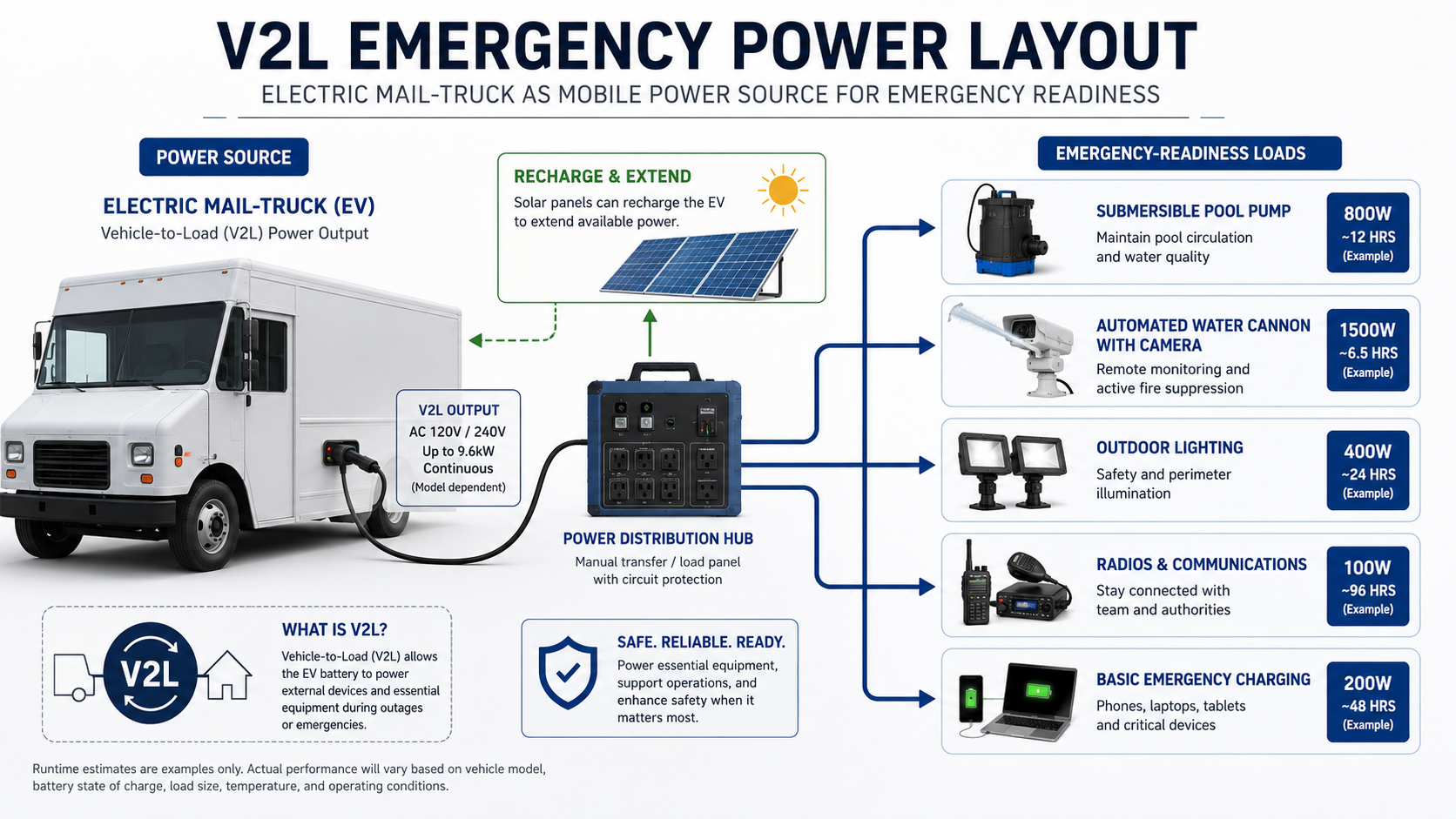
This episode turns load management into a comedy argument the reader can remember.
The grid flickers out. The crew looks at Sparky. Sparky looks at his battery gauge.
Pump, camera, lights, radio, and control box all sprint toward the V2L outlet at once.
Sparky draws a load-priority chart on the driveway with a piece of chalk and a very serious face.
The crew checks startup surge and realizes the pump cannot be treated like a phone charger.
Instead of lighting the whole block, the lights focus on the equipment zone and hose path.
The dashboard reminds everyone to save enough power for safe vehicle movement and shutdown.
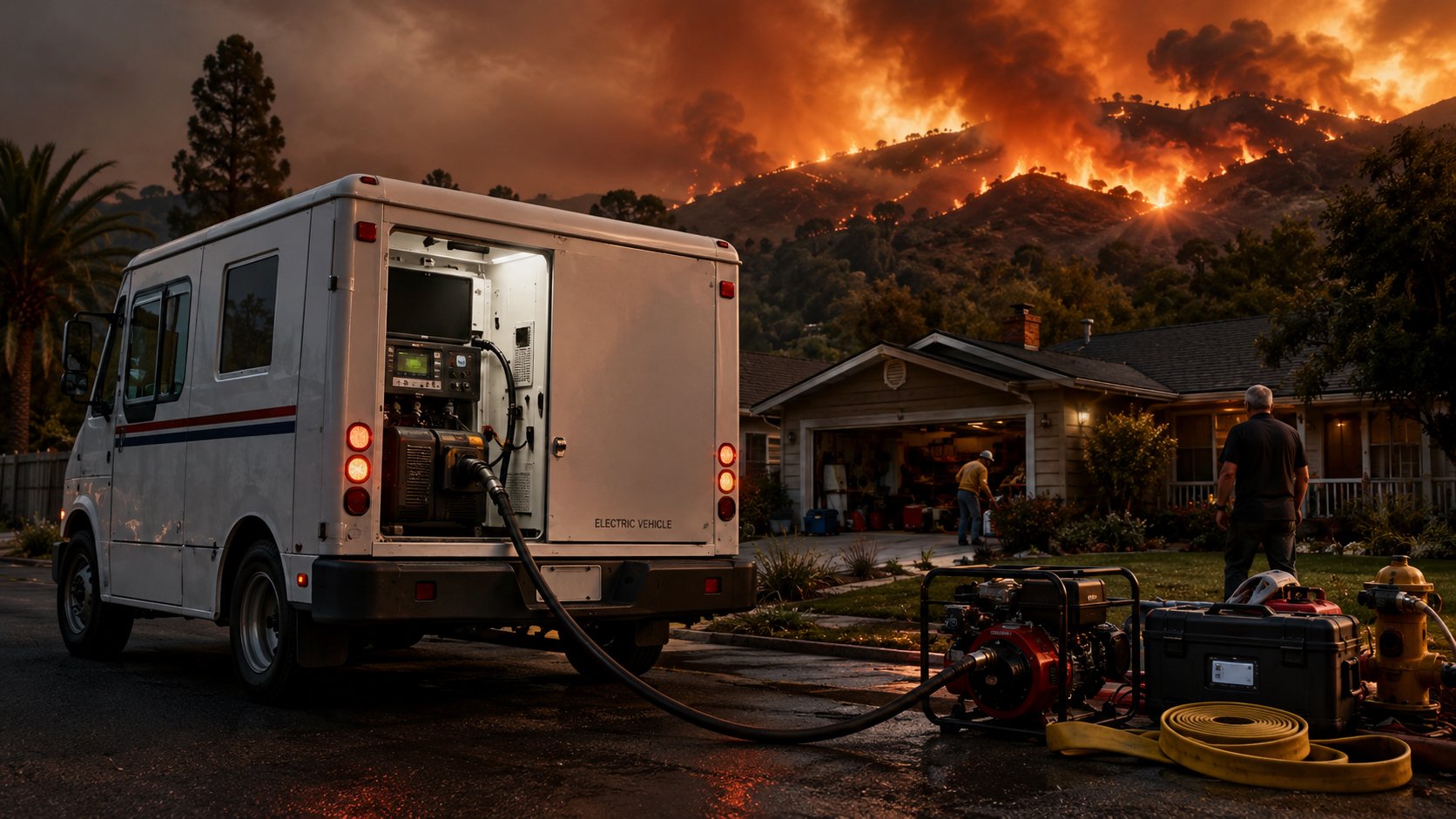
The pump may be the most important device, but the safest system also needs awareness and control. Cameras, lights, radios, and shutoff equipment can matter because they keep the operator from guessing.
Pump, camera, control box, targeted light, radio, phone charging, and emergency shutoff support.
Comfort items, decorative lighting, unnecessary tools, or anything that reduces power needed for safety.
Unknown motors, damaged cords, wet connections, overloaded adapters, or anything outside the EV’s rated output.
Episode 4 teaches the boring hero of backup power: the label. Voltage, watts, amps, surge, cable rating, and duty cycle are what keep the story from becoming dangerous.
Episode 4 safety rule: Do not overload EV V2L outlets, use wet or damaged cords, bypass protection, backfeed circuits, or drain the EV below safe movement needs. Match every load to the real rating.
The episode makes V2L exciting, then teaches discipline. A mobile EV battery can help the neighborhood only when the crew knows what it can power, what it cannot power, and when to shut down.
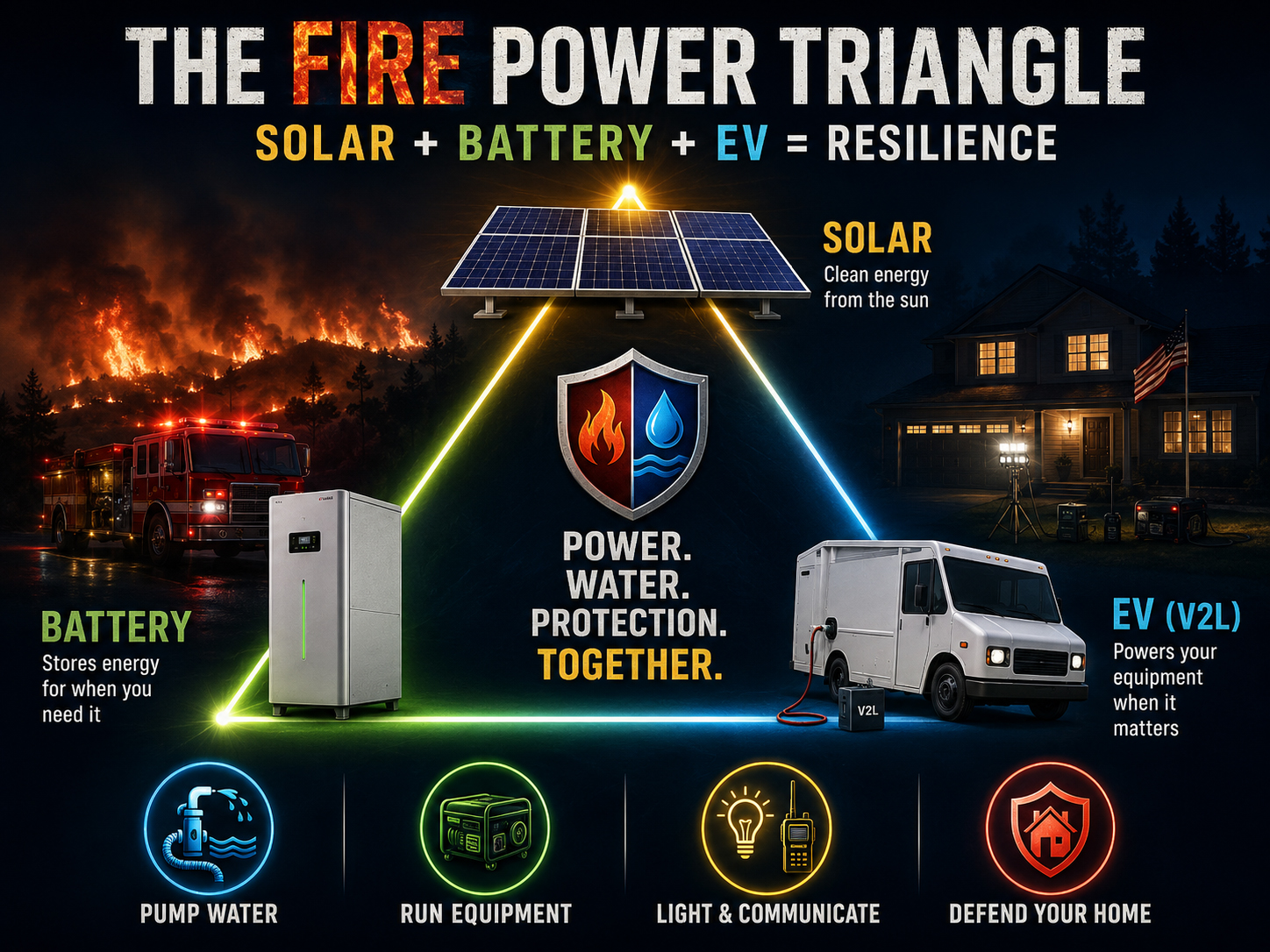
Sparky has learned power, water, pumps, and cameras. Episode 5 delivers the most important lesson: private support is not firefighter command.