🚚
Sparky wants a siren
The chief says no siren, no badge, no pretending. “You are useful because you provide power, not because you play firefighter.”
Postman Sparky has learned about EV power, pool water, pumps, hoses, cameras, and water cannons. Now the fire chief steps into the smoke and draws the most important line in the whole story.
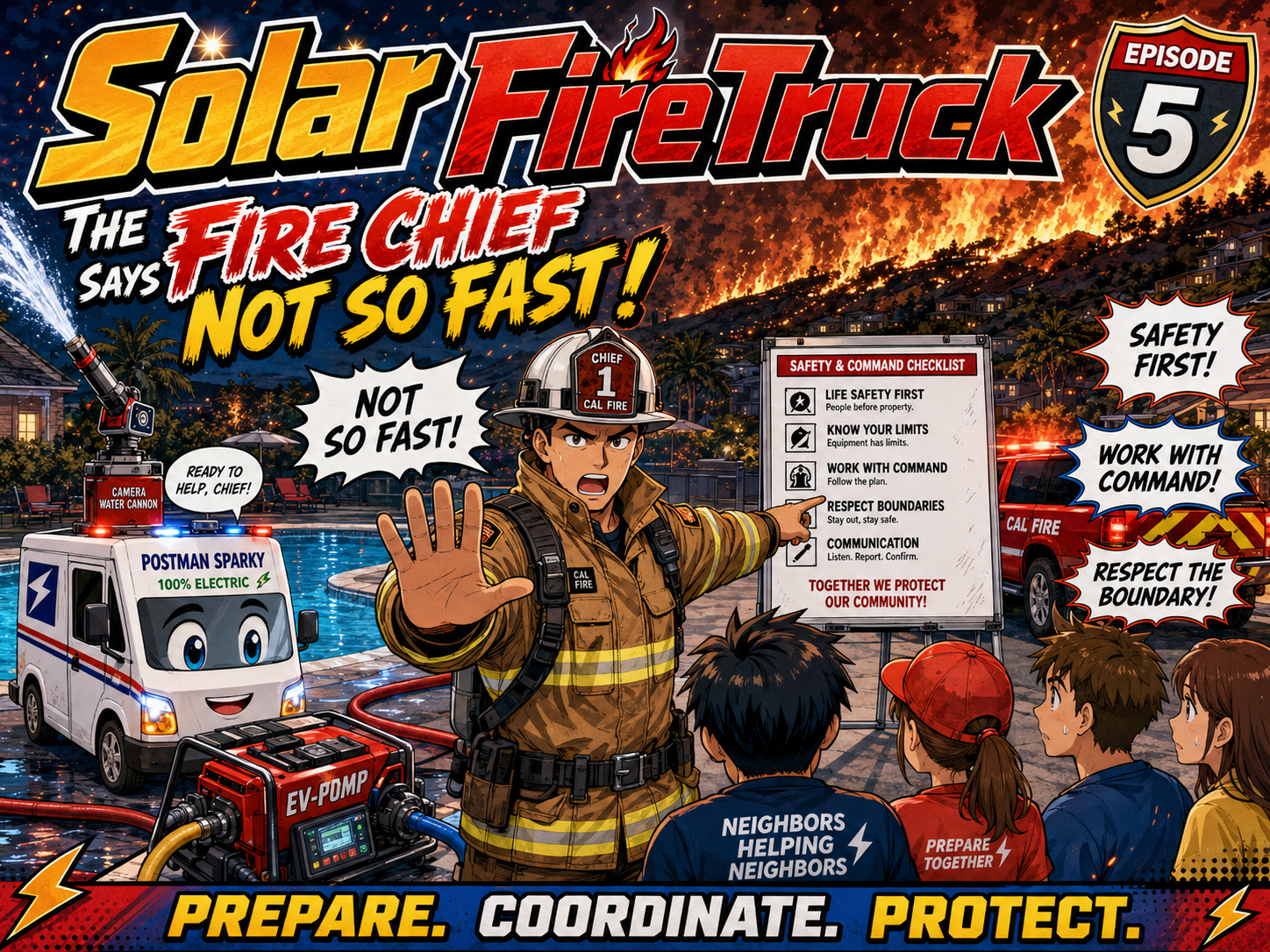
Sparky is charged. The pump is staged. The pool is mapped. The cannon has a camera. The lights are aimed. The radio is on. Then the fire chief raises one hand and stops the parade.
“You are not the fire department. You are a support resource. If you remember that, you might help. If you forget it, you become another emergency.”
The fire chief does not kill the idea. The fire chief saves the idea by forcing it to become responsible.
The chief says no siren, no badge, no pretending. “You are useful because you provide power, not because you play firefighter.”
The chief says the pool is water reserve, not a hydrant. Access, pump sizing, and permission still matter.
The chief points to the stop button and says, “The best cannon is the one that can shut down safely.”
Firefighters, evacuation officials, police, and emergency managers control the scene. Private equipment yields.
Episode 5 turns the entire SolarFireTruck.com concept into a responsible message: EV V2L power, pool pumps, cameras, and water cannons can be discussed as support tools, but they must never replace professional firefighting or evacuation.
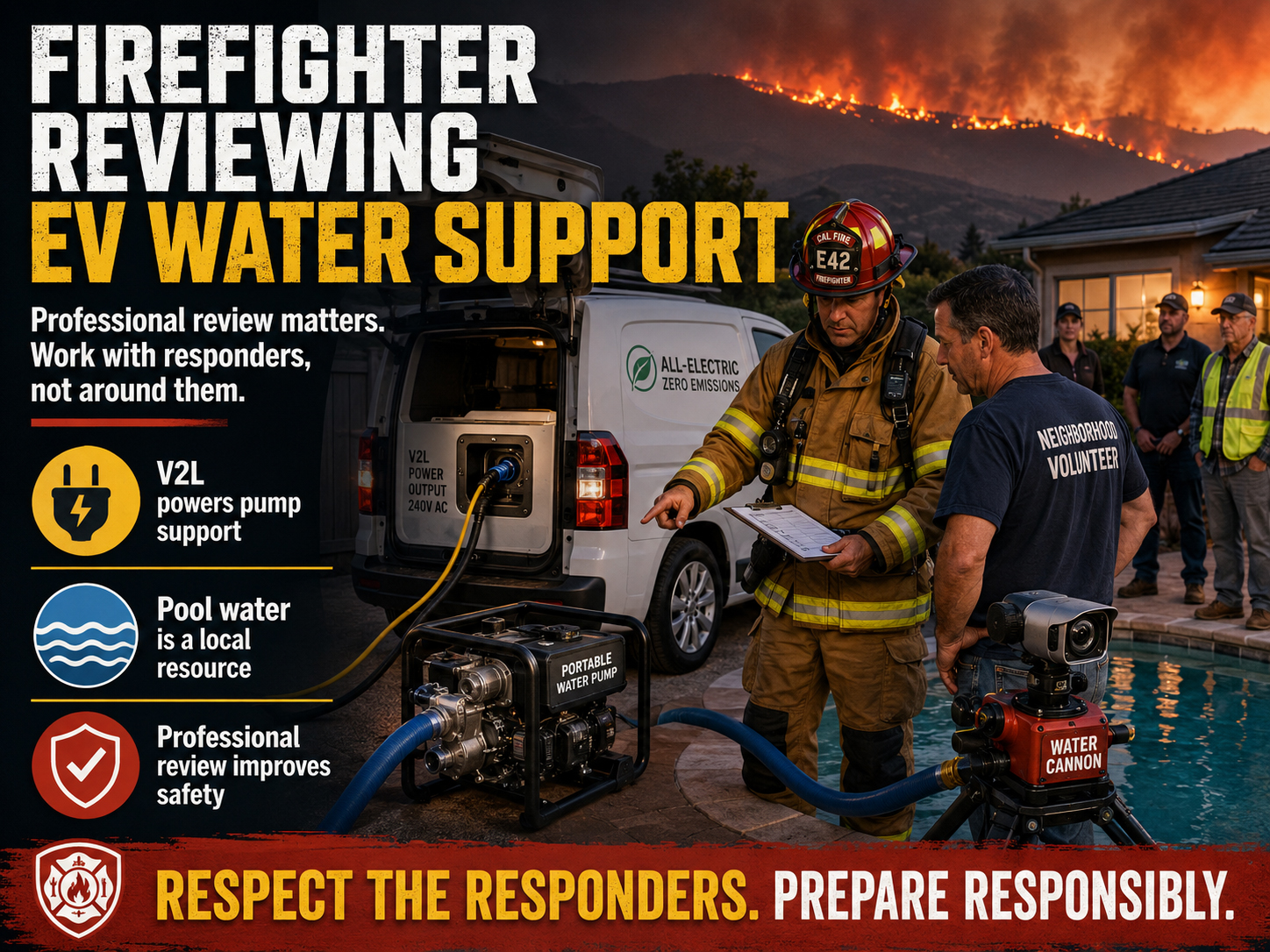
This episode makes the disclaimer memorable instead of buried in fine print.
Sparky, the pump, the pool, and the cannon line up heroically under a smoky orange sky.
The fire chief walks into frame and says the famous words: “Not so fast.”
The chief points out a hose blocking a driveway and an EV parked too close to the action.
The chief asks what everyone does if evacuation is ordered. Sparky answers correctly: “We leave.”
The crew labels the shutoff, dry cable route, no-spray zone, and clear fire access lane.
Sparky stands quietly as a support resource. The chief nods. The neighborhood finally understands.
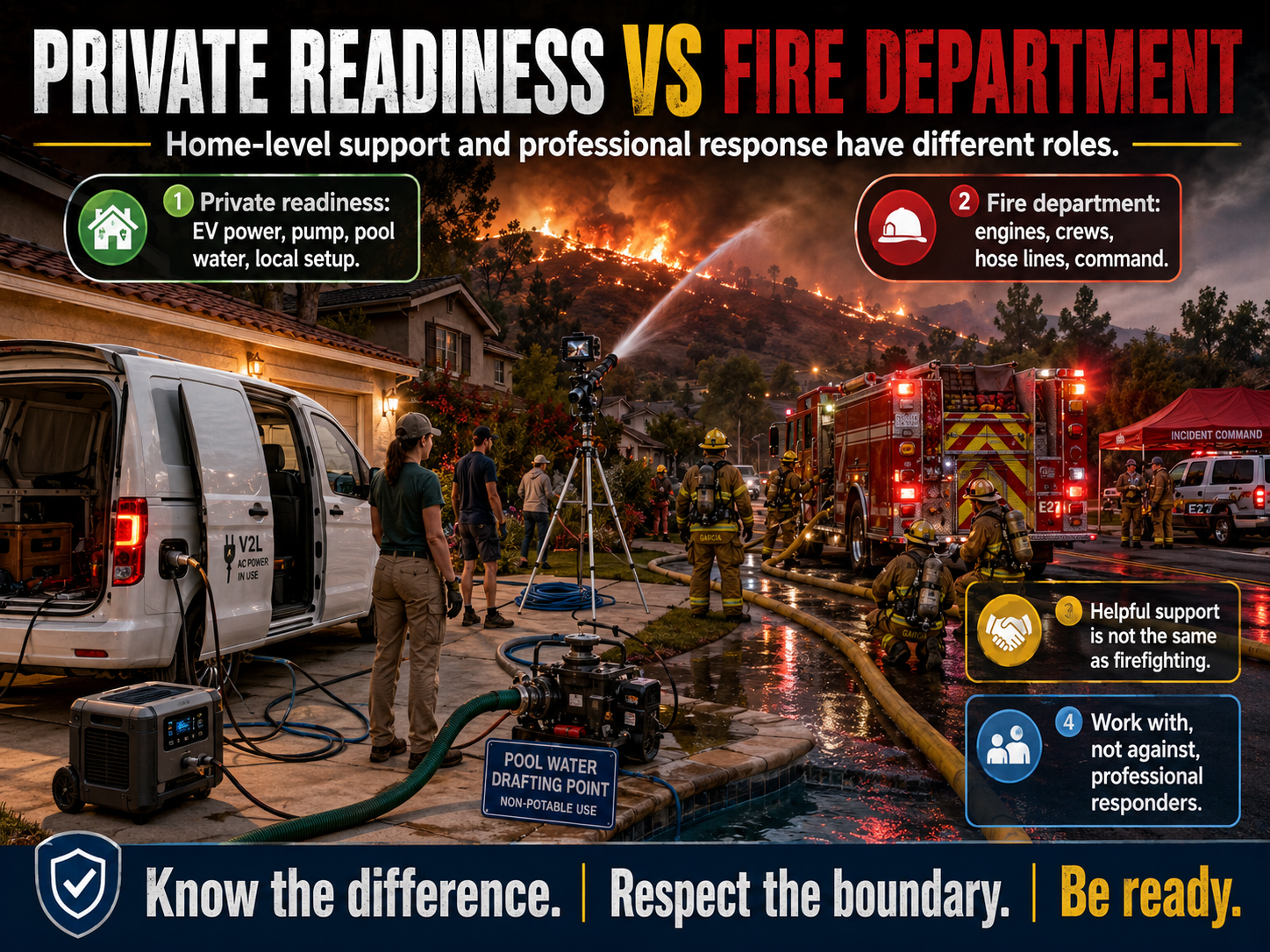
The fire chief explains that a support resource may help with narrow tasks — power a pump, light a path, monitor a camera, move water to a planned spray point — but it does not change who controls the emergency.
Equipment staged safely, rated properly, operated by trained people, and shut down or moved when responders need the area.
Equipment that blocks access, creates electrical hazards, encourages people to stay, or confuses the role of firefighters.
If the private system creates risk for people or responders, it is not helping.
The chief’s line should echo across the whole SolarFireTruck.com site. Every exciting idea gets tested against the same question: can it be done safely, legally, and without interfering with emergency response?
Episode 5 safety rule: SolarFireTruck is a concept for support readiness only. It is not a fire engine, fire department, evacuation substitute, code-compliant fire protection system, or guarantee of safety.
Episode 5 keeps the comedy but protects the message. Sparky can still be charming. The cannon can still be dramatic. The pool can still be heroic. But the fire chief explains the adult framework.
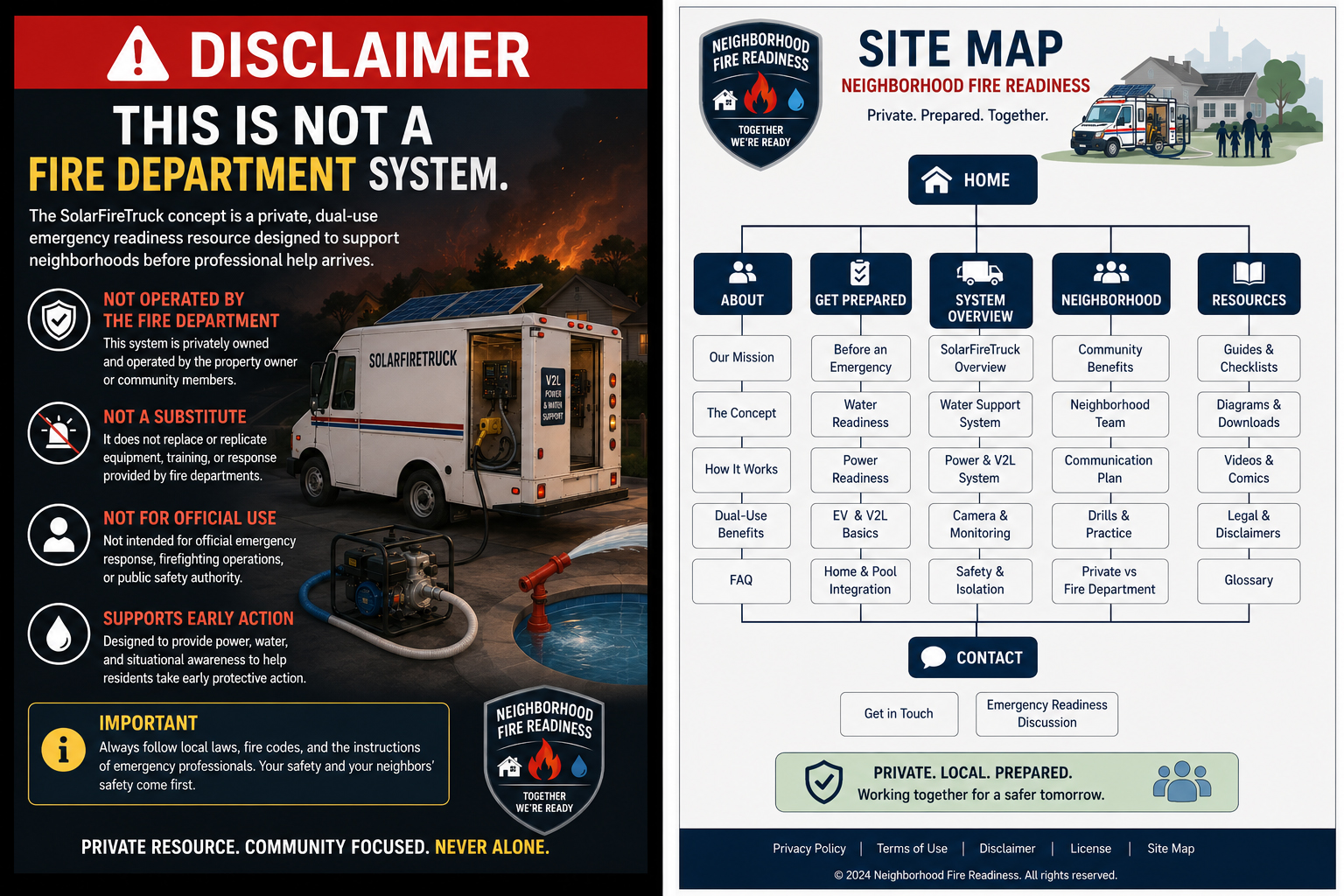
The crew is smarter now: power is useful, water is valuable, cameras help, pumps matter, and the fire chief is always right when safety is on the line.