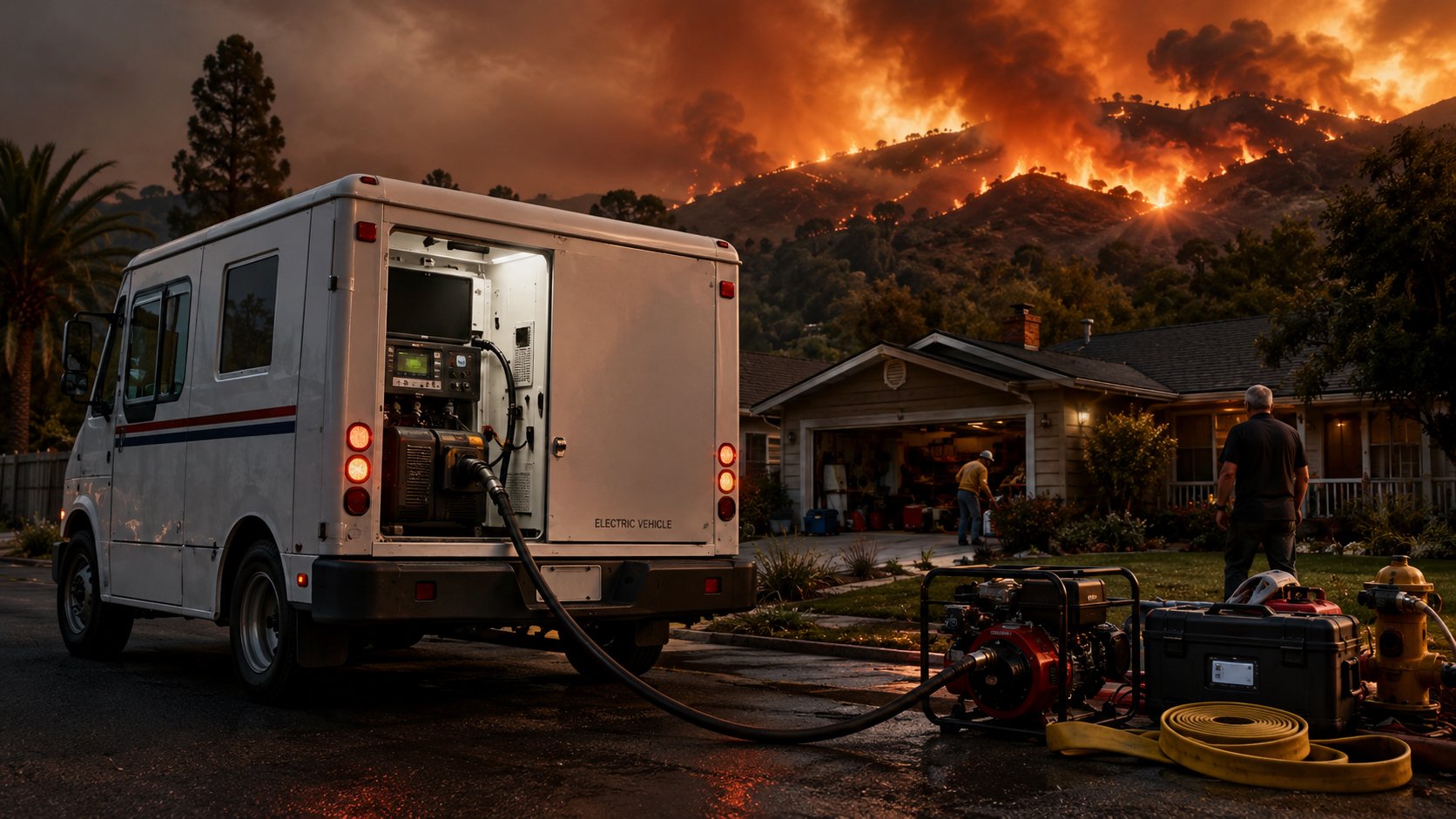
Power questions
EV V2L output, pump startup surge, cable routing, battery runtime, solar charging, home batteries, and load priority.
SolarFireTruck.com explains a dual-use emergency-readiness concept: EVs with Vehicle-to-Load power supporting pumps, cameras, lights, radios, and pool-water defense ideas. These answers keep the idea exciting without blurring the safety boundary.
The basic idea is simple: an EV may provide mobile power, a pool may provide local water, and a pump may move that water to a defensive spray point. The hard rule is just as simple: firefighters, evacuation orders, codes, and professional design come first.
Important: SolarFireTruck.com is educational and conceptual. It is not emergency instruction, not a fire-code system, and not a substitute for firefighters, evacuation, professional design, permits, inspections, or public safety authority.
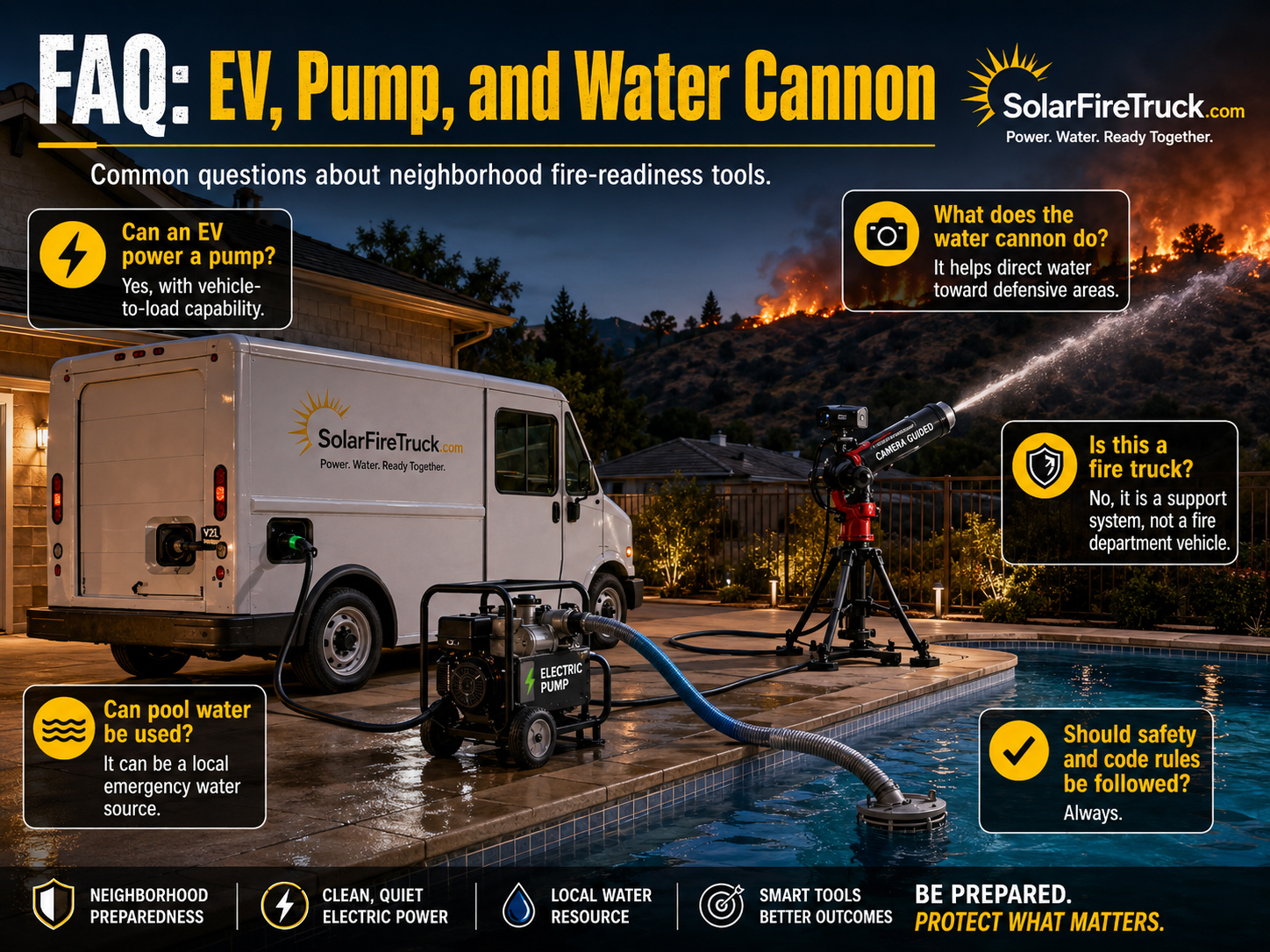
Plain-language answers for the key questions homeowners, fleet operators, neighbors, and emergency-readiness planners will ask first.
No. SolarFireTruck.com is using a dramatic name to explain a support concept. The idea is that an EV with Vehicle-to-Load power could support selected emergency-readiness equipment. It is not a fire engine, not a fire department, and not a substitute for professional response.
Vehicle-to-Load means an EV can provide power to external devices through an outlet or power export feature. In this concept, V2L power could support a properly rated pump, lights, cameras, radios, or small control equipment.
Sometimes, but only if the pump is within the EV’s rated output and the electrical setup is safe. Pump startup surge, running wattage, voltage, cable rating, duty cycle, and protection devices all matter. Do not guess.
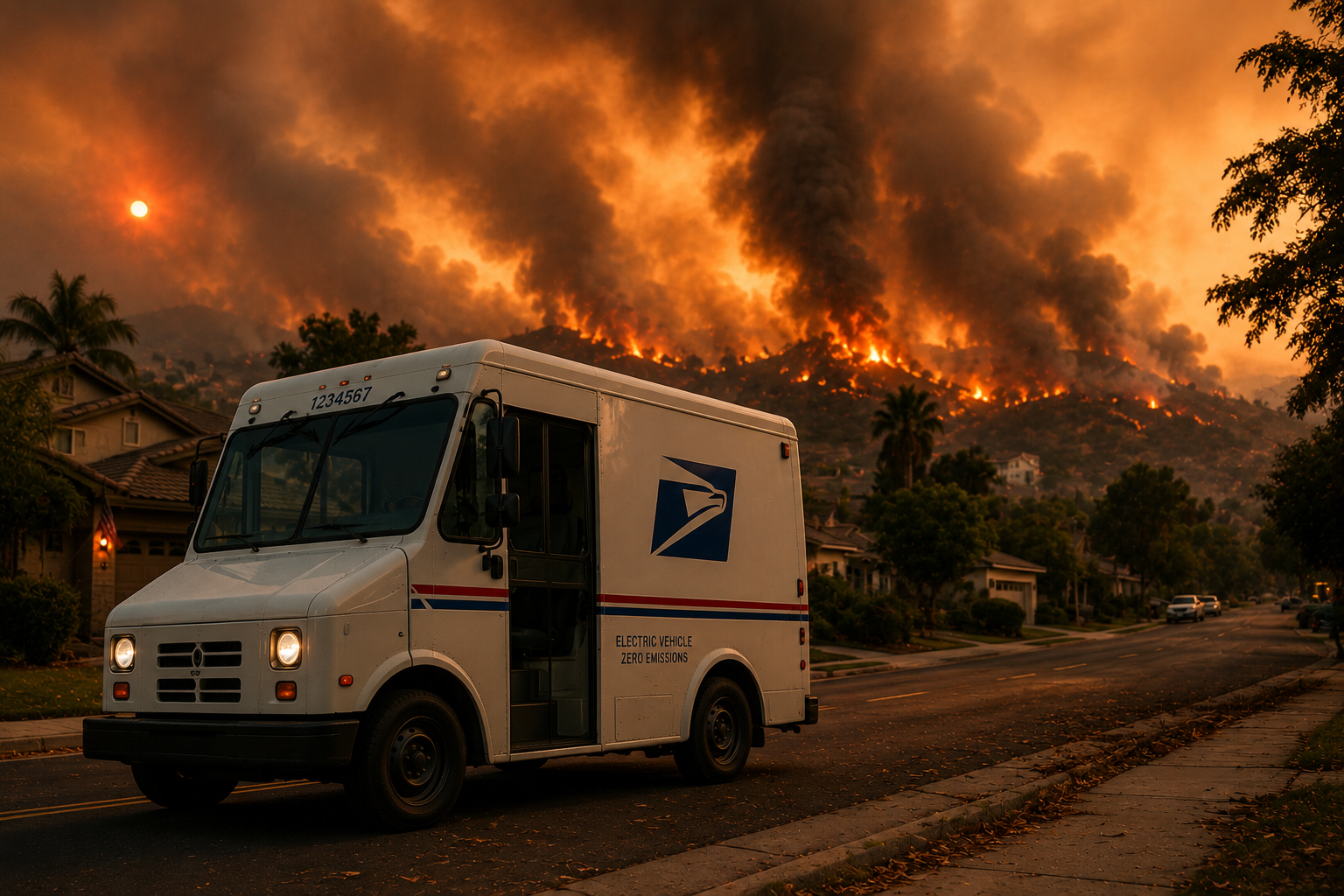
An electric postal truck is a strong example because it is route-based, visible, local, and already moving through neighborhoods. With the right equipment and rules, a fleet EV could be imagined as a dual-use emergency support resource.
No. The concept is not about turning postal workers into firefighters. It is about the vehicle as a mobile power platform and the idea of standardized emergency support equipment. Emergency responders remain in charge.
Pool water may be useful as a local water reserve if it can be accessed safely and moved with the right pump, hose, intake, power source, and discharge plan. A pool is not a hydrant, and it does not guarantee protection.
It is a concept for a monitored defensive spray point. The camera helps show where embers, smoke, and water spray are going. The cannon should have planned spray zones, manual override, and emergency shutoff. It is not a replacement for firefighters.
No. A camera can improve awareness, but it cannot show the whole emergency or replace judgment. Wind, heat, smoke, responders, evacuation orders, and access conditions can change quickly.
The biggest risks include water near electricity, overloaded V2L outlets, wet or damaged cords, blocked firefighter access, delayed evacuation, unsafe pump operation, hose trip hazards, and false confidence during a fast-moving fire.
No. Nothing on SolarFireTruck.com should be treated as code-compliant, permitted, inspected, certified, or approved fire protection. Real systems require licensed professional design and local authority review.
No. This is a private support concept only. It does not replace fire sprinklers, hydrants, fire engines, public water systems, defensible space, evacuation planning, fire codes, or trained firefighters.
Leave. Equipment must not delay evacuation. A pump, EV, water cannon, camera, hose, or battery is not worth a life.
Private equipment must yield immediately. Firefighters and emergency officials control the scene. Equipment should be easy to shut down, move, or abandon without blocking access.
Yes, as part of a professionally designed backup-power plan. Solar can help charge batteries and EVs before emergencies. Batteries can support selected loads. EVs can bring mobile power to specific equipment. Safe switching and electrical design are essential.
Think of it as an educational idea about distributed readiness: EV power, local water, pumps, cameras, and neighborhood planning. The responsible version is limited, professionally reviewed, and always subordinate to public safety.
Almost every SolarFireTruck question falls into one of these three buckets.
EV V2L output, pump startup surge, cable routing, battery runtime, solar charging, home batteries, and load priority.
Pool drafting, submersible pumps, intake screens, hose length, pressure loss, nozzle flow, and defensive spray zones.
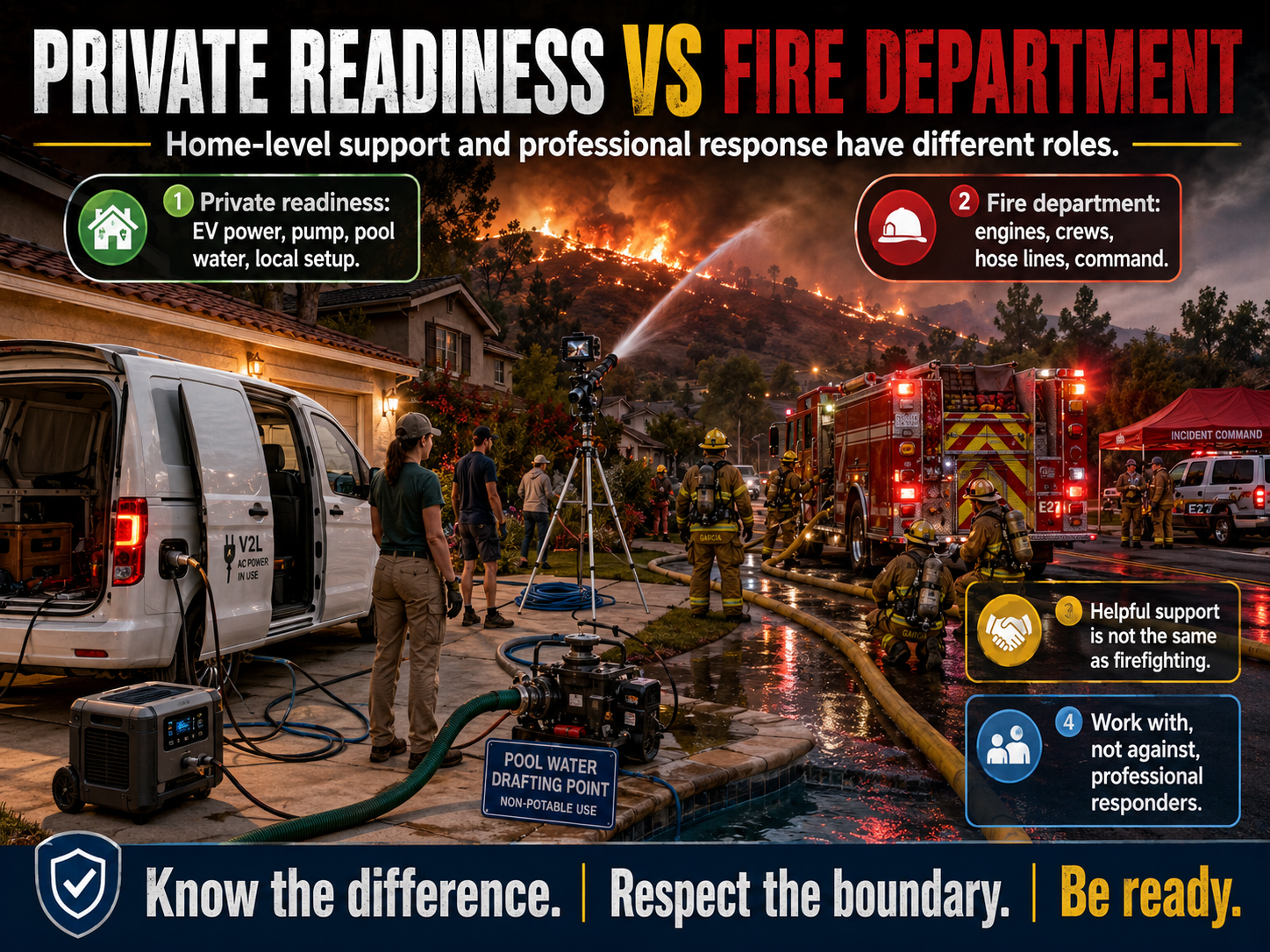
Firefighter access, evacuation, code compliance, professional design, permits, inspections, and the limits of private support.
As a planning concept, yes. As a replacement for emergency response, no.
Bottom line: EV power, pool water, pumps, cameras, and water cannons may be useful support tools only when planned safely. They must never delay evacuation, block responders, or pretend to be professional firefighting systems.
Discussing a concept is easy. Designing a real system requires qualified local professionals, code review, and practical site-specific planning.