☀️
Solar
Solar panels can produce energy before and during an outage if the system is designed to operate safely with batteries or approved backup equipment.
The SolarFireTruck.com concept is strongest when EV V2L power is not treated as a standalone trick. It becomes part of a larger backup-power plan: solar charges batteries, batteries support critical loads, and EVs bring mobile power to pumps, cameras, lights, and communications.
Fire-readiness power is not just about one outlet. It is about having clean, stored energy available before the emergency and then using it intelligently when the grid is down, unstable, or unavailable.
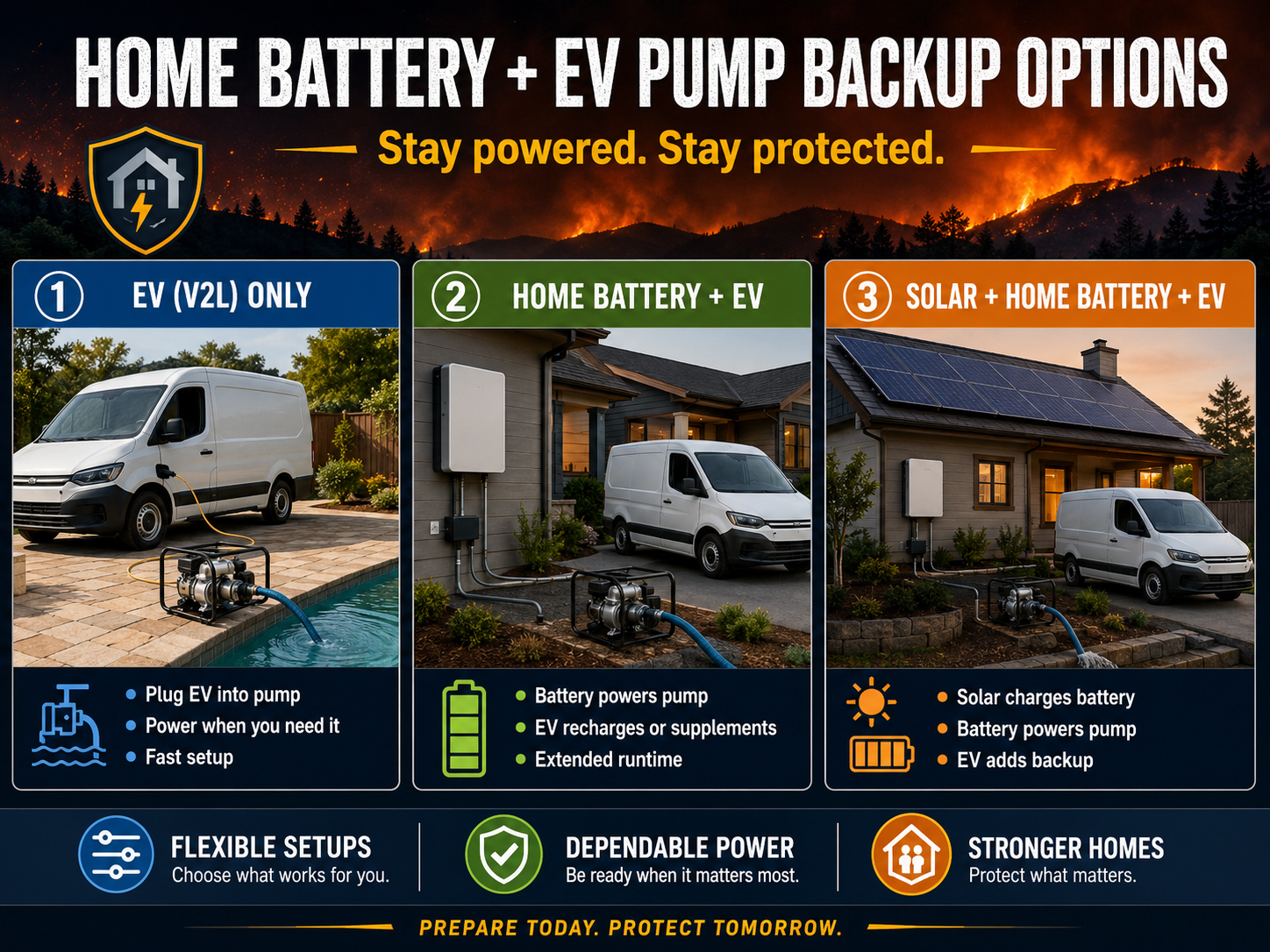
Solar, stationary batteries, and EV batteries should not be treated as identical. Each has a role in readiness planning.
Solar panels can produce energy before and during an outage if the system is designed to operate safely with batteries or approved backup equipment.
A stationary battery can support selected home circuits, communications, controls, lighting, refrigeration, or other critical loads.
An EV with V2L can bring power to a specific location, such as a pool pump, camera station, light stand, or temporary support setup.
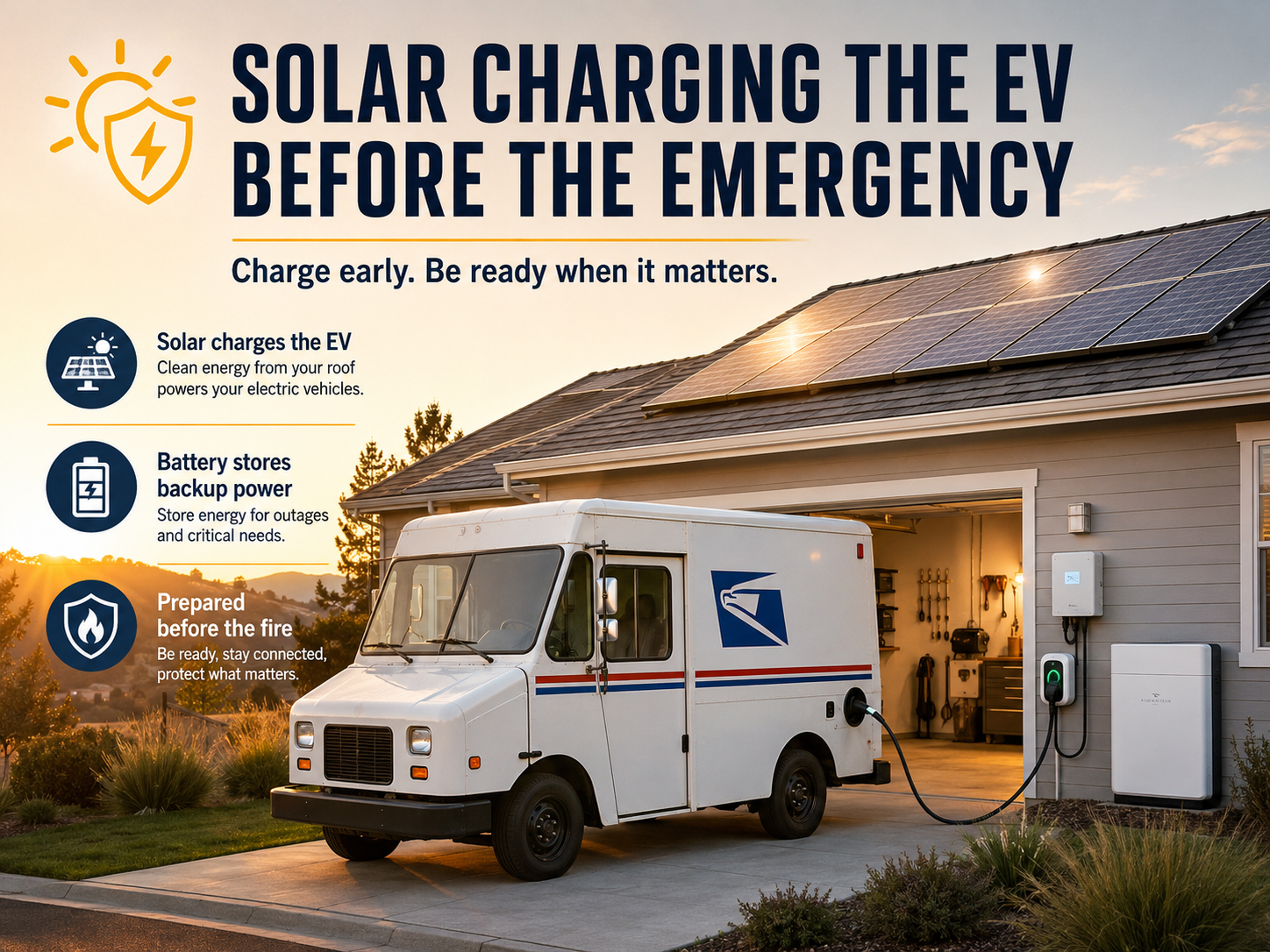
An EV with a low battery is not much of an emergency power resource. During red-flag weather or planned shutoff risk, EVs and home batteries should be managed as preparedness assets.
If the EV may be used for V2L support, it should be charged early and kept available, while still preserving evacuation range.
A home battery can support selected critical loads, but only if the system is configured for backup operation and kept ready.
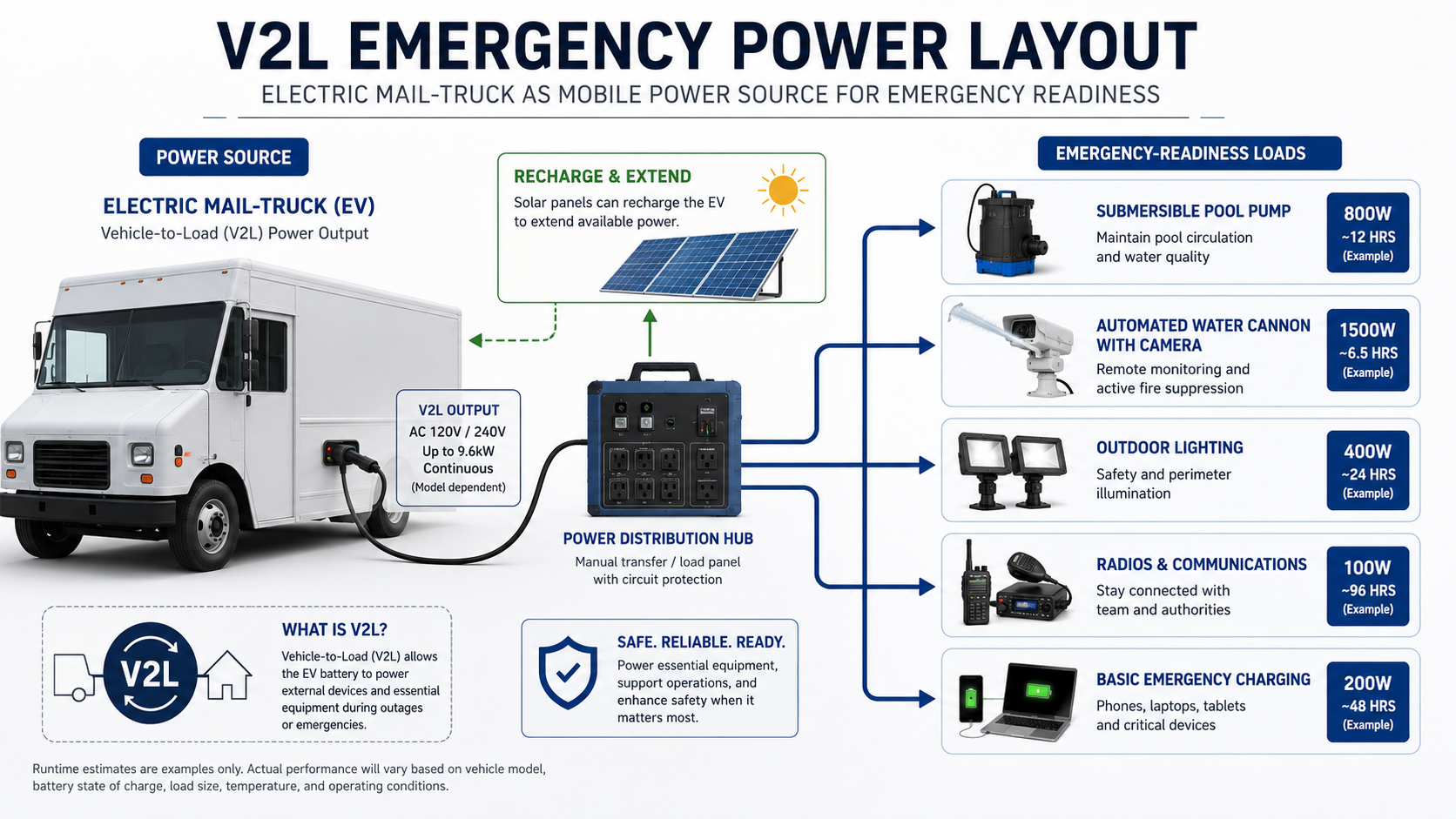
Pumps, cameras, lights, controls, radios, and appliances should be prioritized. Backup power should not be wasted on nonessential loads.
Stored energy is valuable. The SolarFireTruck model prioritizes loads that support water movement, awareness, communication, and safety.
A properly rated submersible pump may be the highest-value load in the water-defense concept.
Cameras can help monitor embers, spray zones, gates, slopes, fences, and equipment operation.
Emergency lighting can reduce confusion, improve safety, and support night equipment checks.
Phone charging, radios, routers, and small communication loads may be critical in an outage.
A backup system can fail dangerously if it is overloaded, backfeeds unsafe circuits, lacks transfer equipment, or uses cables and connectors outside their rating. Fire-readiness power needs discipline.
Solar, batteries, EVs, pumps, and water are powerful tools. They can also become hazards if they are connected casually. Any real system requires licensed electrical review, safe transfer methods, weather-rated equipment, and clear operating limits.
Do not improvise backup power: Do not backfeed circuits, bypass transfer equipment, run wet cords, overload V2L outlets, or connect pumps and home circuits without qualified electrical design.
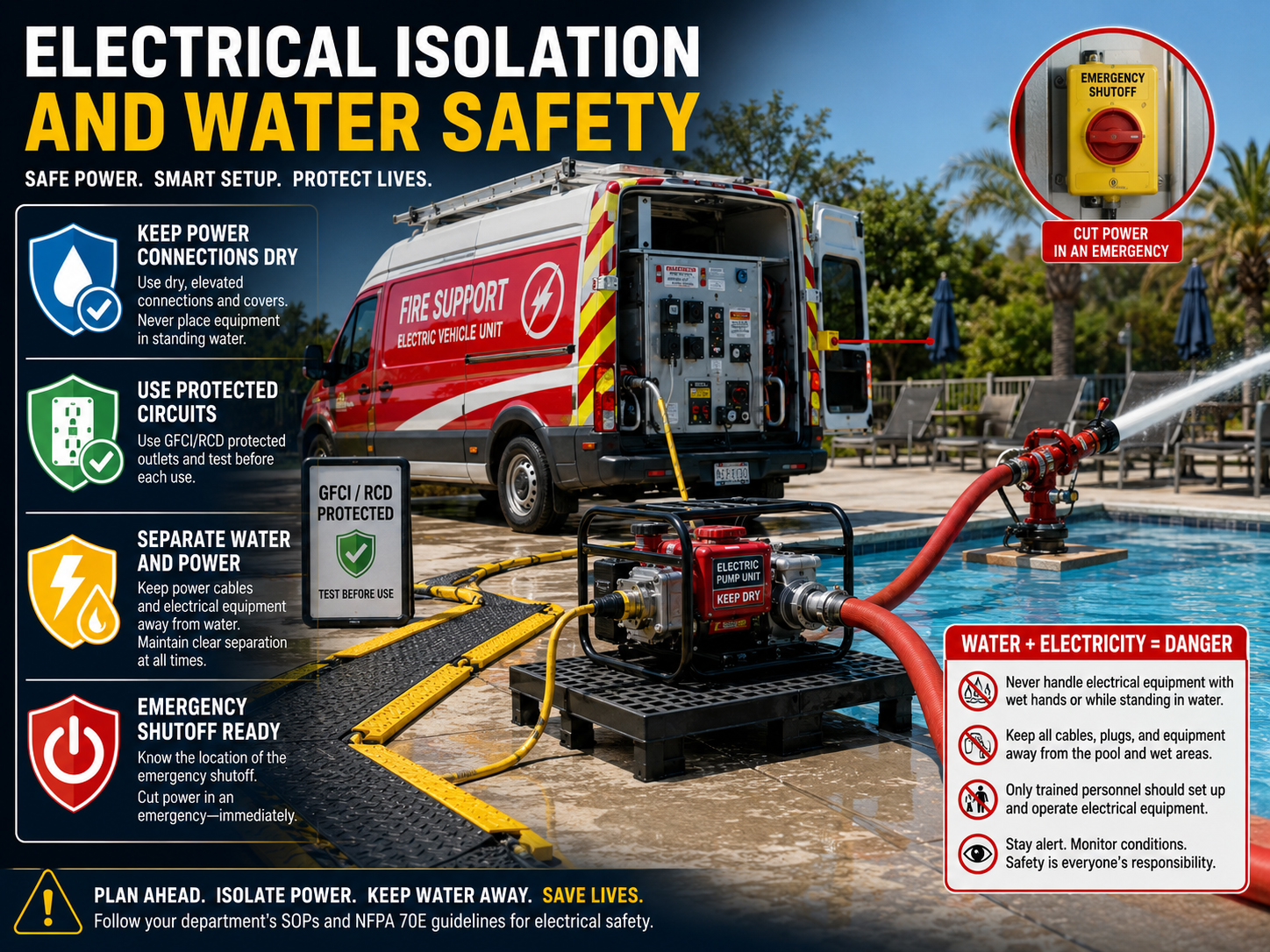
Pumps and hoses belong near water. EV outlets, home batteries, transfer equipment, and controls must be placed and protected so spray, leaks, flooding, and panic do not create an electrical hazard.
SolarFireTruck.com is a concept site, but the planning patterns are easy to understand.
The house battery supports critical home loads while the EV is preserved for mobility or pump support.
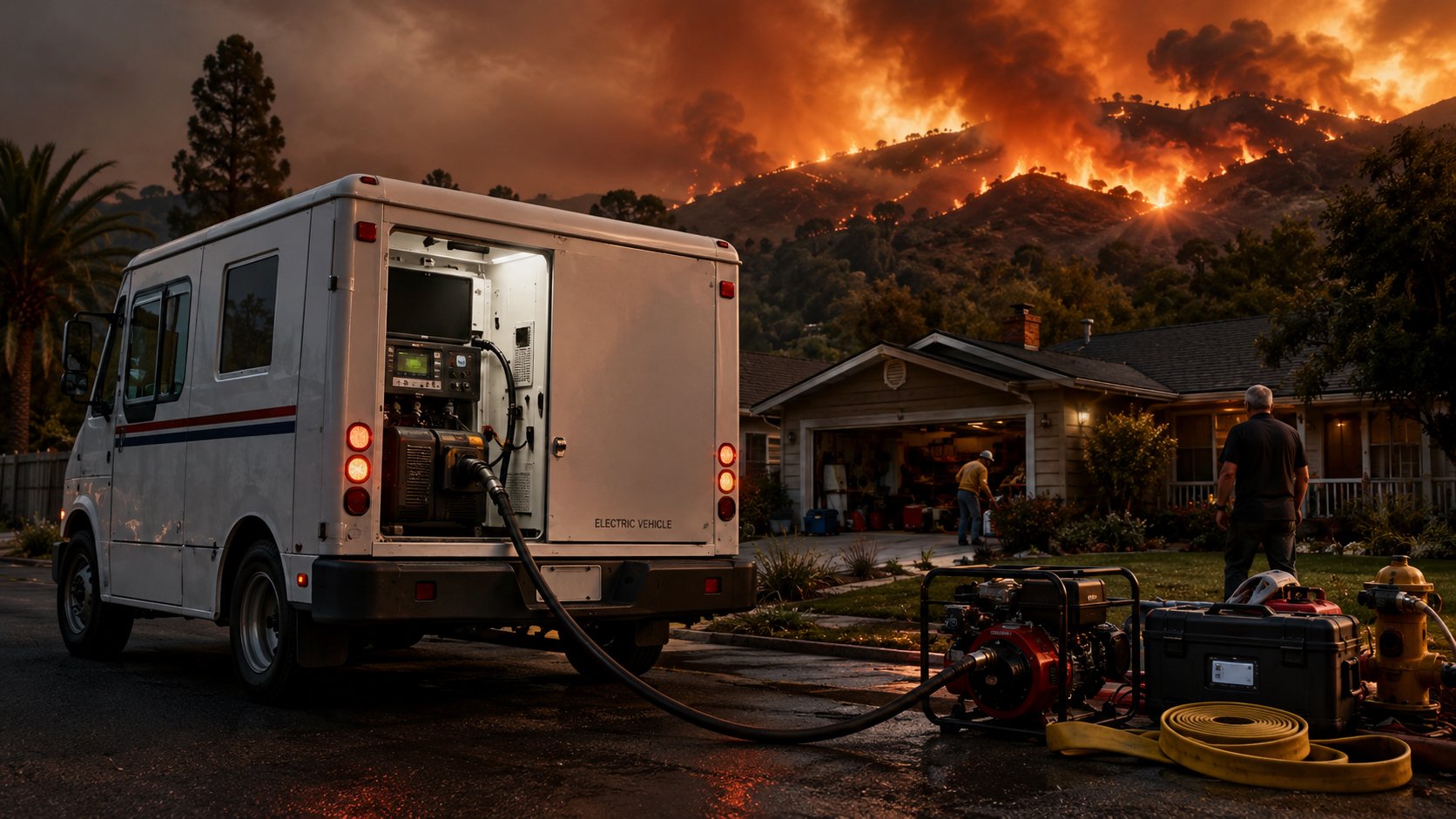
The EV powers a specific external load, such as a pump, light, camera, or control station.
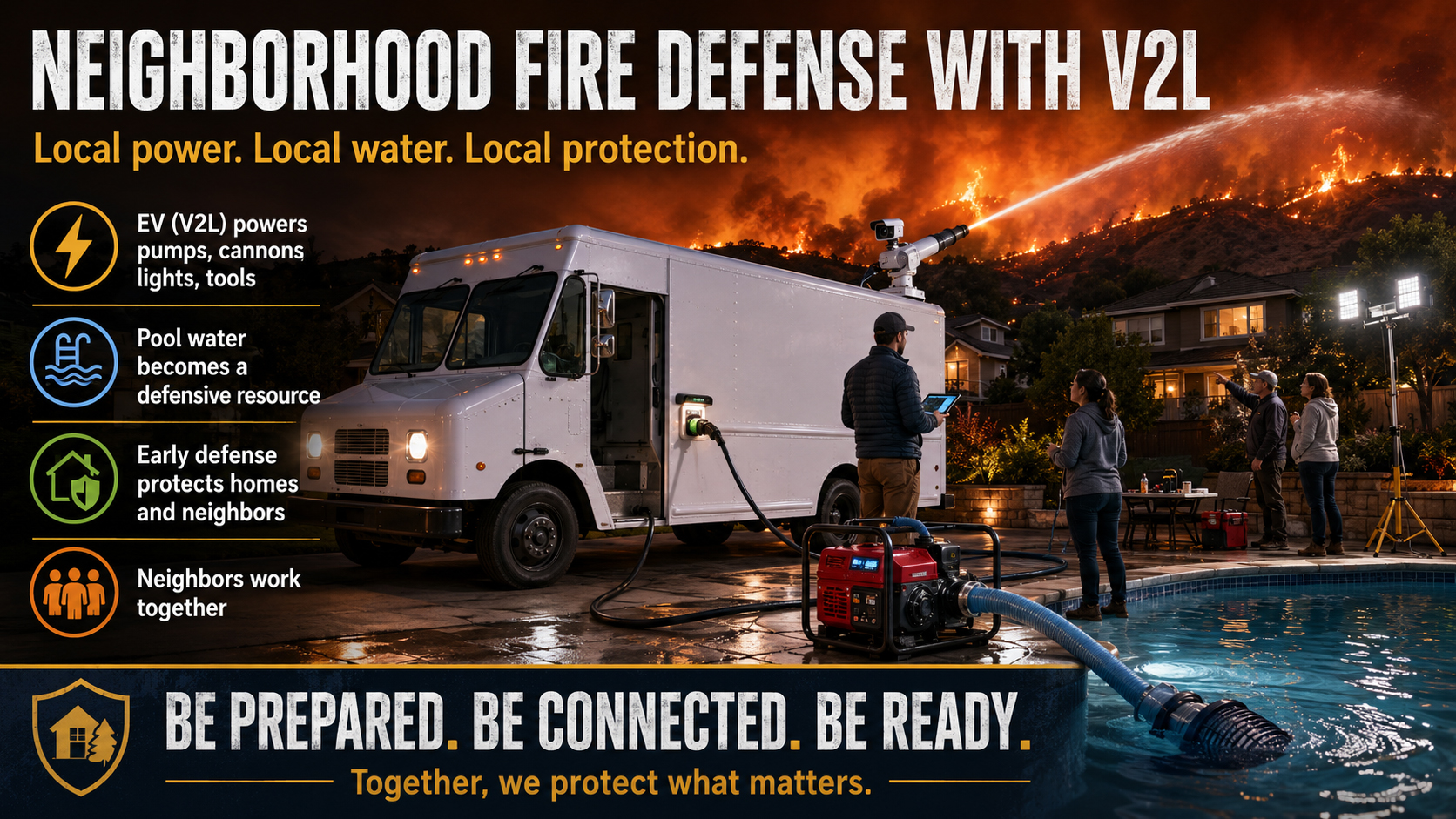
Several EVs and batteries can be mapped as distributed support resources across the block.
Clean backup power can support readiness, but it does not make a private system into a fire engine. The next page explains the limit clearly.